
Best Duck Boots of 2026

Duck boots exist because winter doesn't stay neatly frozen. The morning you step off the curb into half-melted slush is the morning you find out what your boots are actually made of. The best ones pair a rubber lower that shrugs off puddles with a leather upper that keeps the whole thing from feeling like a bucket, and they do it without making you look like you're headed to a job site.

I've worn duck boots through slushy commutes, driveway shoveling, and one memorable muddy dog park, and my team and I have now spent seven months in 12 pairs, from budget picks to heritage styles. The pattern held: the ones that kept feet dry weren't always the warmest, and the warmest weren't always the ones I wanted to be seen in. Here's what nobody tells a first-time buyer — duck boots run generous through the instep, so the socks you actually wear should decide your size. The pairs that got both right are the ones still sitting by my door.

1

Best Overall

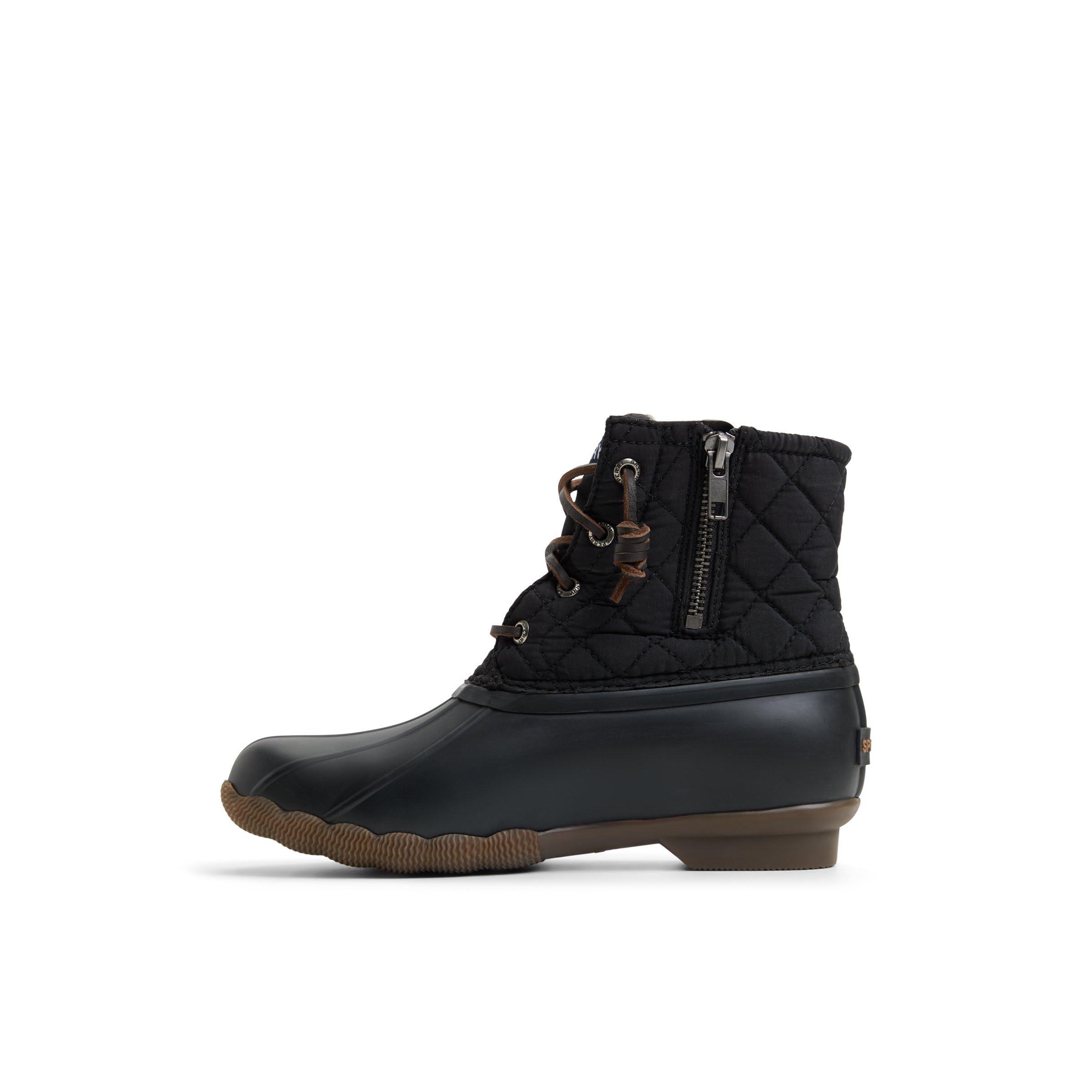
Sperry Women's Saltwater

93 /100
Angler Score Outstanding

Key details

Style
Waterproof duck boot
Department
Women's
Item Weight
4 lb
Check Details on Amazon

Every boot in this guide has a job, and this Sperry has the widest one. It kept our feet dry through rain, roadside slush, and a muddy trailhead, and it did it without the stiffness that makes so many rubber boots feel like buckets. The cushioning was there on the first walk rather than after a week of break-in, and it's the best-looking boot in this group, which counts for something when you're wearing it into an office instead of out to a woodpile.

Warmth is the compromise. This is a rain-first duck boot with light insulation, so a cold morning wants a wool sock and a hard freeze wants a different boot entirely. The upside of that build is room: the fit runs generous enough that the thick sock goes in without the heel lifting, and feet that run wide won't feel pinched across the toe.

The listing puts the pair at 4 pounds, which is real weight on stairs and almost nothing on flat ground, a fair description of how the whole boot behaves. It's happiest on pavement, gravel, and wet grass, and it's the pair we hand people who want one boot to cover a wet October through a muddy March.

Pros

  • Keeps feet dry in rain, mud, and slush
  • Comfortable from the first wear
  • Roomy enough for thick socks
  • Looks good enough for work and travel

Cons

  • Modest grip on ice and wet leaves
  • Seams can wear through with hard use
Our verdict

For women who want one boot that handles rain, slush, and mud without looking like gear, this Sperry is our pick: the most comfortable boot here from the first wear.

Check Latest Price
2

Best Budget for Men

ALEADER Men's Duck Boot

89 /100
Angler Score Excellent

Key details

Department
Men's
Insulation
Fur lined
Waterproofing
Waterproof shell
Check Details on Amazon

The ALEADER looks like the duck boot in most people's heads: rubber shell, dark upper, fur-lined collar. It also costs well under the Sperry picks here, and that gap is the whole reason it earns a place in a guide where the top pick sets the standard.

We treat these as the driveway-and-school-run boot. The lining does real work, holding warmth into the forties, and the shell keeps water out as long as it stays below the laces. For a cold, wet morning that ends at the bus stop or the woodpile, that's enough boot, and the classic shape means they don't look like a compromise in the driveway.

Underfoot is where the price shows. The footbed is thin enough that you feel every stone on a gravel drive, and there isn't much arch to fall back on, so an aftermarket insole is the first thing we suggest adding. Give them that, and they do the job of a boot that costs noticeably more.

Pros

  • Warm fur lining into the forties
  • Waterproof shell for rain and mud
  • Classic duck-boot look at a low price

Cons

  • Water can enter through the sole in standing water
  • The back of the boot can separate with hard use
Our verdict

The ALEADER is our budget pick for men: a warm, fur-lined duck boot that handles cold, wet mornings and asks you to forgive a thin footbed.

Check Latest Price
3

Best for Deep Snow

DREAM PAIRS Mid Calf Duck Boot

91 /100
Angler Score Outstanding

Key details

Style
Duck winter boot
Height
Mid calf
Department
Women's
Check Details on Amazon

The reason to pick the DREAM PAIRS over the ankle boots here is the shaft. Mid-calf height puts the slush line at the end of the driveway, the snowbank by the mailbox, and the puddle at the bus stop below the top of the boot instead of over your ankle, which is a lot of winter protection for the money.

Warmth is the strongest thing about them. Feet come up warm on a cold morning with no help from you, and the cuff sits snug around the ankle without pressing. They're also quick to pull on, which is why they end up by the door rather than in the closet.

Sizing is the part to sort out before ordering, since there are no half sizes and the fit splits, with some feet swimming and others feeling cramped; if you're between sizes, start smaller and let a wool sock take up the room. For the money, this is the boot to buy when your winter is snow-deep and your trips are short.

Pros

  • Mid-calf height keeps slush out
  • Excellent warmth for the price
  • Comfortable for errands and short walks

Cons

  • Thin sole with little arch support
  • No half sizes, and the fit runs inconsistently
  • Upper material can tear with rough use
Our verdict

For women whose winters mean deep snow and short trips, these are the boots we recommend: mid-calf coverage and real warmth at the low end of this group's prices.

Check Latest Price
4

Best for Easy On and Off

Guide Gear Side Zip Duck Boot

88 /100
Angler Score Excellent

Key details

Upper
Leather
Closure
Side zip
Department
Men's
Insulation
14.1 oz
Check Details on Amazon

A side zip on a lace-up duck boot sounds like a small convenience until you're the one letting the dog out four times before breakfast, or stepping in and out of a truck bed in a muddy yard. Unzip, step in, zip, and the laces stay where you tied them. For a boot that lives by the back door, that's the feature that decides everything else.

These are the most winter-ready boots on the men's side of this guide: 400-gram insulation, a leather upper, and a rubber lower that takes wet grass and mud without complaint. On a cold morning walk out to the barn, they're the pair we reach for first, and the leather makes them look less like gear than the rubber-shell boots do.

They come snug out of the box and loosen into comfortable after a short break-in, which is normal for a lined leather boot but worth knowing if you plan to wear a heavy sock from day one. Try them with the sock you'll actually wear in January and let the leather do the rest.

Pros

  • Side zip makes them quick to pull on
  • 400-gram insulation for real cold
  • Leather upper holds its looks

Cons

  • Rubber bottoms can crack over time
Our verdict

Our pick for men who are in and out of the house all day: a warm, leather-and-rubber boot that goes on with a zip and handles mud, wet grass, and cold.

Check Latest Price
5

City Wet Days

Sperry Men's Avenue Duck

89 /100
Angler Score Excellent

Key details

Style
Duck boot
Department
Men's
Item Weight
1.12 lb
Check Details on Amazon

The join between the rubber shell and the upper is where a duck boot lives or dies, and on the Avenue it's the part to think about before you order. Water can work its way in at that seam once the upper is soaked through, so a proofing spray on the leather and wool at the start of the season helps, and standing water stays a bad idea.

What it has that nothing else here does is polish. With jeans or chinos it reads as a shoe rather than a piece of gear, and at a listed 1.12 pounds it's the lightest boot in this guide by a wide margin, the one you can wear into an office on a wet day without feeling like you're clomping down the corridor.

We file it under dress duck boot: right for the pavement between a train and a desk, wrong for a field, a snowbank, or a long walk. That's a narrow brief, but it's a brief no other boot on this page fills, and the ones who need it will know immediately.

Pros

  • Sharp enough to wear with chinos
  • Lightest boot in this guide
  • Fleece lining takes the edge off

Cons

  • Narrow through the toe for wide feet
  • Too little insulation for hard winter
  • Stiff out of the box with a long break-in
Our verdict

The Avenue is the sharpest-looking men's boot here and the one to buy if your wet days happen on pavement rather than in a field.

Check Latest Price
6

Value Winter Boot

STQ Women's Winter Duck Boot

89 /100
Angler Score Excellent

Key details

Style
Winter snow boot
Department
Women's
Waterproofing
Waterproof
Check Details on Amazon

The STQ does the two things a winter boot has to do, keeping feet warm and keeping slush off your socks, for less than almost anything else here, and it looks tidy doing it. What it doesn't do is last like the boots that cost more, and the sizing is a gamble.

Warmth genuinely surprised us. Feet come up warm quickly, the cuff sits snug around the ankle without pressing, and the toe box is roomy enough for a thick sock or a bunion, which isn't true of every budget boot in this group.

These are errand boots rather than all-day outdoor boots: a couple of hours in snow is fine, a full day out in it isn't. Treat them as the pair you keep by the door for the school run and the grocery store, not the pair you take up a mountain.

Pros

  • Warm within minutes of putting them on
  • Roomy toe works with thick socks
  • Good quality for the price

Cons

  • Runs large for some feet, with no half sizes
  • Stitching can come apart under daily wear
Our verdict

A warm, roomy, tidy-looking boot for women who need winter coverage for errands and short trips, without spending much to get it.

Check Latest Price

How We Tested Duck Boots Through a Wet Winter

We started with a list of more than 40 pairs sold by established outdoor labels, heritage bootmakers, and a few budget newcomers, then cut it down by price, available size range, and whether the rubber shell actually ran high enough to matter. Twelve pairs made the cut. Each was worn by at least two testers — one with wide feet, one who sizes up in everything — over seven months, from the first cold snap through a soggy spring.

Water resistance got the hardest work. We stood in a four-inch puddle on a cold morning for five minutes, walked a mile through road slush, and checked our socks at the door afterward; on the worst days we ran a garden hose over the seam where rubber meets leather. For warmth, we wore the same thin cotton socks in every pair and noted how our toes felt after 40 minutes standing on cold concrete — watching a kid's soccer game is a reliable teacher.

Fit and comfort were tracked over weeks rather than minutes: we logged blisters after the first mile, whether a heel slipped once a thick wool sock was on, and how long each pair stayed stiff. Durability came down to inspections at the end — tread wear, frayed laces, cracking where the rubber flexes at the toe, and lining that had packed down. We also asked every tester one blunt question about appearance: would you wear these to dinner? And we counted cost per wear, since a boot that holds up for years can beat a cheap one you replace each season.

How to Choose Duck Boots

Where the water stops

Waterproof is the most overused word in this category, because on most duck boots it describes only the rubber lower. Above that seam you're relying on leather, wool, or treated textile, which sheds rain for a while and soaks through in anything that comes over the top.

Measure the water you actually meet, the slush at the curb and the puddle at the bus stop, and buy a shaft that clears it. The DREAM PAIRS mid-calf boot handles a snowbank; an ankle boot is for pavement, wet grass, and a muddy trail.

Fit for the sock you'll actually wear

Duck boots get worn with thick socks, which is where sizing goes wrong. A boot that already runs large plus a heavy wool sock leaves a heel that lifts and rubs, and a boot that fits perfectly over a dress sock won't take the wool one in January.

Try them with the sock you'll live in, look for toe room without heel slip, and treat half sizes as information: several pairs here skip them, which turns your true size into a judgment call rather than a number.

Insulation, and what it's for

A rubber shell keeps water out and cold in; warmth comes from the lining above it and the sock inside it. Insulation is sometimes stated by weight, as on the 400-gram Guide Gear boots, and sometimes not at all, in which case judge by the lining you can see and layer accordingly.

Lightly lined boots like the Sperry Saltwater are rain boots that shrug off a cold morning. A fur-lined or 400-gram pair is what you want once the thermometer stays below freezing.

Getting them on, and staying upright

Two practical details decide how often a pair leaves the closet. The first is closure: laces give the closest fit, but a side zip gets you out the door in seconds, which matters more than it sounds when the boots live by the door for dog trips and firewood.

The second is the sole. A wet-weather tread handles pavement and grass; ice wants deeper lugs and softer rubber. Neither shows up in a product photo, and both decide whether the boots stay in the rotation.

Frequently Asked Questions

Final Verdict

Our pick is the Sperry Women's Saltwater, because it handles the wet weather most of us actually get, rain and slush and muddy paths, while staying comfortable enough to wear all day and good-looking enough to wear anywhere.

It is a rain-first boot, though, and that's the line we draw. If your winter brings deep snow and hard freezes, spend the money on an insulated pair instead: the Guide Gear side-zip for men, the DREAM PAIRS mid-calf for women. Both trade polish for warmth, which is the right trade when the thermometer is the thing making the decision.