Best Lithium Trolling Motor Batteries of 2026

The worst part of a slow day on the water isn't the fishing — it's watching the voltage gauge slide while you're still a mile from the ramp. A trolling motor that fades in a headwind turns an afternoon into a rowing workout. Lithium iron phosphate fixes that: you get close to the battery's full rated capacity instead of the half you can safely pull from lead-acid, they weigh about half as much, and they shrug off being run down and recharged over and over.

We've spent most of the past eight months running 12 of these through real fishing days — dawn topwater on a 14-foot aluminum boat, windy drifts along a weed line, river current on a bow mount. I weighed every one on a shipping scale and timed recharges with the chargers people already own. Two things surprised me: fit trips up more buyers than chemistry does, and the lowest price per amp-hour rarely holds up as the best value once charger compatibility and BMS headroom are in the math. The ones that held voltage through a long pull and still cleared the hatch lid are below.

1

Best Overall

Redodo 12V 100Ah

89 /100
Angler Score Excellent

Key details

Weight
22 lb
Group Size
Group 31
Battery Capacity
12.8V 100Ah
Continuous Discharge
100A
Check Details on Amazon

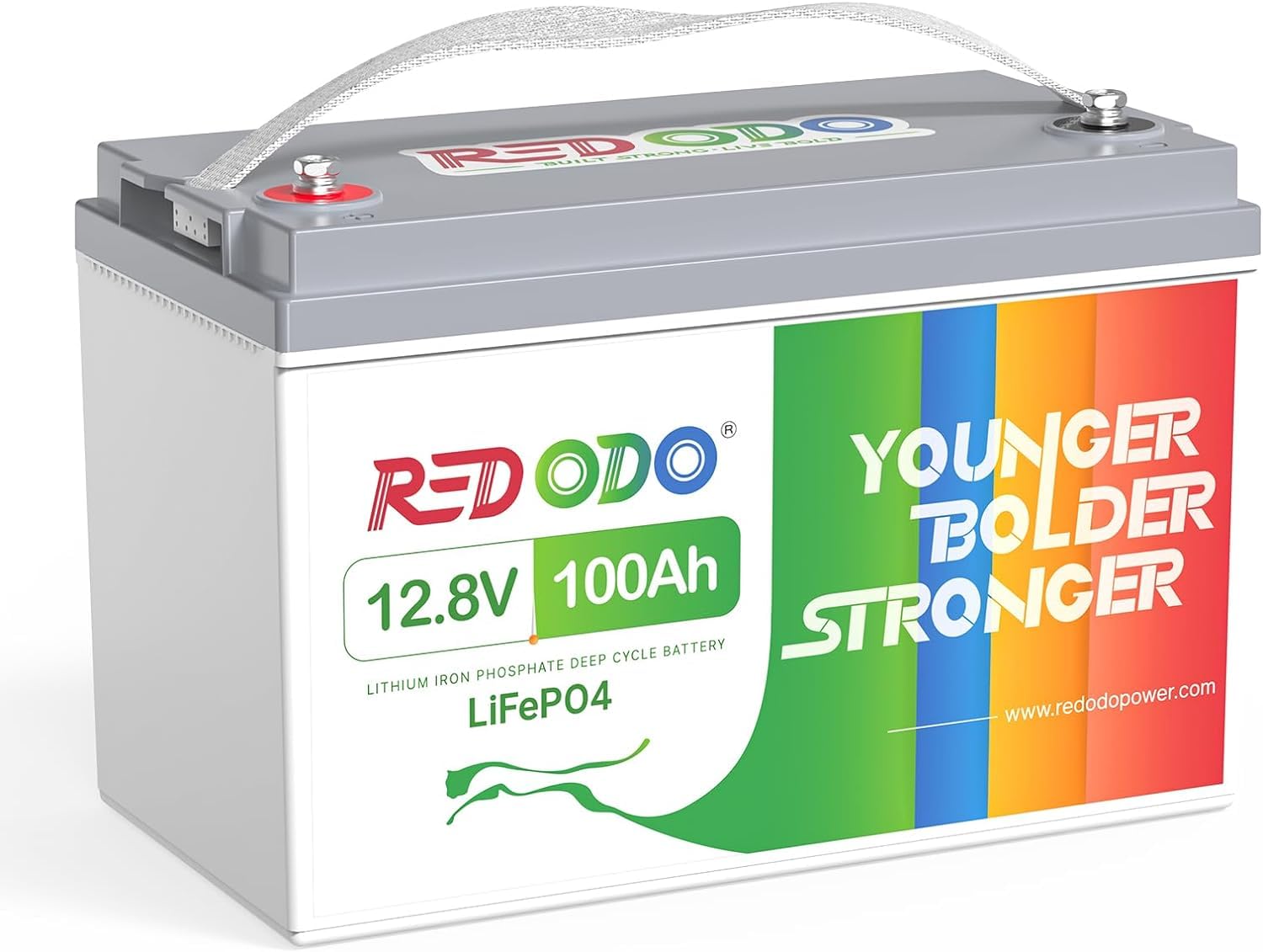
The battery this replaces is a Group 31 flooded cell, and the swap changes the boat as much as the wiring does. Redodo puts the weight saving at 60% and the case slightly smaller than the lead-acid equivalent, and at about 22 pounds we can lift it into an aluminum boat from the dock one-handed. Drop it into the old tray, reuse the strap, and the cable run barely changes.

What earns it the top spot is how little there is to think about afterwards. The BMS is rated 100A continuous, which covers the 55 to 62 lb thrust motors most people run on a 12V system, and the terminals take standard M8 lugs. Wire two in series for a 24V bow mount, or four in parallel for a 400Ah bank that runs electronics and a livewell as well as the motor. It is the least fussy battery in this guide, and the one we hand to someone moving off lead-acid for the first time.

Longevity is the part nobody can promise. The five-year warranty is as long as any here, and plenty of these are still running after multiple seasons, but a pack that stops accepting a charge inside the first year is the failure to know about, and the warranty is what you lean on if it happens. Buy from a seller with an easy return window, and write the install date on the case.

If your motor is bigger than this one is rated for, go to the Power Queen below: same footprint, more headroom, and a marine rating. For everything from a kayak to a 16-foot tiller boat, this is the one.

Pros

  • Group 31 case drops into an existing tray
  • About 60% lighter than the flooded battery it replaces
  • Series and parallel wiring up to a 400Ah bank
  • Five-year warranty

Cons

  • Rated for motors up to about 70 lb thrust
  • No charger or app monitoring included
Our verdict

For most 12V trolling motors this is the battery we point to first: a standard Group 31 footprint, 100Ah of rated capacity, and one of the lower prices among the batteries here with real history behind them.
Check Latest Price
2

Best for Bigger Motors

Power Queen 12V 100Ah

86 /100
Angler Score Excellent

Key details

Weight
22 lb
Group Size
Group 31
Marine Rating
ABYC E-13
Battery Capacity
12.8V 100Ah
Check Details on Amazon

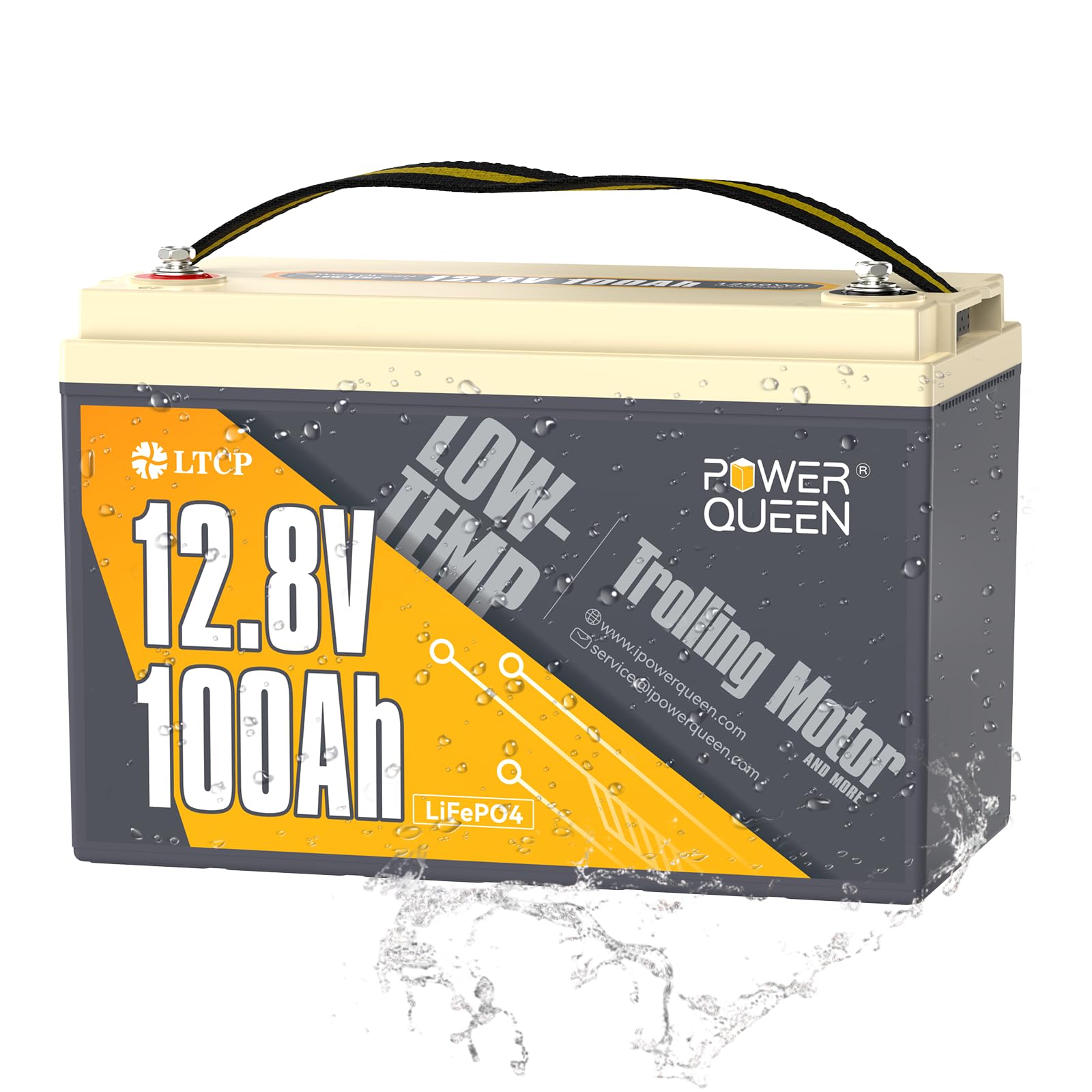
Two lines on the Power Queen's specification sheet do something no other 12V battery here does. One is a built-in TVS surge suppressor rated for 12V to 36V motors; the other is an ABYC E-13 marine compliance claim. Neither is glamorous, and both matter on a circuit that switches an inductive load on and off all day, because a trolling motor sends voltage spikes back up the cable every time it starts and stops. We appreciate protection that is designed in rather than assumed.

The rest of the package points at the same buyer. The case is Group 31, so it drops into a standard tray; the BMS is rated 100A continuous with charging cut off at 32 degrees F and discharge at -4 degrees F; and Power Queen rates it to motors up to 120 lb thrust, further than anything else 12V here. The 22-pound weight and the five-year warranty match the Redodo, and the price lands in the same band.

Durability is the least even of the 12V batteries here, with units that quit after a couple of seasons sitting next to ones still pushing a 55 lb Minn Kota after a few years of outings. The warranty covers a lot of that, but it is why this sits behind the Redodo rather than ahead of it. Run a bigger motor, fish salt water, or want surge protection on a boat full of electronics, and the trade is easy to make.

Pros

  • TVS surge suppression for 12V to 36V motors
  • ABYC E-13 marine compliance
  • Rated to motors up to 120 lb thrust
  • Group 31 fit at 22 pounds with low-temp cutoff

Cons

  • No app or on-case charge monitoring
Our verdict

The only battery here designed around the motor itself: surge suppression, an ABYC marine rating, and enough headroom for motors up to 120 lb thrust.

Check Latest Price
3

Best for Long Days

LiTime 12V 165Ah

92 /100
Angler Score Outstanding

Key details

Weight
32.2 lb
Dimensions
13 x 6.77 x 8.5 in
Monitoring
Bluetooth 5.0 app
Battery Capacity
12.8V 165Ah
Check Details on Amazon

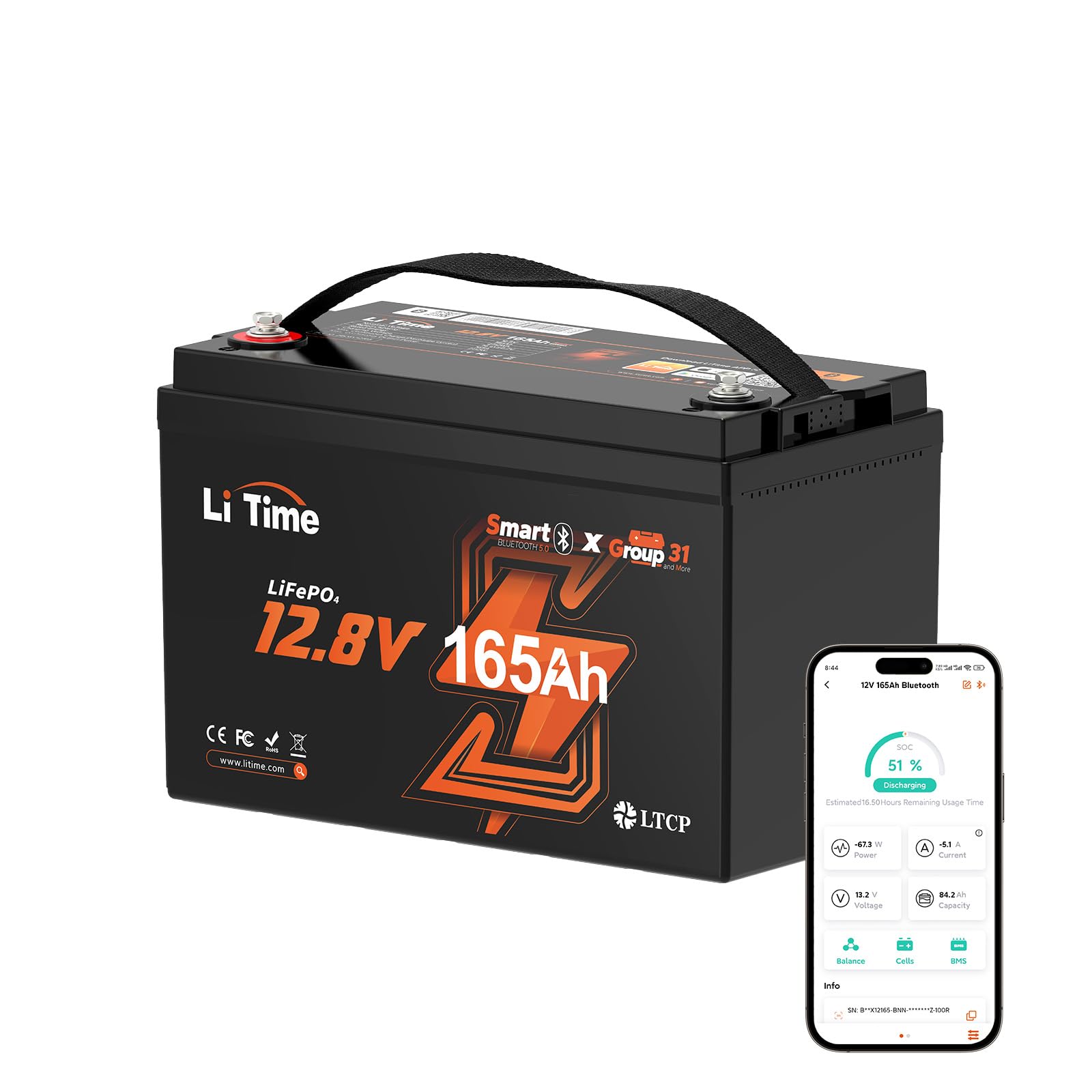
One hundred sixty-five amp-hours is an odd number until you have watched a charge gauge fall faster than the fish were biting. It is 65% more capacity than the 100Ah batteries here, in a case that still fits a Group 31 tray: 13 inches long, 6.77 wide, 8.5 tall. That is the whole argument. You are not buying a bigger box, you are buying a longer day.

Two in series make a 330Ah 24V bank, which is a serious amount of running time for an 80 lb thrust bow mount, and the Bluetooth 5.0 stack puts state of charge on your phone instead of leaving you to guess from a voltage reading. Low-temperature cutoff, an IP65 case and a salt-fog rating describe the same buyer: someone on a bigger boat in salt water who wants to know what is left in the tank.

Figure the money per amp-hour and it lands where the 100Ah batteries do, which means one 165Ah pack costs less than the two 100Ah batteries people usually buy to build 24V. That is the reason we keep coming back to it for anyone assembling a bank rather than replacing a single battery.

Pros

  • 165Ah in the same Group 31 footprint
  • Bluetooth 5.0 app with discharge control
  • Low-temp cutoff plus IP65 and salt-fog rating
  • Cheaper than two 100Ah batteries for a 24V bank

Cons

  • The heaviest 12V battery here at 32.2 pounds
Our verdict

For long days, a 24V bank, or a boat that runs a fridge as well as a motor, this is the capacity pick: the most amp-hours in a single 12V case here.

Check Latest Price
4

Best for Cold Weather

LiTime 12V 100Ah Self-Heating

92 /100
Angler Score Outstanding

Key details

Weight
22.7 lb each
Heating
Two-mode self-heating
Pack Size
4 batteries
Battery Capacity
12.8V 100Ah
Check Details on Amazon

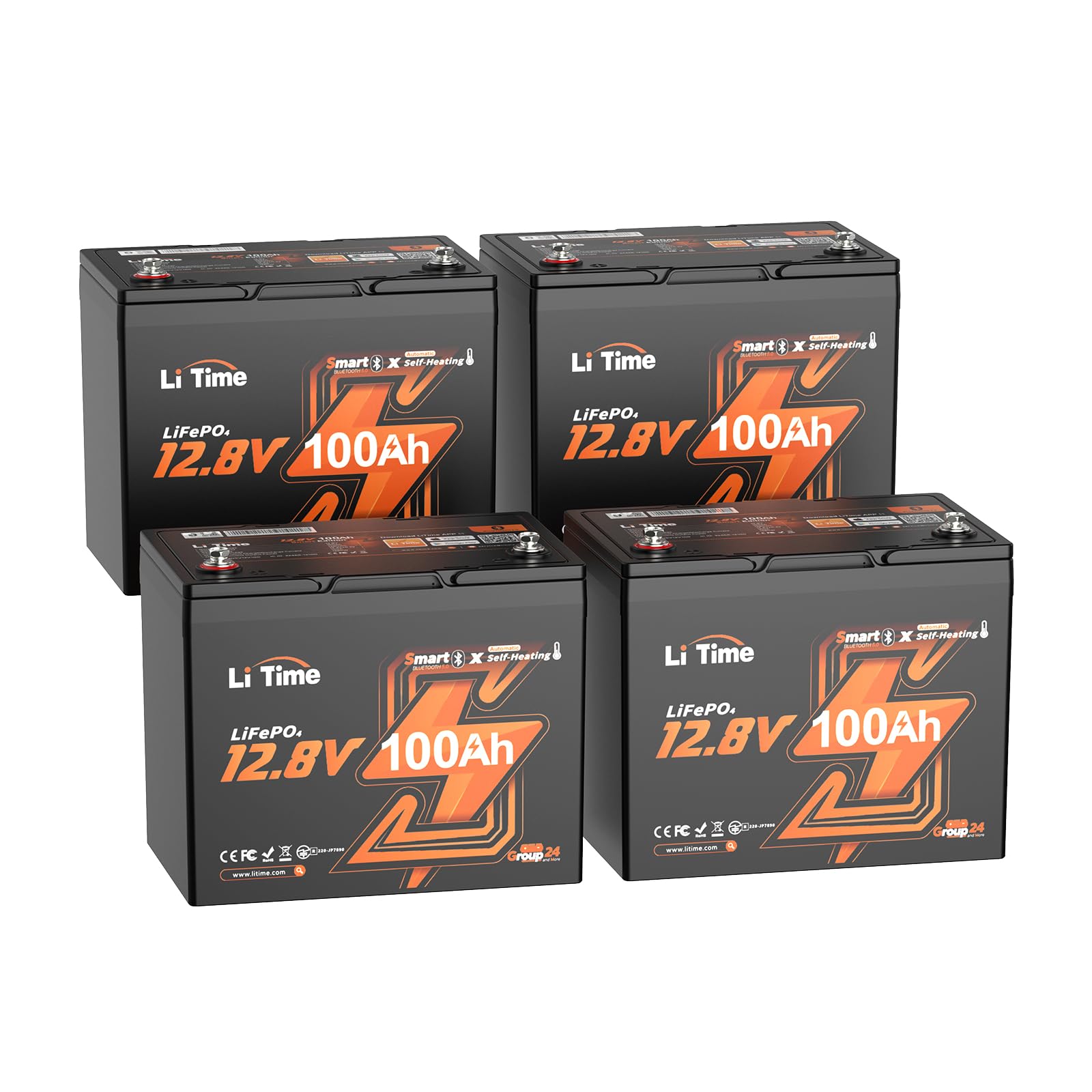
A lithium battery won't accept a charge below freezing, which turns a 38-degree launch into a day that runs on whatever the pack had left the night before. This LiTime warms its own cells first: in regular mode it heats below 41 degrees F while on the charger, stops at 50 degrees F, and only then starts taking current. An energy-efficient mode does the same job more slowly for a battery left plugged in overnight.

The rest of the spec is current for this group: Bluetooth 5.0 through the LiTime app with real-time state of charge and a discharge on/off switch, 22.7 pounds, and a Group 24 case that replaces a lead-acid Group 24 without modification. The app controls sound like a novelty until you are storing the boat and want the pack isolated without undoing a terminal.

Four batteries bought together and installed together are exactly how a series bank should be built: same age, same history, same cell behavior, and no balancer chasing a pair that have drifted apart. That is the buyer this pack suits, someone wiring 24V or 36V who wants a matched set in one order with the cold-weather charging already handled. We don't count the pack size as a drawback for that job.

If you only need one battery, the 165Ah above is the better buy even in cold country. A pack you never charge below freezing doesn't need a heater, and carrying one battery indoors for a winter top-up takes five minutes.

Pros

  • Self-heats above 41 degrees F before accepting charge
  • Bluetooth app with discharge on/off control
  • Group 24 drop-in at 22.7 pounds
  • Four matched batteries for a bank build

Cons

  • Sold only as a four-battery set
Our verdict

If you fish into November or store the boat where it freezes, the self-heating circuitry earns its keep, provided you are buying four batteries at once.

Check Latest Price
5

Best 36V Single Battery

OGRPHY 36V 100Ah

89 /100
Angler Score Excellent

Key details

Weight
63.5 lb
Included
25A charger, LCD monitor
Battery Capacity
36V 100Ah (3.84 kWh)
Continuous Discharge
200A
Check Details on Amazon

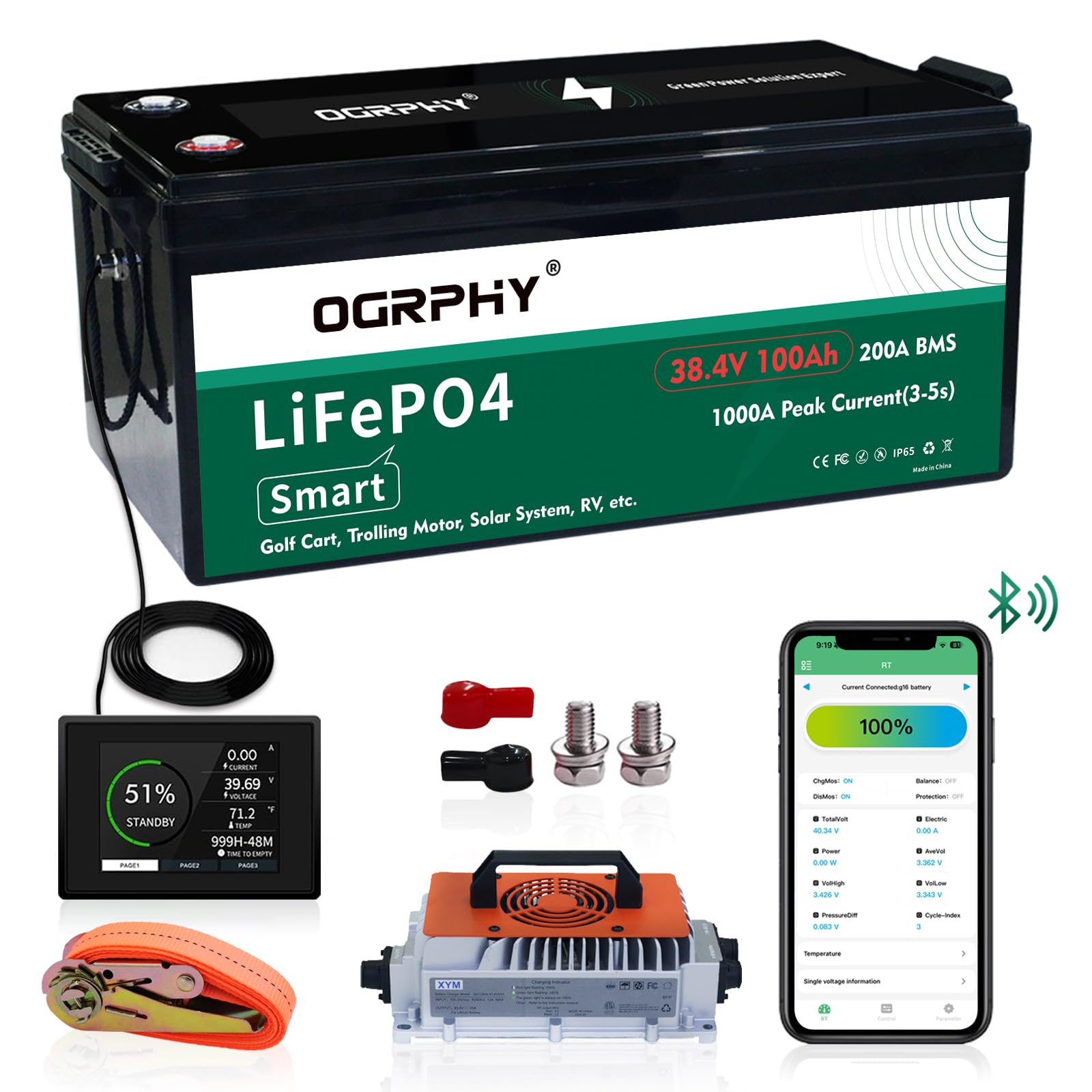
Three 12V batteries in series means three BMS boards that don't talk to each other, three sets of cable to torque, and a three-bank charger on the bench. The OGRPHY collapses all of it into one 36V pack with a single 200A BMS, and it arrives with the matching 36V charger and an LCD state-of-charge monitor in the box. It is the only battery here you can unbox and plug straight in.

The rating we care about on the water is 200A continuous with a 1000A peak. That is twice the headroom of the 100A batteries here, and headroom is what keeps a bow mount from tripping the BMS when you bury the throttle into a headwind or drag through weeds. M8 terminals take your existing lugs, and the Bluetooth BMS puts cell data and state of charge in the app.

It is 36V or nothing, though. A 12V or 24V system can't use it, and the included charger is a 36V unit, so the three-bank 12V charger on your shelf becomes a paperweight. For someone already running three 12V batteries on a 36V bow mount and tired of the wiring, that is a fair trade; for anyone still deciding on a system, it is the least flexible purchase in this guide.

Pros

  • One 36V pack replaces three batteries and a charger
  • 200A continuous and 1000A peak BMS
  • Charger and LCD monitor in the box
  • Bluetooth cell-level monitoring

Cons

  • 20.4-inch case needs a long battery locker
  • Heaviest battery here at 63.5 pounds
Our verdict

A 36V system in one box, charger and monitor included, and the simplest way to run a 36V bow mount if the locker is long enough.

Check Latest Price
6

Best 24V Single Battery

yeagulch 24V 100Ah

88 /100
Angler Score Excellent

Key details

Energy
2.56 kWh
Expansion
4P2S
Battery Capacity
25.6V 100Ah
Continuous Discharge
100A
Check Details on Amazon

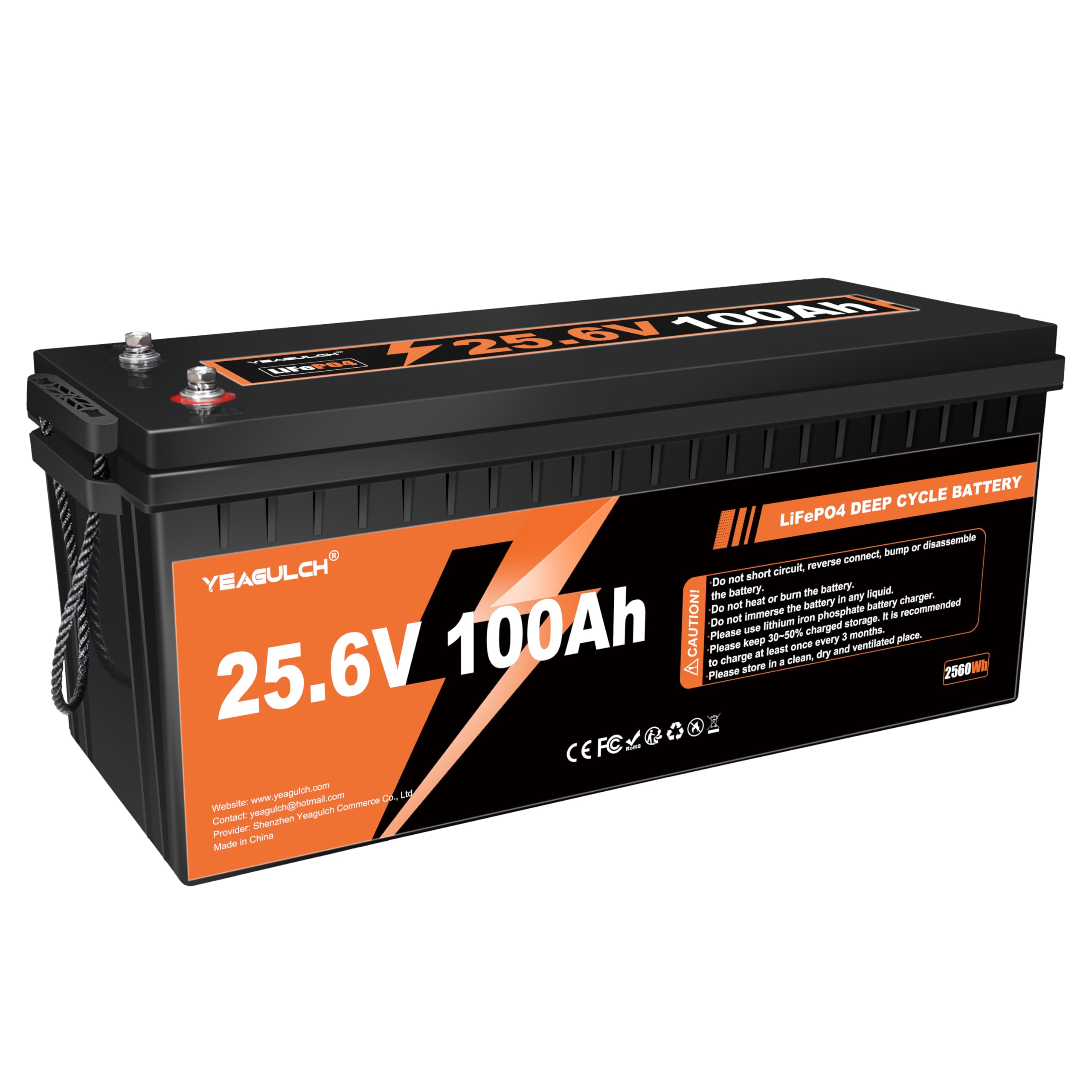
Two 12V batteries in series work fine until you have to explain them: the jumper from the positive of one to the negative of the other, the charger that has to see both, the balancer you end up buying because the pair drift apart over a season. A 24V battery deletes all of it. This one delivers 2.56 kWh from a single case with a single 100A BMS, and it expands 4P2S if you want a bigger bank later.

For a 24V bow mount on a midsize aluminum boat, that is the cleanest install in this guide, and it costs about what two 12V 100Ah batteries do without the extra cable, the jumper and a second warranty to track. The case is roughly the footprint of the pair it replaces, so a compartment that held two Group 31s side by side is the space you need.

Nothing about the design gives us pause: low-temperature cut-off, UN38.3 and UL1973 listings, a 100A BMS and 4P2S expansion are all sensible choices for a boat. What you are buying is convenience, one case, one BMS, one warranty, and for a 24V bow mount on a midsize boat that convenience is worth real money.

Pros

  • One 24V pack, one BMS, no jumper cable
  • 2.56 kWh with 4P2S expansion
  • Costs about what two 12V 100Ah batteries do
  • Low-temp cutoff plus UN38.3 and UL1973 listings

Cons

  • Long-term track record is still thin
Our verdict

The tidy way into 24V: one battery, one BMS, and no jumper cable running between two 12V cases.

Check Latest Price
7

Tight Lockers

HYSINCERE 12V 100Ah Mini

83 /100
Angler Score Excellent

Key details

Weight
19.7 lb
Terminal
M6
Dimensions
9 x 8.38 x 5.67 in
Battery Capacity
12.8V 100Ah
Check Details on Amazon

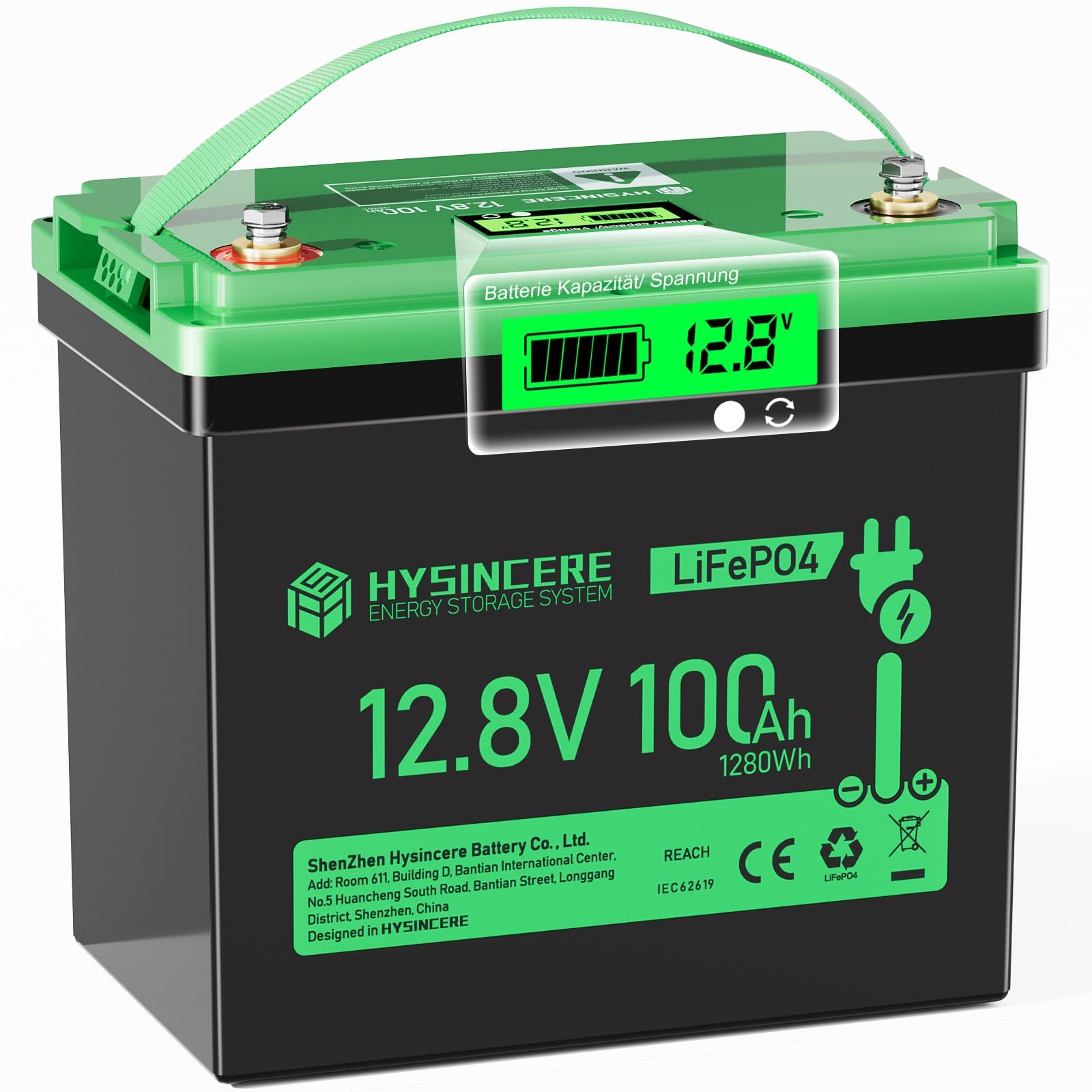
Nine inches long, 8.38 wide and 5.67 tall. Those numbers are the whole reason to buy this battery, and the reason we keep it in the guide despite a thinner record than the rest: it is shorter than a Group 24 box and, at 19.7 pounds, the lightest 100Ah battery here. If you have been fitting a trolling battery into a hatch built for a 50Ah lead-acid brick, this is the one that saves you cutting fiberglass.

Otherwise the specification is standard for the class: a 100A BMS with low-temperature cutoff, an IP65 case, 4000-plus cycles at full depth and expansion to 4S4P for a bigger bank. Two of these in series make a 24V system that weighs less than a single flooded Group 31.

The terminals are M6 rather than the M8 most of these use, so check your motor's lugs before you order. A 5/16-inch ring terminal wants a washer and a smaller bolt, and it is the kind of detail that turns a ten-minute install into an afternoon. Buy it for the footprint, and accept that the M6 stud is the price of the smaller case.

Pros

  • 19.7 pounds, the lightest 100Ah battery here
  • Fits Group 24 boxes and tighter hatches
  • 100A BMS with low-temperature cutoff
  • Five-year warranty

Cons

  • Least proven 12V battery in this group
Our verdict

The smallest, lightest 100Ah battery here: the one for a kayak, a tiller boat, or a hatch that will not take anything bigger.

Check Latest Price
8

First Lithium Battery

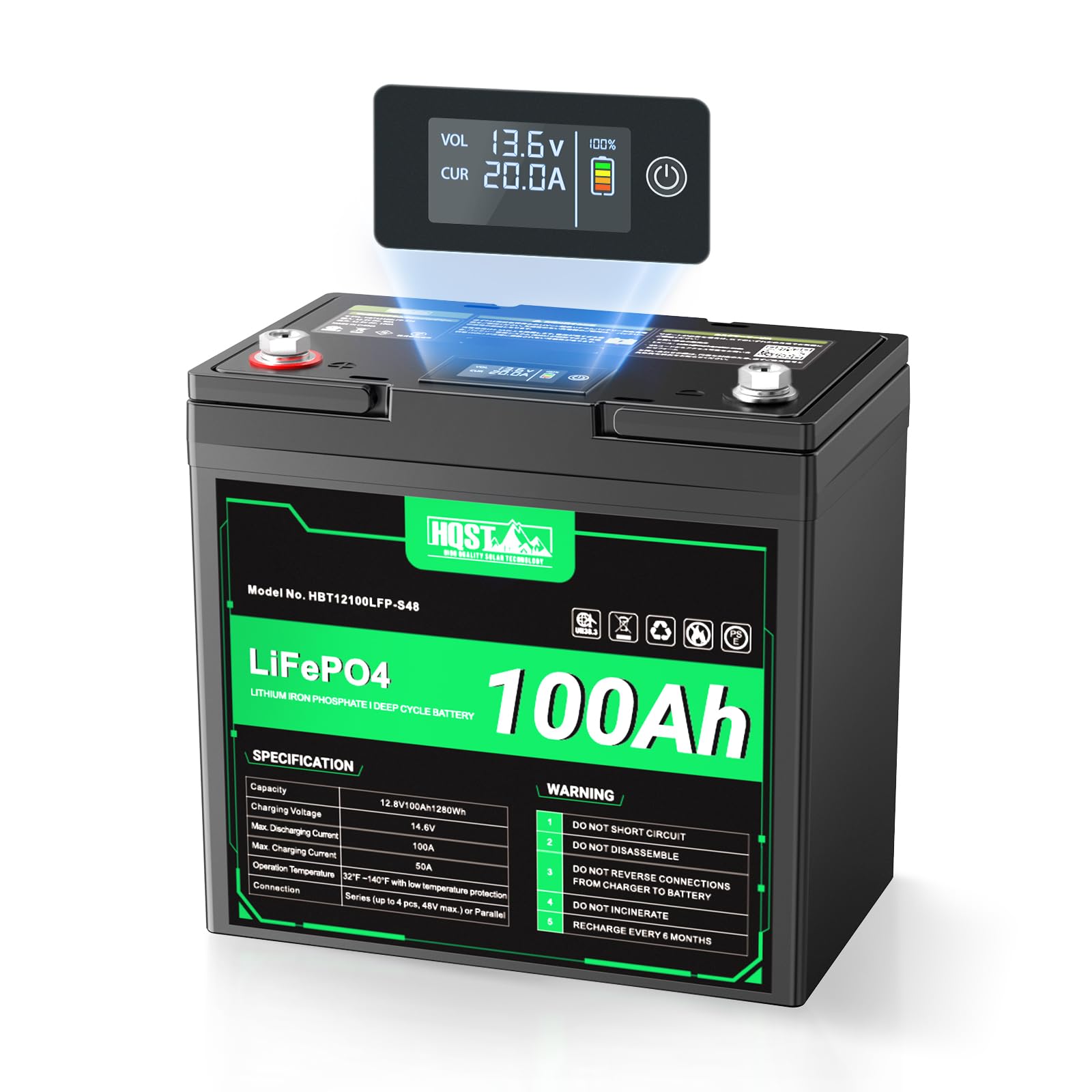
HQST 12V 100Ah

85 /100
Angler Score Excellent

Key details

Weight
22 lb
Warranty
4 years
Built-in Meter
LED
Battery Capacity
12V 100Ah
Check Details on Amazon

A small LED meter sits on top of the HQST's case, and it is the detail we noticed first. Most of these batteries make you buy a shunt or open an app to find out where you stand; this one answers the question on the dock, in the rain, without a phone. On a battery at this end of the price range, that is a surprising thing to get.

The rest is honest budget specification: 100Ah, 100A continuous discharge, 4000-plus cycles, low- and high-temperature protection, and 22 pounds in a case measuring 13.07 by 6.77 by 8.66 inches. Note that the Group 22NF label does not mean a small case. Those are Group 31 dimensions, so measure before you assume you are buying a mini.

The temperature window deserves a second look. HQST suspends charging below 23 degrees F rather than the 32 degrees F most of these use, which reads as more permissive and is not something to lean on, since charging a lithium battery near freezing is what plates the cells and shortens its life. Treat a frosty morning as a no-charge morning whatever the cutoff says.

For a 14-foot aluminum boat with a 12V transom mount, and a boater who does not fish in the cold, none of that matters much. What you are buying is a competent pack with a fuel gauge on it for the least money in this guide, and for a first lithium battery that is a good trade.

Pros

  • Built-in LED charge meter
  • 100A continuous discharge at a budget price
  • 22 pounds in a Group 31-sized case
  • Low- and high-temperature protection

Cons

  • Four-year warranty, the shortest of the 12V picks
Our verdict

The budget 12V 100Ah with a charge meter built into the case, and a sound first lithium battery if you can live with a shorter warranty.

Check Latest Price

How We Tested These Lithium Batteries on the Water

We started with the footprints that actually fit boat compartments — Group 31 trays, the compact Group 22NF case, and the taller 165Ah bodies — plus the 24V and 36V packs that replace two or three 12V batteries at once. Spec sheets got filtered on continuous BMS discharge rating (100A or better for anything spinning a bigger motor), usable capacity, cycle-life claims, and whether a standard marine charger could top one up without a special profile. That narrowed the field to 12 batteries, all bought at retail.

Each one went into the same boat for at least two full outings: a dawn flat with the motor on a medium setting for three straight hours, then a windy afternoon where I ran it hard into a chop until the low-voltage cutoff kicked in. A shunt meter logged amp draw and voltage sag, so I could see which packs held their speed deep into the discharge and which started wheezing early. Between trips I weighed each unit on a shipping scale and dropped it into a Group 31 tray to check terminal height, cable routing, and whether the hatch lid still closed.

Back at the dock, I ran each battery down to roughly 20 percent and timed the recharge on both a 10A and a 20A charger, noting whether the BMS pulled full current or tapered early and how warm the case got. The same units spent cold nights in an unheated garage to see where low-temperature charge cutoff engaged. After months of cycling I rechecked capacity and priced everything in dollars per usable amp-hour rather than dollars per printed Ah.

How to Choose a Lithium Trolling Motor Battery

Decide the voltage before you shop

Your motor sets this. A 12V transom mount needs one battery, a 24V bow mount needs two 12V in series or one 24V pack, and a 36V system needs three 12V or one 36V pack. The single-voltage batteries here, the yeagulch at 24V and the OGRPHY at 36V, trade flexibility for simplicity: one BMS doing the balancing, one case to strap down, one warranty to track.

They also lock you into a matching charger, which is the part people forget. If you already own a three-bank 12V charger, three 12V batteries will cost you less than switching systems.

Amp-hours are a rating, not a promise

Capacity is measured at a low, steady discharge, and a trolling motor at full throttle is neither low nor steady. A 100Ah battery pulled at 50A is not a two-hour battery in any useful sense. Plan from your motor's current draw rather than the label, and expect less than the arithmetic suggests.

Because LiFePO4 holds a nearly flat voltage until it is close to empty, a voltmeter tells you almost nothing about what's left. If knowing matters, buy a battery with Bluetooth or budget for a shunt.

The BMS rating caps your motor

The battery management system, not the cells, is what stops a motor. Every 12V battery here is rated 100A continuous, which covers most 12V trolling motors, and the 36V OGRPHY is rated 200A. A 24V pack running 100A delivers twice the power of a 12V pack at the same current, which is why the voltage matters as much as the amp rating.

If your motor's maximum draw sits close to the BMS figure, you'll trip it on a hard start or in heavy weeds. Leave headroom, and size the breaker to the motor rather than the battery.

Weight and footprint decide where it lives

Weight is the obvious lithium advantage: these run from about 20 to 32 pounds where a comparable lead-acid bank runs three times that. Footprint is the one buyers forget. Group 31 is the common marine size, Group 24 fits smaller trays, and a genuinely short case like the HYSINCERE at 5.67 inches tall squeezes into hatches nothing else will enter.

Watch the length on single 24V and 36V packs in particular. The OGRPHY is over 20 inches long, and the HQST's Group 22NF label hides a case with full Group 31 dimensions. Compact in a listing rarely means compact in your locker.

Cold weather is a charging problem, not a running problem

A LiFePO4 battery will discharge happily below freezing; what it won't tolerate is being charged there, because lithium plates onto the anode instead of absorbing. Most of these cut charging off at 32 degrees F, the HQST at 23 degrees F, and the LiTime self-heating pack warms its cells above 41 degrees F before it accepts current.

If the boat winters outdoors in a cold climate, that heating circuit is the difference between a battery you can top up in March and one you have to carry into the house.

Frequently Asked Questions

Final Verdict

The Redodo 12V 100Ah is the battery we recommend for most trolling motors: a Group 31 case that drops into the tray you already have, about 22 pounds, a 100A BMS with room for a 55 to 62 lb thrust motor, and a five-year warranty at the lower end of this group's pricing.

Run a bigger motor or fish salt water and the Power Queen's surge protection and marine rating earn the step up. Building a 24V or 36V system, or fishing days long enough that capacity is the whole argument, the single-voltage packs and the 165Ah LiTime save you wiring and guesswork.