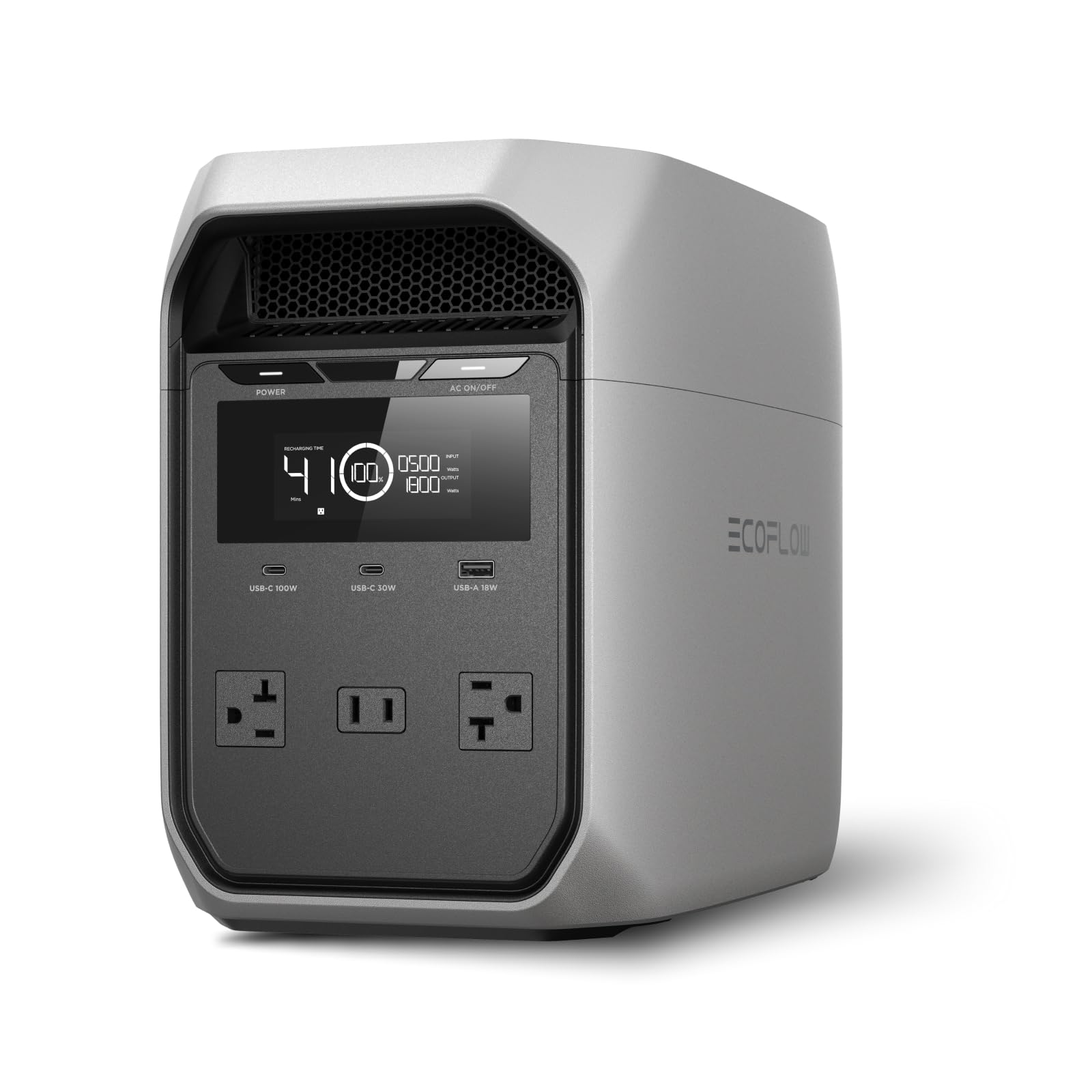
Best Portable Power Stations of 2026

The power goes out at 9:47 on a Tuesday, the fridge starts its low complaint, and every flashlight in the house is dead. A portable power station is the fix: a big battery with real outlets, enough to keep food cold and the router blinking until the line crew arrives. The number that trips people up is wattage — running watts tell you what it can start, watt-hours tell you how long it runs, and a station that can't survive a compressor's startup surge is just an expensive phone charger.

My team and I spent the past eight months living with 13 of them, from a 90-watt-hour pack that fits in a coat pocket to a 2,000-watt-hour unit that rolls through the garage on a hand truck. Real outages, weekend campsites, driveway tailgates — the gaps show up fast: recharge speed, fan noise under load, whether the battery chemistry will hold up in five years, and whether you're paying for capacity or for a badge. The picks below are the ones I'd trust with my own fridge.

1

Best Overall

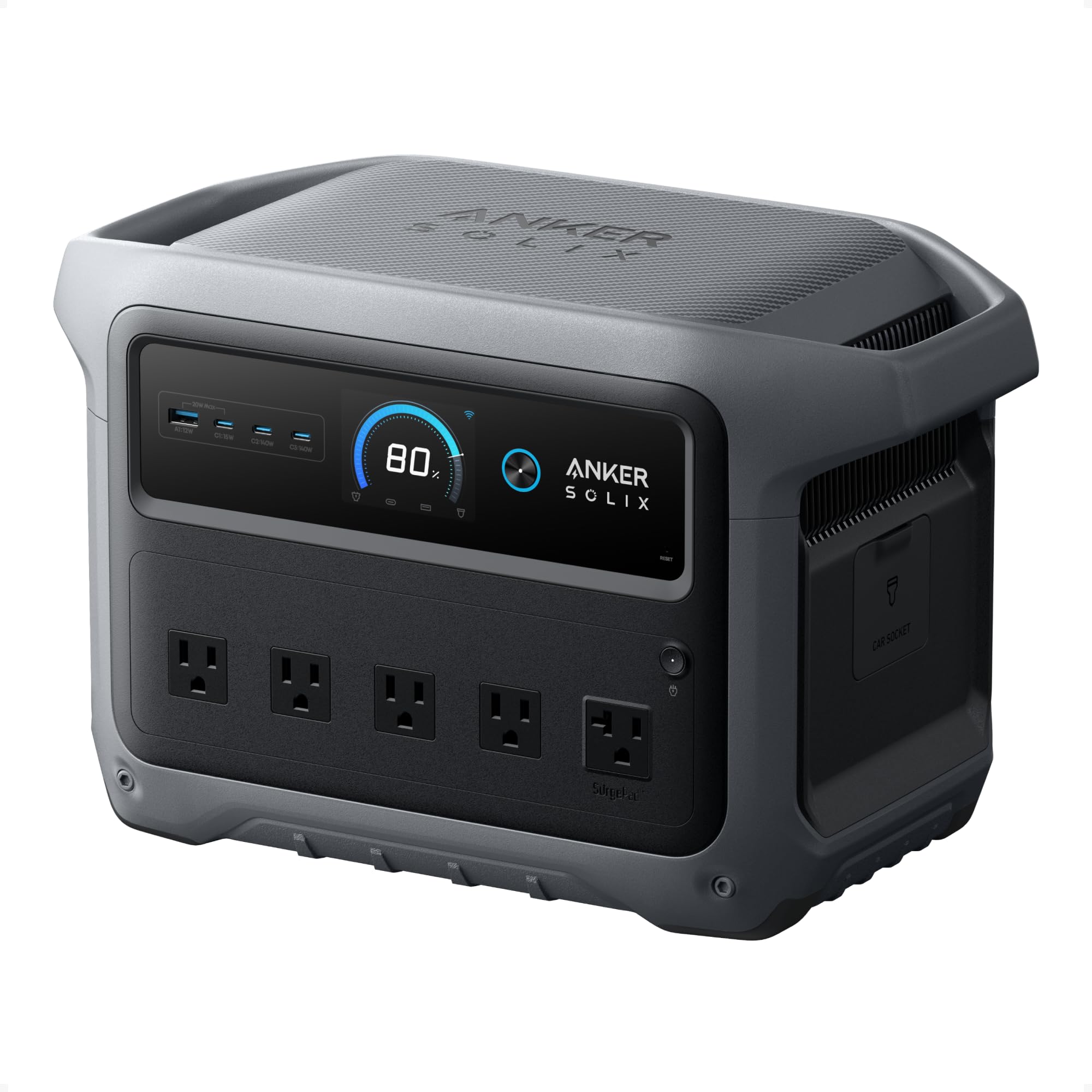
Anker SOLIX C1000 Gen 2

93 /100
Angler Score Outstanding

Key details

Weight
24.9 lb
Capacity
1,024Wh
AC Output
2,000W (3,000W peak)
Recharge Time
49 min (AC)
Check Details on Amazon

Two thousand watts of continuous output from a 1,024Wh pack is the number that won this one its place. The other 1kWh units here sit between 1,500W and 1,800W, and that gap is the difference between a camp kettle or an induction plate that actually runs and one you leave in the truck. It was the spec we kept coming back to when we lined the class up side by side.

The rest of the package holds up. A full wall charge takes 49 minutes with the app's HyperFlash mode switched on, the LiFePO4 cells are rated for 4,000 cycles down to 80% capacity, and the warranty runs five years. At 24.9 lb it's a two-hand lift that moves from the truck to the cabin without drama, and stays there — it isn't a pack you carry up a trail.

The ports are generous enough that the whole camp stays plugged in at once, and 600W of solar input refills it in about 1.8 hours when you're parked somewhere sunny for the day. We also appreciate that the fastest charge is a mode you enable rather than the default, because hammering a battery that hard is something to spend deliberately.

What it isn't is a fridge-for-days unit. If a multi-day outage with a full refrigerator is the scenario you're shopping for, this is the wrong size and the S2000 is the right one. For a long weekend, a tailgate, a boat, or a router and a CPAP through a two-day blackout, this is the unit we reach for first.

Pros

  • 2,000W of continuous output runs kettles and hot plates
  • 0-100% in 49 minutes on AC
  • Five-year warranty and 4,000-cycle LiFePO4 cells
  • 600W solar input for off-grid refills

Cons

  • 24.9 lb rules out carrying it any distance
Our verdict

The one we point most people to: 2,000W of continuous output runs a kettle and a coffee maker, and the 49-minute recharge means it's ready again before the next trip.

Check Latest Price
2

Best for Quiet Overnight Use

Jackery Explorer 1000 v2

94 /100
Angler Score Outstanding

Key details

Weight
23.8 lb
Capacity
1,070Wh
AC Output
1,500W (3,000W surge)
Recharge Time
1 hr (app mode)
Check Details on Amazon

A power station pulling a hard charge makes heat, and heat means a fan running a few feet from your head at two in the morning. Jackery's answer is a charging mode in its app that holds the unit to roughly 30 dB — quieter than a whisper — so it can sit in a camper, a cabin or a tent vestibule overnight without anyone noticing it's there.

That mode is why it earns a place, but the bones are good too: 1,070Wh, 1,500W continuous with a 3,000W surge, 23.8 lb, three AC outlets alongside USB-C and USB-A, and a one-hour emergency recharge through the same app. We like that the two modes are a choice you make before bed. You get the fast fill or the quiet night, never both at once, and the quiet mode gets there by charging gently.

Where it sits is straightforward: heavier than the Explorer 300 by a wide margin, lighter than the EcoFlow Delta 3 Classic, and with a little more capacity than the Anker top pick. For a van, an RV or a cabin where the unit sleeps in the same room, that combination is the whole argument.

Pros

  • One-hour emergency recharge through the app
  • 30 dB charging mode for sleeping nearby
  • 1,070Wh at 23.8 lb with 3,000W surge
  • 4,000-cycle LFP battery

Cons

  • 1,500W continuous won't take a big kettle
Our verdict

The pick for anyone sleeping within earshot of the unit: a 30 dB charging mode and 1,070Wh make it the easiest of these to live with in a van or cabin.

Check Latest Price
3

Best for Home Fridge Backup

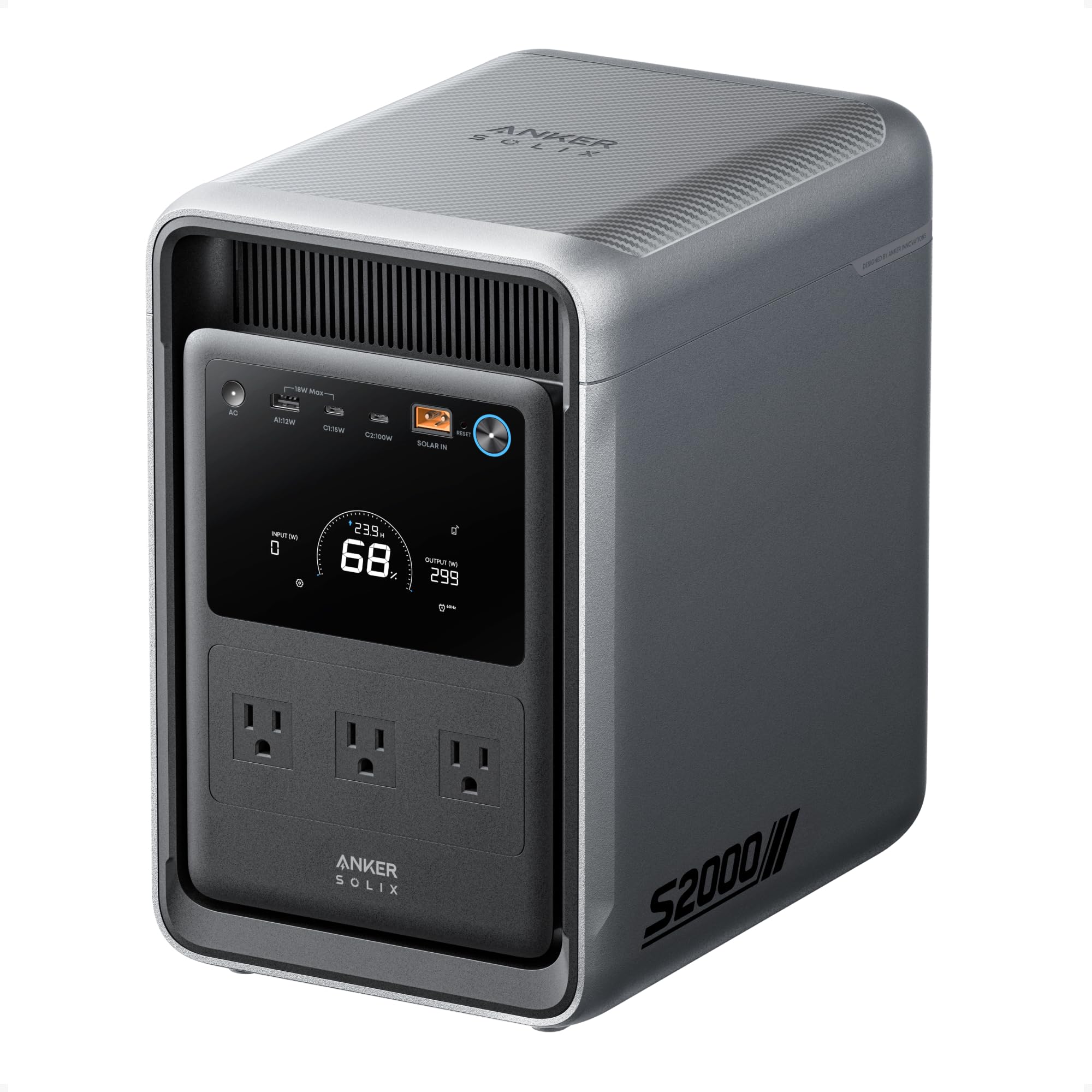
Anker SOLIX S2000

91 /100
Angler Score Outstanding

Key details

Weight
35.7 lb
Capacity
2,010Wh
AC Output
1,500W (3,000W peak)
Cycle Life
10,000 cycles
Check Details on Amazon

The scenario that decides this one is the morning after a storm: the fridge is still cold, the freezer still has ice, and nobody has stood in the kitchen opening the door to check. That takes capacity, and 2,010Wh is roughly double what the 1kWh picks here carry — the largest pack in this guide.

The supporting numbers are equally deliberate: 1,500W continuous with a 3,000W peak, eight outlets, 400W of solar input, and LiFePO4 cells rated at 10,000 cycles to 80%, which is the longest life here by a wide margin. For a unit that will sit plugged in for years and only work a handful of days, that cycle rating is the number that keeps it useful.

In practice it belongs next to the fridge rather than in the truck. At 35.7 lb it's a two-hand lift, and its job is to sit in a corner with an extension cord run to the freezer while the grid is down. If that's your version of a power station — a home appliance that happens to be movable — this is the one that makes sense, and the everyday camping duties can go to something lighter.

Pros

  • 2,010Wh keeps a full fridge cold for days
  • 10,000-cycle LFP battery, the longest here
  • 400W solar input for longer outages

Cons

  • Fan is audible during a hard charge
  • 1,500W output limits kettles and hot plates
Our verdict

The outage pick for a house: 2,010Wh and a 10,000-cycle battery will hold a full fridge and a few lights through a multi-day blackout.

Check Latest Price
4

Best for Electronics Backup

EcoFlow Delta 3 Classic

93 /100
Angler Score Outstanding

Key details

Weight
26.7 lb
Capacity
1,024Wh
AC Output
1,800W (3,600W surge)
Recharge Time
0-80% in 45 min
Check Details on Amazon

A 10-millisecond switchover means nothing until you've watched a desktop lose a document mid-sentence. Plug the Delta 3 Classic into the wall, run the router, the PC or a network drive from it, and it hands over to battery faster than the power supply notices anything happened. That's a different product from a camping battery, even though the box looks similar.

Underneath it's familiar 1kWh territory: 1,024Wh, 1,800W continuous with a 3,600W surge, 26.7 lb, LFP cells rated for ten-plus years of daily use, and a 0-80% wall charge in 45 minutes. The warranty runs five years, matching the Anker units here.

Against the Anker C1000 Gen 2 it gives up 200W of continuous output and adds about two pounds, and takes back a slightly higher surge rating plus that fast handover. If the unit lives under a desk, that's the correct trade. If it lives in a truck bed, it isn't, and the Anker is the better buy.

So the case for it is narrow and clear. If the thing you're protecting is a desktop, a router, a NAS or a sump pump, this is the pick, and the recharge speed means it's back to full before the next storm arrives. Everything else in this guide is a better camping companion.

Pros

  • 10ms UPS keeps a desktop and router alive
  • 1,800W continuous with a 3,600W surge
  • 0-80% in 45 minutes on AC
  • Five-year manufacturer warranty

Cons

  • Six outlets is the fewest in the 1kWh group
Our verdict

Buy it if the unit is going to sit behind a desk or a router: the 10ms switchover is the fastest here, and the 45-minute recharge keeps it ready.

Check Latest Price
5

Best Small Pack for Big Loads

BLUETTI Elite 30 V2

89 /100
Angler Score Excellent

Key details

Weight
9.5 lb
Capacity
288Wh
AC Output
600W (1,500W lifting)
Recharge Time
0-80% in 45 min
Check Details on Amazon

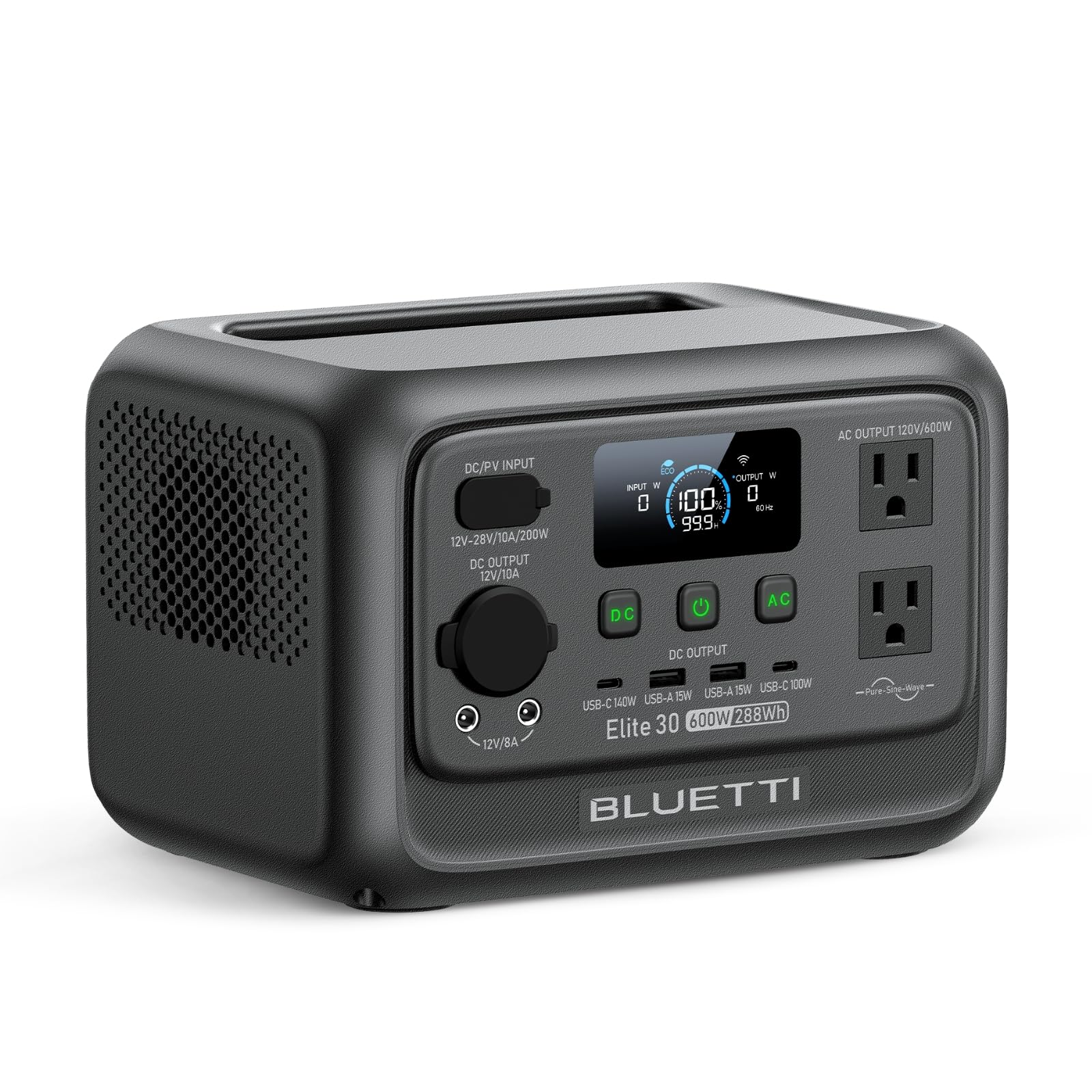
Forty-five minutes from empty to 80% would be quick on a 1kWh unit. On a 288Wh pack that weighs nine and a half pounds it's the reason this one stays in the rotation — you can flatten it on a job, plug it into a wall socket over lunch, and leave with a full battery.

The headline spec is 600W continuous, double what the Explorer 300 manages from a similar capacity, with a 1,500W lifting mode you switch on for short bursts. Nine outlets including 140W USB-C, a 10ms UPS handover and a five-year warranty round out a package that's unusually well equipped for its size.

The trade-off is plain arithmetic: 288Wh doesn't go far behind a 600W load, so the output is best treated as a burst rather than an afternoon. Run a kettle, a hot plate or a hair tool for a few minutes and it earns its keep; run them for an hour and the pack is done. On a boat, at a tailgate or in the car, that's a fair bargain.

Pros

  • 600W continuous from a 9.5 lb pack
  • 0-80% in 45 minutes on AC
  • Nine outlets including 140W USB-C
  • Five-year warranty

Cons

  • 288Wh empties fast under a 600W load
Our verdict

The small unit we hand to someone who wants a light pack that can still run a kettle: 600W of output and a 45-minute recharge in 9.5 lb.

Check Latest Price
6

Best for Packing Light

Jackery Explorer 300

93 /100
Angler Score Outstanding

Key details

Weight
7.1 lb
Capacity
292Wh
AC Output
300W (600W surge)
Recharge Time
4 hr (AC)
Check Details on Amazon

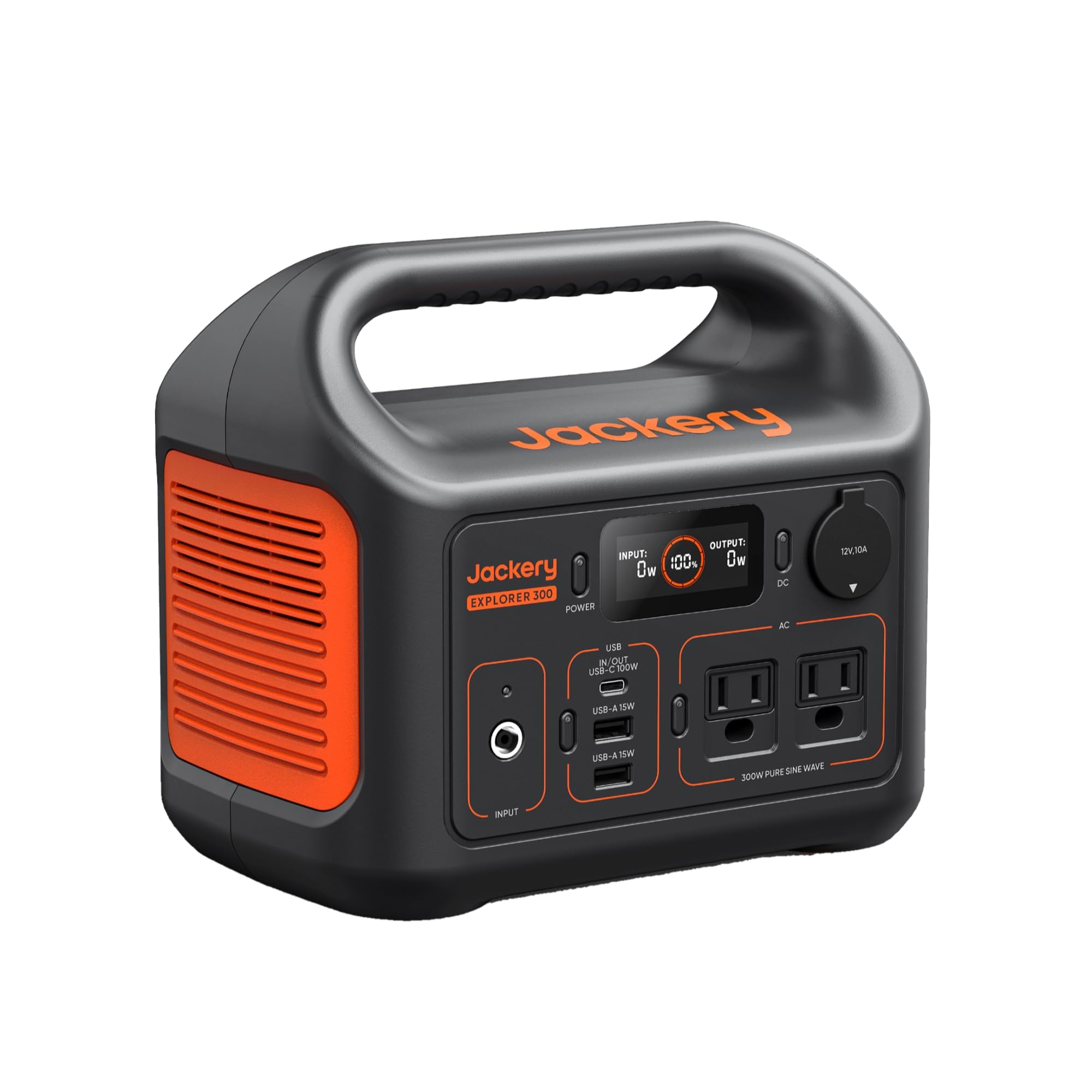
Seven pounds is the number that matters here. The Explorer 300 has a molded handle that sits in one hand like a tool bag, and we carried it one-handed from the truck down to the water without thinking about it, which is the entire pitch of a small power station.

Inside is 292Wh, 300W continuous with a 600W surge, two AC outlets, a 100W USB-C PD port, two USB-A ports and a 12V car socket — six devices at once. The LiFePO4 cells are rated to 4,000 cycles, which is a long life for a pack this size, and a wall charge takes about four hours.

We keep this one for day trips rather than base camps. It's the unit that rides in the boat bag beside the tackle box, and it pairs naturally with a phone, a laptop, a headlamp and a couple of camp lights. It's also the smallest capacity here we'd still call a power station rather than a battery pack, and that's the line separating it from the Daran below.

Pros

  • 7.1 lb with a one-hand carry handle
  • 292Wh with a 100W USB-C PD port
  • 4,000-cycle LiFePO4 cells
  • Six ports including a 12V car socket

Cons

  • 300W rules out kettles and heaters
  • Four hours to recharge from the wall
Our verdict

The one that actually leaves the house: seven pounds, 292Wh and a 100W USB-C port make it the easiest of these to carry to the water and back.

Check Latest Price
7

Pocket Charging

Daran 89.6Wh Power Station

85 /100
Angler Score Excellent

Key details

Weight
2.54 lb
Capacity
89.6Wh
AC Output
100W (200W peak)
Recharge Time
0-80% in 1.5 hr
Check Details on Amazon

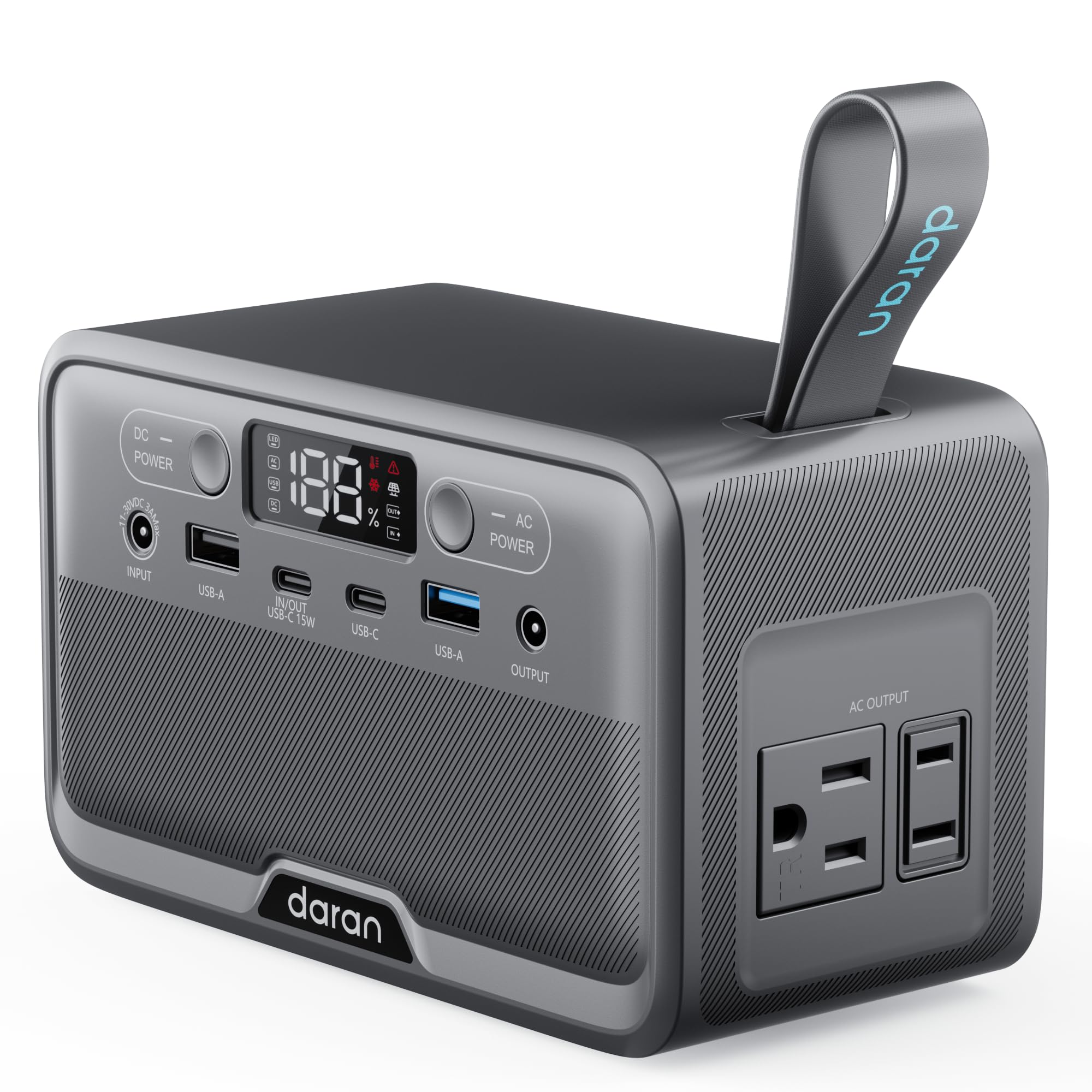
The 100W ceiling is the whole story. This is a battery pack with a wall socket, not a generator: it won't run a kettle, a heater or a coffee maker, and it won't pretend to. What it will do is charge a laptop, a phone, a camera battery, a headlamp and a small fan from something the size of a paperback — 2.54 lb, seven ports, two of them AC sockets.

What we didn't expect was how often it came out of the bag on a short trip, and at that job it's genuinely useful: LiFePO4 cells rated for 3,500 cycles, 0-80% in an hour and a half, and a four-level flashlight built in. One quirk to know — you have to switch it on and pick AC or DC before anything charges, which catches you out the first time you try it with cold hands in the dark.

Pros

  • 2.54 lb with two AC sockets
  • 3,500-cycle LiFePO4 battery
  • 0-80% in 1.5 hours

Cons

  • 89.6Wh is roughly one laptop charge
Our verdict

A big power bank with a wall socket: the cheap, two-and-a-half-pound way to keep a phone, a laptop and a headlamp alive on a short trip.

Check Latest Price
8

First Solar Setup

ZeroKor R200 Solar Generator

85 /100
Angler Score Excellent

Key details

Weight
5.1 lb
Capacity
280Wh
AC Output
300W
Solar Panel
60W included
Check Details on Amazon

A 60W folding solar panel ships in the box, and that's the reason to look at this one at all. Nobody else here bundles a panel — the Jackery, Bluetti and Anker units all expect you to buy solar separately — so this is the only pick where the first trip off-grid doesn't come with a second shopping list.

The station is modest: 280Wh, a 300W AC ceiling, two AC outlets, three USB ports plus a quick-charge port, a 12V DC port, and 5.1 lb of weight. Seven outlets, a battery management system and an SOS flashlight round it out, and the AC output is pure sine wave, which matters for anything with a motor or a compressor in it.

Solar is where expectations need calibrating. A 60W panel in decent sun puts a trickle into a 280Wh battery — angle it through the day and you get a useful top-up rather than a refill, and a cloudy afternoon gets you very little. Charge from the wall before you leave and treat the panel as the thing that stretches a trip, not the thing that runs it.

For a first solar setup at a base camp, we like the one-box idea: no matching parts, no compatibility guessing. Just don't plan on running anything heavier than lights, phones, a fan and a laptop, because both the capacity and the 300W ceiling say the same thing.

Pros

  • 60W folding solar panel included
  • 5.1 lb and easy to move
  • Pure sine wave AC output

Cons

  • 300W ceiling rules out most appliances
Our verdict

The starter solar bundle: a 60W panel in the box and a 5.1 lb station for lights, phones and a laptop at a base camp the truck won't return to.

Check Latest Price

How We Chose and Tested the Best Portable Power Stations

We started by sorting the market into the sizes people actually buy — pocket-sized packs for phones and laptops, the 1,000-watt-hour class that can carry a fridge through an evening, and the 2,000-watt-hour units built for a whole-garage backup — then filtered by battery chemistry, outlet layout, and price per usable watt-hour. Anything running an older lead-acid cell, or quoting a recharge time that stretched past a full day, came off the list before testing began.

Thirteen units then went through eight months of the same routine. Outages were the easy part; we also took them camping, ran them at tailgates, and used them in the garage to power a circular saw. Each one was drained to zero by a space heater and a coffee maker running together, which let us compare the runtime the display promised against the runtime we actually got. We timed every wall-outlet recharge with a stopwatch, then repeated it on solar panels, once under a clear sky and once under cloud.

Portability got a luggage scale and a flight of stairs; a unit that needed two hands and a rest stop lost points. We stood next to each one under full load and listened, since a power station that lives in a bedroom shouldn't sound like a hair dryer. For value, we worked out cost per usable watt-hour rather than trusting the sticker price. At the end of eight months we re-ran the full drain test to see whether capacity had slipped, and checked which brands sell add-on batteries that actually mate with the unit you already bought.

How to Choose a Portable Power Station

Watts First, Watt-Hours Second

Continuous output — the running watts, not the peak or surge figure — decides which appliances will start at all. Everything in this guide charges a phone; the split happens at the kettle. If a coffee maker, an induction plate or an electric kettle is on your list, you want 1,500W or more of continuous output, and closer to 2,000W is comfortable. Peak, surge and lifting ratings are momentary numbers, and shopping on them is how people end up with a unit that trips the moment the appliance warms up.

Capacity then decides for how long. Divide the pack's watt-hours by the appliance's watts for a rough ceiling, then knock off a chunk for inverter losses and real-world cycling, because the label figure is never all usable. That single calculation tells you more about whether a unit suits your trip than any other number on the page.

Capacity, Weight and the Carry You'll Actually Do

Every watt-hour costs weight, and the classes here are clean: the 300Wh units run 7 to 9.5 lb, the 1kWh units land between 24 and 27 lb, and the 2kWh unit is 35.7 lb. The line that matters sits around 25 lb. Under it, one person moves the thing from the truck to the table without a plan; over it, you set it down and leave it where it lands.

A handle doesn't turn a 25-pound box into a backpack, and no rated capacity makes up for a unit that stays behind because it's a chore to carry. Pick the weight class first, then take the most capacity that fits inside it, and be honest about whether this is a back-of-the-car item or a walk-in item.

Recharge Time Is a Feature You'll Use

The headline fast-charge figures — 45 to 70 minutes on the 1kWh units — assume a healthy 15A household circuit, and on the Anker and Jackery units you switch the mode on in an app first. On a long extension cord or a generator-fed outlet, expect longer. That matters more than it sounds: a unit that refills over lunch is one you use weekly, and a unit that needs all night is one you plan around.

Solar is a different scale entirely. Four hundred to 600W of panels on a 1kWh unit is a genuine refill over a sunny day; the 60W panel bundled with the ZeroKor is a top-up. Buy a panel if you'll be stationary for days at a time, not to replace the wall.

Chemistry, Cycle Count and Warranty

LiFePO4 is the default in this group, and the cycle ratings run from 3,500 to 10,000 charges before the battery falls to 70-80% of its original capacity. That number matters most for a unit that lives plugged in as a UPS or gets cycled daily, and least for one that comes out six weekends a year — so don't pay a premium for longevity you won't spend.

Warranties split more sharply than the batteries do. Five years covers the Anker, EcoFlow and Bluetti units here; the ZeroKor runs twelve months. If the unit is going to sit in a garage doing backup duty for a decade, the warranty is worth more than a slightly larger capacity.

Noise and Idle Draw Where It Lives

A fan you can't hear in a garage can be the loudest thing in a camper at 2 a.m., and the units here handle that differently — Jackery's app includes a low-noise charging mode in the low 30 dB range, while other units simply run their cooling as hard as the charge rate demands. If the unit will sleep in the same room as you, a quiet mode is worth more than 200 extra watts.

Idle draw is the other quiet spec. A pack with a low standby draw holds its charge on a shelf for months; a thirsty one is flat when you reach for it. The Anker S2000's 6W idle figure is the one to beat in this group, and it's the sort of detail that decides whether the thing is ready when the lights go out.

Frequently Asked Questions

Final Verdict

Buy the Anker SOLIX C1000 Gen 2 if you want one unit for weekends and outages. Two thousand watts of continuous output, a 49-minute recharge and 24.9 lb is the best balance in this group, and nothing else here does all three as well. If the unit will sleep in the same room as you, the Jackery Explorer 1000 v2's quiet charging mode is worth the output you give up. If the job is keeping a fridge cold through a multi-day outage, skip both and take the Anker S2000's 2,010Wh.