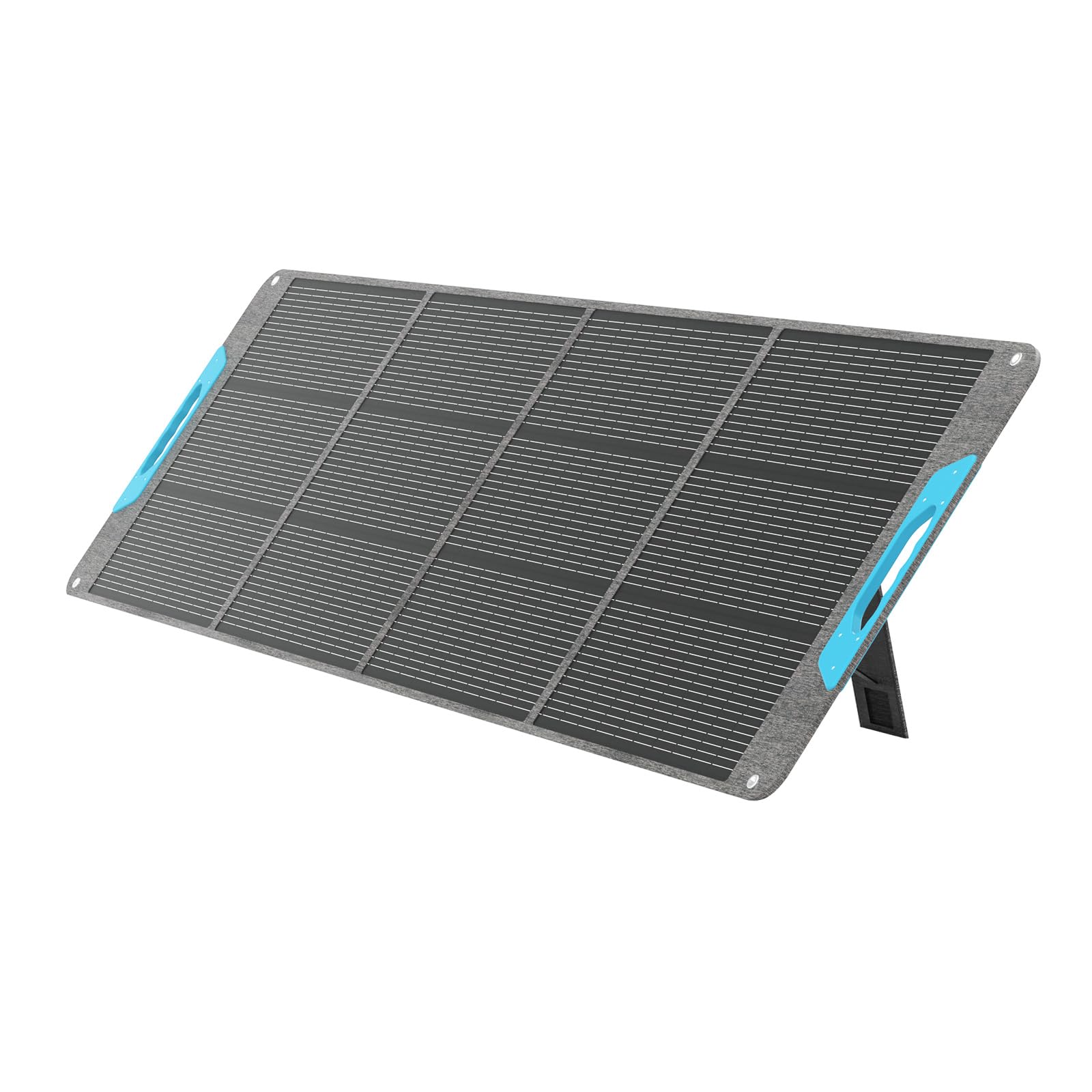
Best Portable Solar Panels of 2026

A portable solar panel is a folding sheet of silicon cells that turns daylight into DC power, so what matters is how much of it you can carry and how much of that rated wattage survives a real campsite. The number on the box is measured in a lab under a perfectly angled sun, not at 2 p.m. on a hazy afternoon. I've watched a 200-watt panel push barely 130 watts into a power station lying flat on hot sand. The right one keeps a cooler, a phone, and a week of camera batteries alive without hunting for an outlet.

Portability matters as much as output: a panel that needs two hands and won't slide behind the seat stays home. We've spent eight months running nine of them through backyard afternoons, car-camping weekends, and one long off-grid stretch, and real charging speeds diverged far more than the spec sheets implied. Value in this category isn't dollars per rated watt — it's dollars per watt you'll actually see on a cloudy morning, and that lens shaped the list below.

1

Best Overall

Renogy 200W Portable Panel

89 /100
Angler Score Excellent

Key details

Weight
13.9 lb
Folded Size
23.72 x 22.99 x 1.97 inches
Rated Power
200 watts
Direct Charging
USB-C PD 45W and 2x USB-A
Check Details on Amazon

Four legs, each marked at 40, 50 and 60 degrees, are the reason this one ended up at the top of our list. Angling a panel by eye is guesswork that costs you output all afternoon; with printed stops you set the same angle twice and stop thinking about it. We used the reinforced grommets to lash it down on a breezy afternoon too, and a folded panel that stays where you put it is worth more than a few extra watts on the label.

The rest of the panel backs the legs up. Renogy uses 16-busbar N-type cells at 25% efficiency, and the whole thing folds to roughly the size of a fat briefcase at 13.9 pounds. The magnetic closure in the handles does the small thing well — it snaps shut and stays shut in a truck bed — and we noticed the difference most on the second and third setup of a day, when the novelty of a new panel has worn off and you just want it standing.

Charging is where it pulls away from the cheaper 200s. There's a USB-C PD 45W port and two USB-A ports built into the panel, so phones, a headlamp and a camera battery top up without tying up the station. It's also the only panel here that names a UL standard, 61730, rather than just an IP rating, and the two-year warranty is longer than most of this group offers.

Thirteen point nine pounds is light enough for one hand and heavy enough that you'll be glad the handle is padded. It isn't the cheapest route to 200 watts — the HQST costs less and does the same core job without the USB ports — but it is the one we take when we don't know what the day will ask for.

Pros

  • 25% N-type cells with 16 busbars
  • Four legs with printed 40/50/60 degree stops
  • USB-C PD 45W plus two USB-A ports
  • UL 61730 testing claim and two-year warranty

Cons

  • No charging cable in the listed box
  • Legs feel light on soft or uneven ground
Our verdict

The panel we point most people to: 200 watts of N-type cells, four legs with marked angles, and USB-C PD for the gear your station can't charge.

Check Latest Price
2

Best Value

HQST 200W Portable Panel

87 /100
Angler Score Excellent

Key details

Weight
11 lb
Kickstands
2, adjustable 40° to 60°
Rated Power
200 watts
Cell Efficiency
Up to 25%
Check Details on Amazon

Eleven pounds is the whole argument. The other 200-watt panels in this group run from about fourteen pounds to eighteen, and the difference shows up at the end of a portage rather than in the driveway. HQST gets there with 16-busbar N-type cells rated up to 25% efficiency, IP67 sealing, and a laminated build that folds to under two inches thick with buckles holding it shut.

The kit is deliberately plain: a 4.9-foot three-in-one cable with XT60, DC7909 and DC5521 ends, and two kickstands that adjust between 40 and 60 degrees. Setup is unfold, prop, plug in — under a minute once you know the drill, and there's nothing on the panel to configure.

Two legs rather than four is the compromise you feel. On a flat tailgate or a picnic table it stands fine; on a lumpy bank one corner wants a rock or a pack shoved under it. In exchange you get a lighter panel that folds faster, which for something that lives behind a truck seat most of the year is the right trade to make.

Where it gives ground to the Renogy is the small stuff — angle markings, port selection, a longer cable. Where it wins is weight and money, and for a panel whose job is keeping a station topped up rather than running a camp, those are the two that matter most.

Pros

  • Eleven pounds, lightest 200W panel here
  • Up to 25% N-type efficiency
  • IP67 rated with a three-in-one adapter cable

Cons

  • No USB ports for charging devices directly
Our verdict

Buy this if you want the most 200-watt panel for the money and never plan to charge a phone off the panel itself. It's the lightest of the 200s here.

Check Latest Price
3

Best for Small Power Stations

ZOUPW 100W Portable Panel

90 /100
Angler Score Outstanding

Key details

Weight
9.5 lb
Rated Power
100 watts
Connector Kit
5-in-1: XT60, Anderson, DC5521, DC7909, DC8020
Direct Charging
USB-C PD 45W and 2x USB-A
Check Details on Amazon

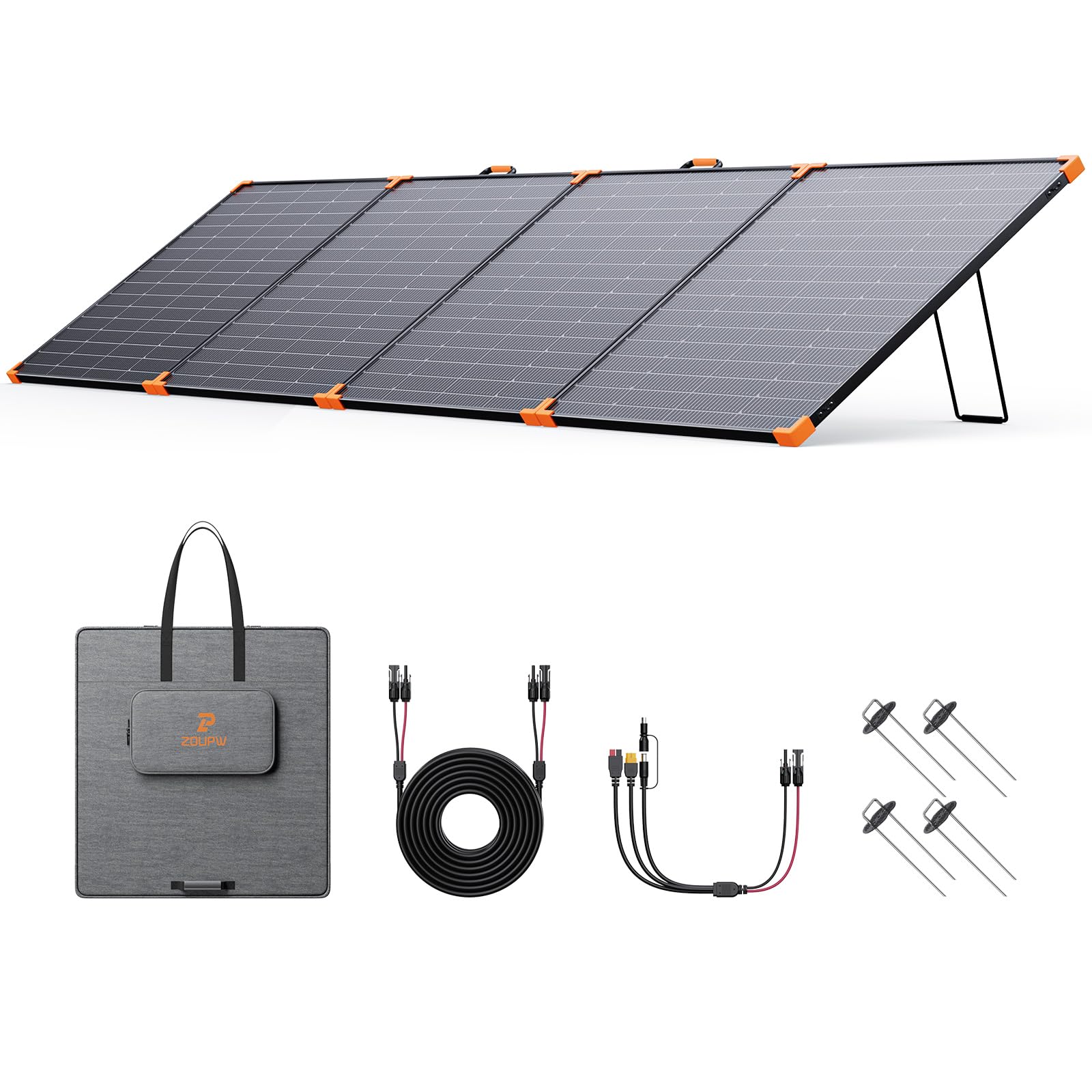
The built-in controller is what makes this panel more than a solar brick. Three ports — USB-C at PD 45W plus two USB-A, one of them Quick Charge — mean a phone, a headlamp or a fish finder battery can charge straight off the panel with no power station in the middle at all. On a two-night trip that turns the panel from a station accessory into the power source itself.

The hardware is a 100-watt, 23.5% monocrystalline panel in ETFE laminate, rated IP67, folding to 24.13 by 21.06 by 1.77 inches and carrying 9.5 pounds by a magnetic handle. The cable is a genuine five-in-one, including the DC8020 plug newer Jackery units want — the connector most four-in-one kits leave out, and the one people end up ordering separately.

In use it behaves the way a good 100-watt panel should. It does its best work in the hours either side of midday, and it kept a small station climbing through a broken-cloud afternoon. We saw nothing like the rated figure on a hot, hazy day, which is true of every panel in this roundup: judge a 100 by what it adds over four good hours, not by the number on the box.

The case against it over a 200-watt panel is simply wattage. Half the folded bulk and one hand to carry are real advantages for a weekend station, but if you're feeding a one-kilowatt-hour bank the 100 watts will feel slow and you'll be buying twice.

Pros

  • USB-C PD 45W and two USB-A ports built in
  • Five-in-one cable includes the DC8020 plug
  • IP67 sealed at 9.5 pounds

Cons

  • Heavier than the other 100W pick here
  • Warranty runs only 12 months
Our verdict

Our pick for a 300 to 500 watt-hour station: sealed to IP67, light enough for one hand, and it charges a phone without a power station in sight.

Check Latest Price
4

Best Ultralight

FlexSolar 100W Folding Panel

86 /100
Angler Score Excellent

Key details

Weight
4.1 lb
Rated Power
100 watts
Folded Profile
0.59 inches
Direct Charging
USB-C PD 45W and USB-A 18W
Check Details on Amazon

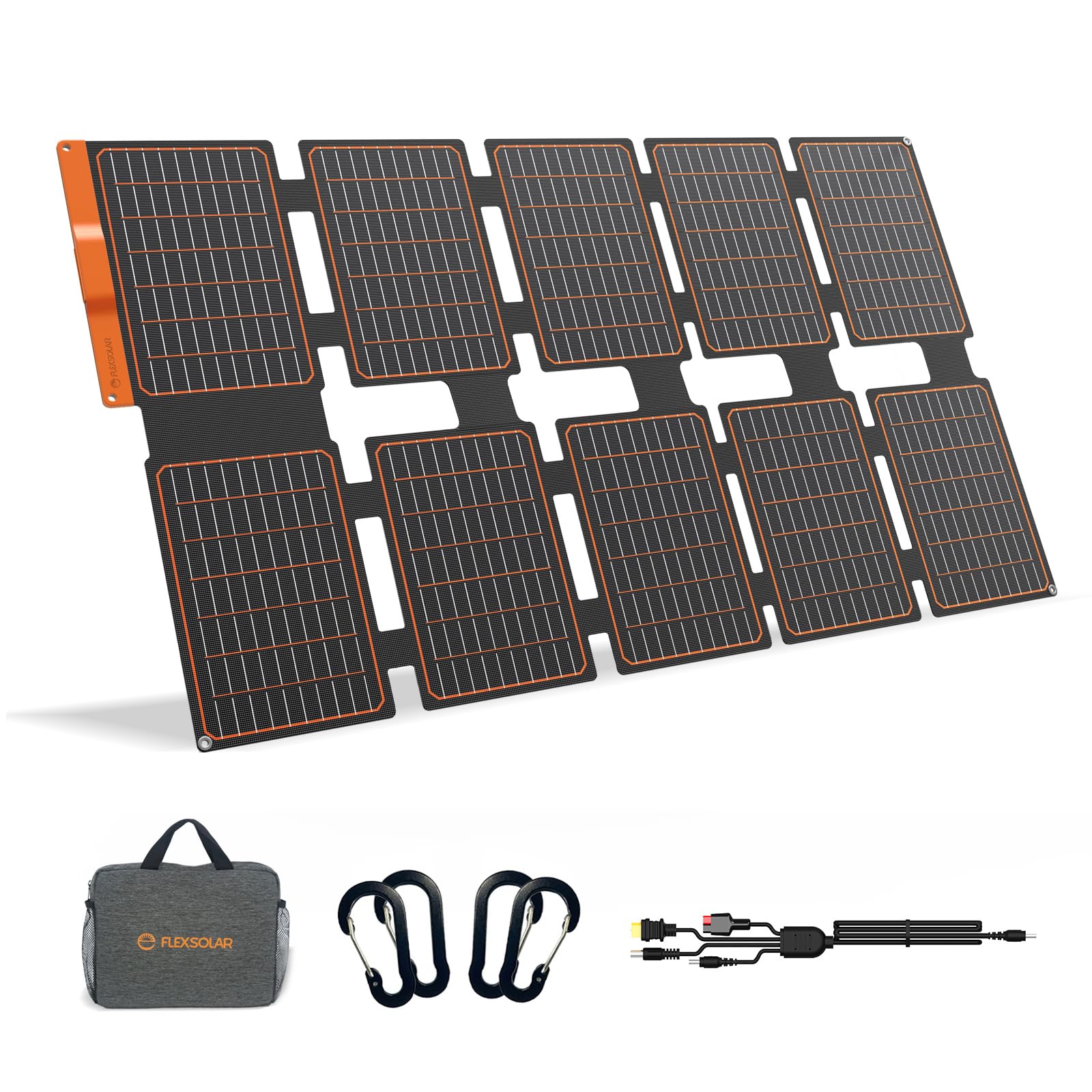
Four point one pounds and a 0.59-inch fold are the numbers that matter. That's light enough to ride in a daypack next to a rain shell and thin enough to slide behind a seat or into a dry bag, and it's the only panel here you can forget you're carrying. The cells are monocrystalline under E-Film laminate, the panel is rated IP67, and the rating is 100 watts.

We think that trade is worth it for anyone whose trips involve walking. The panel gives up rigidity and area, so it wants aiming — clipped to a pack or hung vertically off a branch is how it earns its keep — and it does pull useful current in flat overcast. What it won't do is shrug off being thrown in a truck bed the way the hard-framed panels here do.

The ports punch above the price: USB-C PD 45W, an 18-watt USB-A and a 100-watt DC output with a three-in-one adapter cable. Charge a phone and a power bank together and it still does the job, just more slowly, and the DC side will run a small station through a sunny day without complaint.

Set against the ZOUPW 100W it's lighter and cheaper with a smaller connector kit; set against any 200-watt panel it's a quarter of the output. For a pack, that's the right set of compromises, and it's the panel we hand people heading out on foot rather than by vehicle.

Pros

  • Four pounds and 0.59 inches folded
  • USB-C PD 45W for direct device charging
  • IP67 rated at a budget price

Cons

  • DC input socket is the weak point
Our verdict

Four pounds and a half-inch fold make this the panel that actually goes in the pack, and the USB-C port means it earns its place there.

Check Latest Price
5

Best High Output

ZOUPW 450W Portable Panel

89 /100
Angler Score Excellent

Key details

Weight
29.5 lb
Rated Power
450 watts
Weather Rating
IP68
Open-circuit Voltage
45.9 V
Check Details on Amazon

Forty-five point nine volts of open-circuit voltage is the first thing to check. This panel is built for large stations with a 40-to-60-volt solar input, and it's aimed squarely at the Delta and Anker C1000-and-up class. Feed it into a station that caps solar input down at 30 volts and you've bought an expensive panel that can't be used.

Past that gate it's the most capable panel here: 450 watts of N-type cells in a 16-busbar layout at 25% efficiency, IP68 sealing on the laminate, and a fold that lands at 30.43 by 34.56 by 3.54 inches in a padded case with a cord pocket. Ground stakes are in the box for windy sites, which is more than most of this group gives you.

Output is where it earns its keep. It holds over 400 watts through the middle of the day and can nudge past its own rating in cold, clear, square-on sun. The four-in-one adapter cable covers XT60, Anderson, DC7909 and DC8020, so it plugs into most large stations without a second order, and setup is unfold the wire legs, choose an angle, stake it down.

Given the right input window, this is the panel that turns a big battery bank into a working off-grid setup in a day rather than a week. Give it a clear, unshaded view of the sky, move it when the sun swings, and it pays for itself over a couple of seasons of trips.

Pros

  • 450 watts from N-type cells at 25%
  • IP68 sealing on the laminate
  • Stakes and a padded case included

Cons

  • No USB ports on the panel
  • Folded pack takes real space in a small car
Our verdict

For a station that takes 40 to 60 volts, this is the most output per trip in the group, and it folds into a padded case with a cord pocket.

Check Latest Price
6

Best for RVs and Vans

Renogy 400W Solar Suitcase

84 /100
Angler Score Excellent

Key details

Weight
30.2 lb
Warranty
3 years
Rated Power
400 watts
Open-circuit Voltage
67.5 V
Check Details on Amazon

Renogy wires this panel's cells in parallel rather than in series, and that's a deliberate choice aimed at partial shade. Cover one corner with a branch and the design is meant to lose less of the total than a series string would. On a wooded shoreline where the sun comes and goes through trees, that's the difference between a slow afternoon and a wasted one.

The numbers: 400 watts at 23% efficiency, 67.5 volts open-circuit, 30.2 pounds, folded to 27.9 by 33.7 by 3.2 inches in a padded carry case. The build is the most heavily armored here — fiberglass reinforcement, ETFE coating, corner protection and an aluminum backsheet, with IP68 connectors and a three-year warranty that only the GEYOTO matches.

Setup is quick because the stands are integrated: fold out, kick the legs down, aim. At 67.5 volts it needs a station with a higher input ceiling, so check yours before ordering — Renogy names the models it works with, and that list is the one to shop from rather than assuming a big panel is a drop-in.

Choosing between this and the 450W ZOUPW comes down to two things: your station's voltage ceiling, and whether the panel rides on a roof rack or in a trunk. The ZOUPW gives you 50 more watts and IP68; the Renogy gives you fiberglass armor, a longer warranty and parallel wiring where the panel lives outdoors.

Pros

  • Parallel wiring aimed at partial shade
  • Fiberglass, ETFE and corner protection
  • Three-year warranty with a padded case

Cons

  • Corners have separated on some units
  • Highest cost per watt in this group
Our verdict

A 400-watt suitcase for vans and basecamps on high-voltage inputs, with a three-year warranty and a case that takes a knock.

Check Latest Price
7

Fridge Duty

EBL 200W Portable Panel

88 /100
Angler Score Excellent

Key details

Weight
18 lb
Folded Size
25.31 x 20.87 x 2.17 inches
Rated Power
200 watts
Water Resistance
IP65
Check Details on Amazon

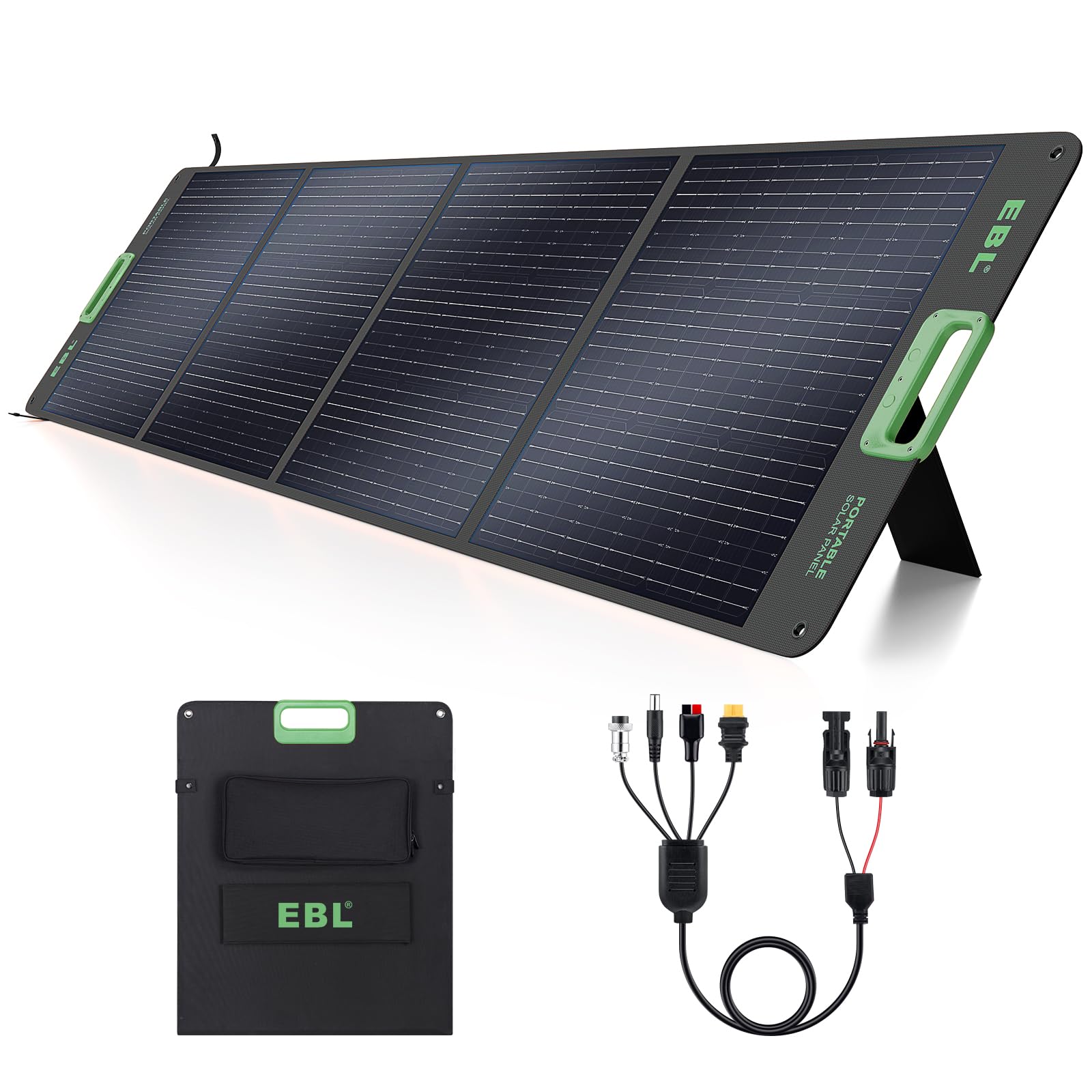
The gap to our top pick is the first thing to notice, and what it buys is a simpler panel rather than a worse one. The EBL uses 23.5% monocrystalline cells under PET lamination with an 840D Oxford shell — a step below the ETFE-faced panels here — and it makes up some of that ground with a genuinely tough outer layer that shrugs off being slid across a truck bed.

What it has is the shape of a panel that gets used: four kickstands, a fold to 25.31 by 20.87 by 2.17 inches, and a four-in-one cable with XT60, Anderson, DC7909 and an aviation plug. At 18 pounds it's the heaviest 200-watt panel in this roundup, and that weight is what you feel carrying it from the truck down to the water.

Charging speed is where it holds up. It pushes hard enough to keep a 12V cooler running through a sunny day and cuts charging time noticeably against a 100-watt panel doing the same job. Like everything here it falls well short of its rating in heat and haze, so plan on a good chunk less than 200 watts except in clean, cold sun.

If you don't need USB-C or the longest possible weather rating and you want 200 watts for less, this is the sensible buy. If the panel is going to sit outside from April to October, spend up for the ETFE panels instead.

Pros

  • 200 watts at a low cost per watt
  • Four kickstands and a four-in-one cable
  • Charges a 12V cooler through a sunny day

Cons

  • 18 pounds is heavy for the class
  • IP65 sealing rather than IP67
Our verdict

A dependable 200-watt workhorse for a 12V fridge and a mid-size station, priced under our top pick and built to take a knock.

Check Latest Price
8

Fixed Camps

GEYOTO 200W Bifacial Panel

90 /100
Angler Score Outstanding

Key details

Weight
15 lb
Kickstand
Y-shaped carbon steel
Rated Power
200 watts
Cell Efficiency
26%
Check Details on Amazon

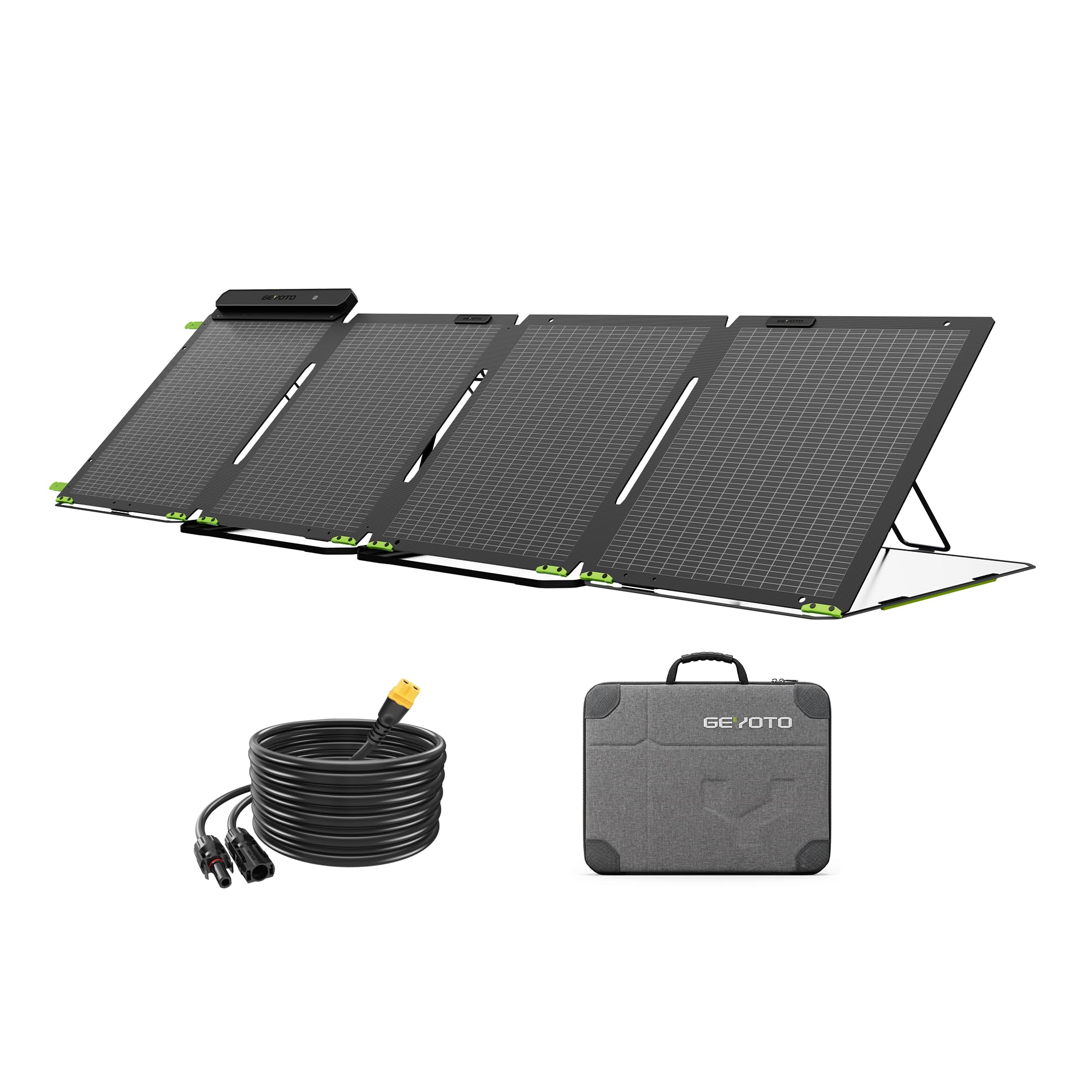
The reflective lining in the carry case is the detail that makes the bifacial design more than a spec-sheet word. Set the panel with its back to a bright surface — the open case, a pale tarp, sand — and the rear face can add to what the front is collecting. On grass in deep shade it won't, so treat the gain as a bonus rather than a figure to plan around.

The rest is solid: 200 watts from N-type cells with a 26% cell conversion rate, 15 pounds, a Y-shaped carbon-steel kickstand that makes a triangular footprint instead of a single prop, a concealed connector for tidier storage, and a 10-foot XT60-to-MC4 cable in the box. The warranty runs three years, which only the Renogy 400W matches.

Two cautions before you buy. The panel surface is IP68 but the junction box is not waterproof, so keep it off wet ground and out of standing water. And at 25.2 volts maximum it suits stations with a modest input ceiling — check yours before assuming a big panel is a drop-in.

We haven't put enough of these through a full season to say how the four-layer laminate and the steel legs hold up, and that's the only reason it sits here rather than higher. The design is the most interesting in the group; the history behind it is the shortest.

Pros

  • Bifacial cells with a reflective case
  • 26% cell conversion efficiency
  • Three-year warranty and a 10-foot cable

Cons

  • Junction box is not waterproof
  • Most expensive 200-watt panel here
Our verdict

One to watch for a fixed camp: a bifacial panel that can collect light from behind, though it has the thinnest field record here.

Check Latest Price

How We Tested Portable Solar Panels

We started with every folding panel we could find between 100 and 400 watts, then cut anything that couldn't feed a power station directly, anything too heavy or bulky to haul from the car, and anything whose connector fit only one brand. Nine panels survived that cut, and we've lived with them for eight months.

Most testing happened where these panels actually live: a sunny driveway in the morning, a partly shaded campsite, the hood of a truck, and one long stretch of open desert. We ran each panel into the same two power stations through an inline watt meter and logged output at 9 a.m., noon, and 4 p.m., watching how far below the rated number it fell and how much it lost when a single corner went into shade. We timed setup one-handed, carried each one folded across a gravel lot, propped kickstands on uneven ground, and matched every connector — MC4, XT60, Anderson, USB-C — against the ports on three different stations.

Durability got the least gentle treatment: weather-rated panels stayed out through two rainstorms and a windy night, then we checked for moisture behind the cells, loose seams, and hinges that had gone floppy. Functionality came down to whether a panel could run a cooler and top up two phones at once without one port throttling the other. For charging speed, we timed each panel from 20 to 80 percent on the same 500-watt-hour station, and the highest-rated panel was not the fastest. What separated the good ones in the end was price against that measured output, plus build quality that didn't rattle after a season in the trunk.

How to Choose a Portable Solar Panel

Start with your power station's input, not the panel's wattage

Every station has a solar input window: a maximum voltage, a current cap and often a wattage ceiling of its own. A 450-watt panel feeding a station capped at 200 watts is money strapped to a roof rack. Find three figures on your station — max solar volts, max amps, max watts — and buy a panel whose open-circuit voltage sits comfortably under the volt limit.

The picks here sit at very different voltages for that reason. The ZOUPW 450W is built around a 40-to-60-volt window; the Renogy 400W runs at 67.5 volts and needs a station with more headroom. Neither is better in the abstract — only against your own input.

Rated watts are a ceiling, not a promise

A 200-watt panel makes 200 watts in a lab: cold cells, clear sky, panel square-on to the sun. In real use plan on something closer to two-thirds of the label. Heat costs output, a panel lying flat at midday costs more, and a shadow across one corner can cost more than the shadow's size suggests.

That's why we size up rather than down. For a station above 500 watt-hours, one 200-watt panel beats two 100-watters in weight, cable clutter and setup time, and it gives you a realistic margin on a hazy afternoon.

Weight and folded size decide whether it comes along

The spread here runs from four pounds to thirty, and the difference is measured in trips from the truck. A 4-pound panel like the FlexSolar disappears into a daypack; a 30-pound suitcase like the Renogy 400W gets carried twenty yards, not two miles. Folded thickness matters as much as folded area when you're sliding it behind a seat or into a hatch.

Be honest about your worst realistic carry before a big wattage number talks you into something you'll leave at home. A 100-watt panel that comes along beats a 400-watt panel in the garage.

Legs, angles and wind

A panel propped at the wrong angle loses more than a better panel gains, which is why we favour marked angle stops over eyeballing it — the Renogy 200W prints 40, 50 and 60 degrees on its legs. Two legs versus four is the other split: four are steadier on uneven ground, two fold faster.

Whichever you buy, plan on anchoring it. Grommets, stakes or a spare battery on the frame edge all work; a panel that gusts over is a cracked panel, and the wind gets up faster on a shoreline than anywhere else.

Ports, plugs and cable reach

Two questions settle this. Does the panel have USB outputs, and does its cable reach where the station sits? USB-C PD of 45 to 60 watts lets you charge a phone, a headlamp or a camera battery without draining the station, and it's the first feature dropped from the biggest panels here.

On the DC side, count the adapters. Five-in-one kits cover the DC8020 plug newer Jackery units want; four-in-one kits usually don't. Short leads at the panel are common, so check the reach before you leave rather than after.

Frequently Asked Questions

Final Verdict

The Renogy 200W EFLEX is the panel we recommend to most people. Two hundred watts with printed leg angles, USB-C PD, a UL testing claim and a two-year warranty covers a mid-size station without weighing like a suitcase, and it's the one that survives being set up three times a day.

If money is the constraint, the HQST does the same core job at eleven pounds and less cost, minus the USB ports. If you're feeding a large station, check the input window first: the ZOUPW 450W for a 40-to-60-volt window, the Renogy 400W where the voltage ceiling is higher and the panel lives outdoors.