Best Trolling Motor Stabilizers of 2026

Sunrise on a glassy flat is the whole reason you own a boat — right up until you push the throttle down and the trolling motor head starts slapping the deck behind you. A stabilizer is the unglamorous fix: it ties the shaft to the hull so the assembly stops whipping when you're on plane, trailering, or crossing someone else's wake. It also spares the mount, the cables, and the spot-lock gears that don't enjoy getting hammered.

I ran a season without one and spent the winter replacing a mount bracket. Since then my team and I have put a dozen stabilizers through eight months on our own boats, and the differences come down to a handful of small details — chief among them post length, the spec almost everyone gets wrong. Short and it won't reach the shaft at the trim angle you actually run; too long and it fouls the deck when you stow. Some bolt down permanently, most clamp on in seconds, and the picks below are the ones that never had us reaching for a wrench mid-trip.

1

Best Overall

RAM Strap Hose Clamp Stabilizer

92 /100
Angler Score Outstanding

Key details

Material
Powder-coated marine aluminum
Rail Fit
1- to 2.1-inch diameter
Warranty
Lifetime
Mount Type
Strap hose clamp
Check Details on Amazon

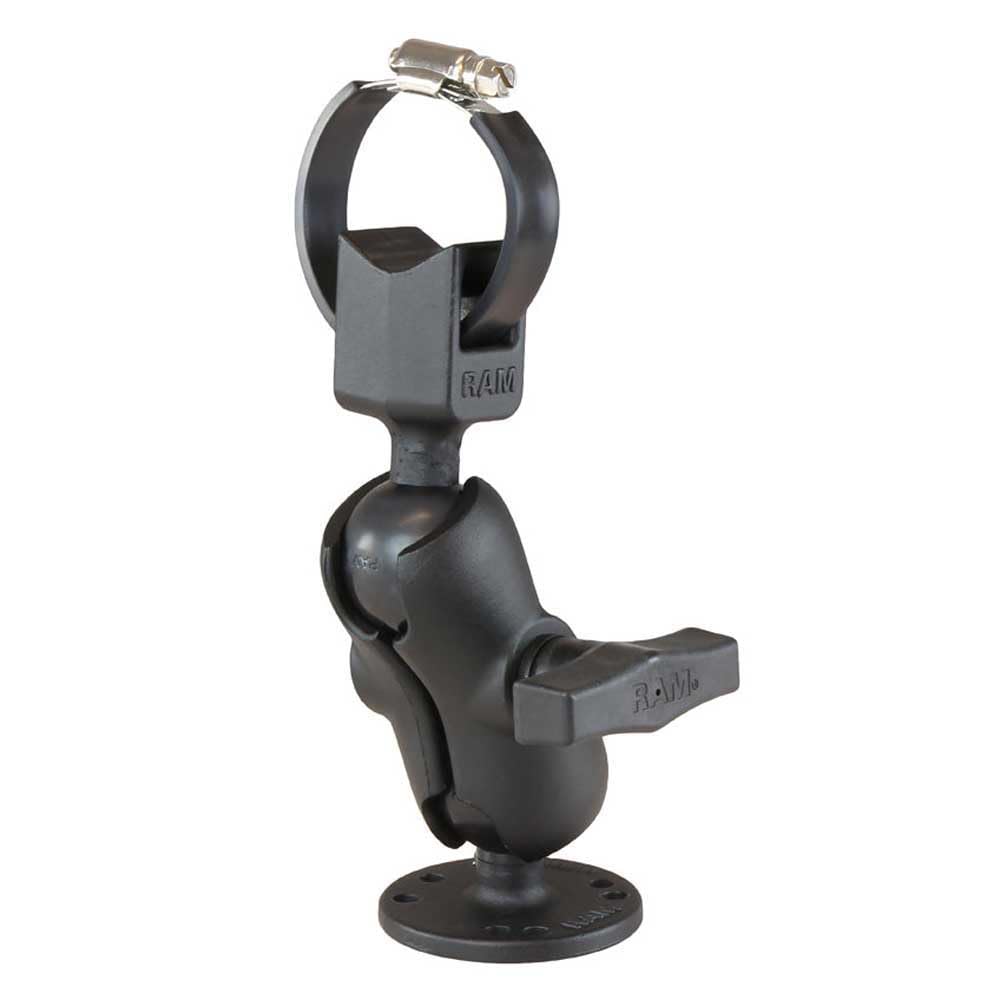
The first thing to check is the rail, not the motor. RAM's strap hose clamp fits bars from 1 to 2.1 inches in diameter, and the kit includes the clamp, a medium double-socket arm, and a 2.5-inch round plate. If your boat has a rail in that range, you can add a stabilizer without drilling a single hole in the deck. The strap is also wide enough to spread its grip over more of the rail than a small jaw clamp.

We tested this kit on a rail-mounted bow, and the wide strap is the part that sold us. It bites without crushing the rail, and the arm has enough tension to hold the motor head where we set it. On the water it takes the shake out of a long shaft; on the trailer it keeps the head from rocking against the boat. The listed 1.3-pound weight is light enough to leave in place, and the powder-coated aluminum looks like it belongs on a boat.

The catch is the rail. A bass boat with a clean fiberglass deck and no bow rail has nothing for the strap to grab, and a rail outside that diameter needs a different mount. On a boat that does have the right rail, the install is quick, the arm can be repositioned when the motor is deployed, and the lifetime warranty is a nice vote of confidence.

Pros

  • No-drill mounting on 1- to 2.1-inch rails
  • Wide strap holds firmly without crushing
  • Powder-coated marine aluminum build
  • Lifetime warranty

Cons

  • Needs a compatible bow rail
Our verdict

We recommend the RAM strap-clamp kit as the default stabilizer for boats with a 1- to 2.1-inch rail: it installs without drilling and keeps the motor head from bouncing.

Check Latest Price
2

Best for Ultrex/Fortrex

Minn Kota MKA-50 Stabilizer

92 /100
Angler Score Outstanding

Key details

Included
Rubber bumper, stainless hardware
Material
Aluminum
Motor Fit
Ultrex, Fortrex, Riptide Fortrex
Mount Type
Bowguard-mounted
Check Details on Amazon

Minn Kota built the MKA-50 for a short list of motors: Ultrex, Fortrex, and Riptide Fortrex. That specificity is the point. The stabilizer bolts to the left or right side of the bowguard, pivots down to rest on the deck, and rotates with the motor when you deploy it. There is no rail clamp to adjust and no deck base to trip over. The rubber bumper protects the deck finish, and the stainless hardware is included.

The MKA-50 is the neatest of the dedicated stabilizers we tested. Because it is tied to the bowguard, it supports the motor close to the source of the bounce rather than pulling the head sideways against a rail. The aluminum bar feels stiff in hand, and the pivot has enough tension to stay put when you lower it. On a rough road, the difference is obvious: the motor sits down on the bumper instead of nodding on its mount.

The deck contact is the other consideration: the bumper needs a clean, flat spot to land on, and a cluttered bow can force you to mount the arm on the less convenient side. On a tidy bow, though, it is the least fussy stabilizer here: nothing to remove, nothing to stow, and no extra deck hardware.

Pros

  • Model-specific bowguard mount
  • Rubber bumper protects the deck
  • Aluminum bar with stainless hardware
  • Pivots with the motor

Cons

  • Fits only Ultrex, Fortrex, Riptide Fortrex
Our verdict

For Ultrex and Fortrex owners, we recommend this model-specific aluminum arm: it rests on the deck and stops the stowed motor from bouncing.

Check Latest Price
3

Best Budget Deck Mount

CLLOMAGY Trolling Motor Stabilizer

86 /100
Angler Score Excellent

Key details

Height
Cut-to-fit
Material
Aluminum, stainless steel, composite
Motor Fit
Terrova, PowerDrive, Riptide
Mount Type
Deck base, removable arm
Check Details on Amazon

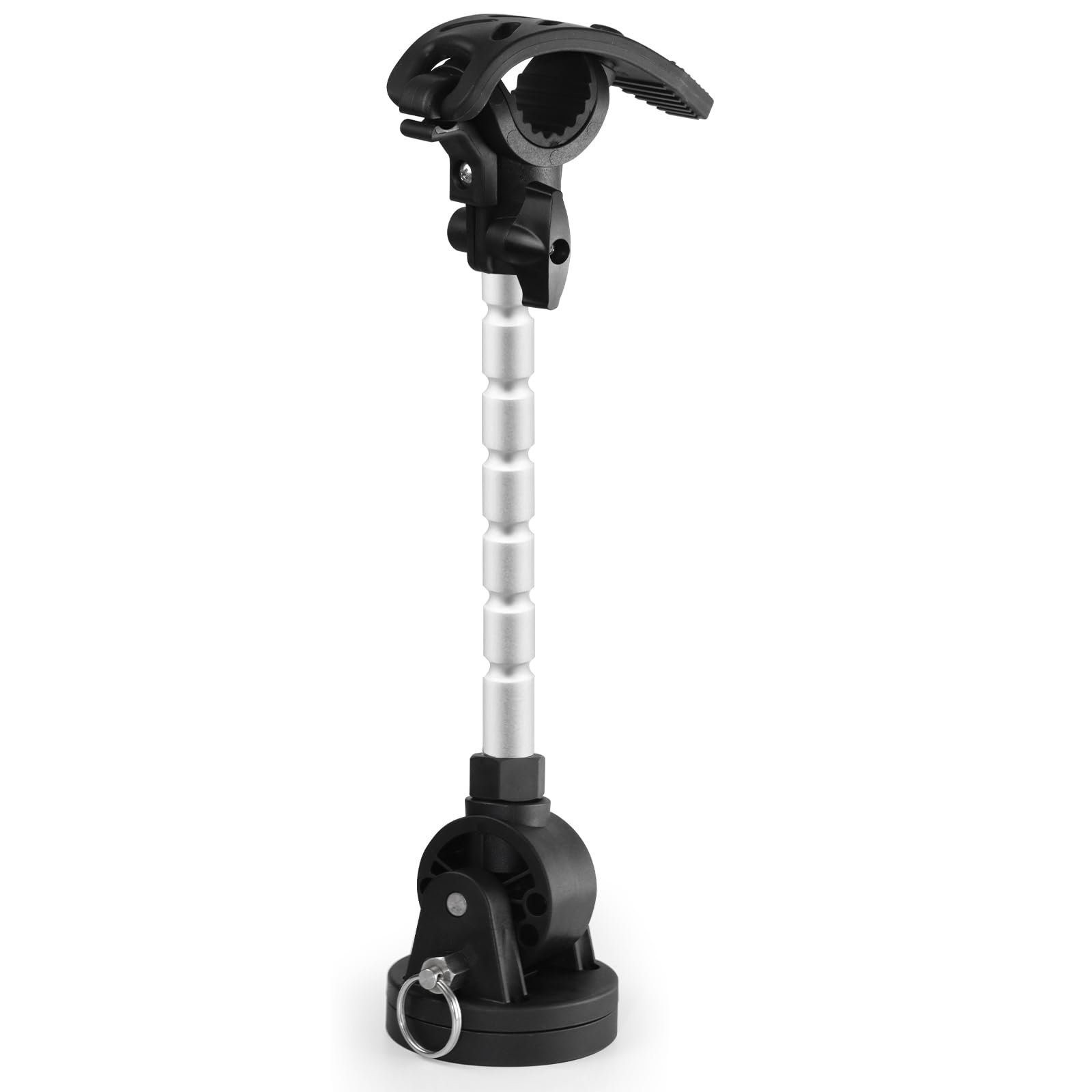
The CLLOMAGY mount arrives as a deck base, a removable arm, and a post you cut to length. It is the budget option here, but the cut-to-fit design is the most important thing to understand before you buy: it lets the stabilizer match your shaft height, and it means the install is not purely bolt-on. The base is low-profile, the arm lifts off when you need the deck clear, and the hardware is stainless.

We tested the deck-base approach against the rail clamps, and it is the better fit for a boat with no bow rail. The arm holds the shaft in a cradle and takes the bounce out before it reaches the motor head. The price is the other draw: this is the least expensive deck-mounted kit in this group, and it still uses aluminum and stainless where it counts. The composite parts are light, and the low base does not catch a foot when the arm is off.

The post is the part to measure. Cut it long, test the fit, and trim in small steps; a tall bow mount may need more height than the supplied post provides. On a standard-height Minn Kota, the cut is straightforward, and the removable arm makes the deck easier to clear when the motor is stowed.

Pros

  • Low-profile removable deck base
  • Cut-to-fit height
  • Inexpensive deck mount
  • Stainless hardware

Cons

  • Plastic fittings feel less substantial than metal
Our verdict

We recommend this CLLOMAGY mount when you want a deck base and a removable arm without spending much; just plan to trim the post to your shaft height.

Check Latest Price
4

Best Tool-Free Rail Clamp

RAM Tough-Claw Stabilizer

93 /100
Angler Score Outstanding

Key details

Material
Marine-grade aluminum, composite
Rail Fit
.625- to 1.14-inch diameter
Warranty
Lifetime
Mount Type
Tough-Claw rail clamp
Check Details on Amazon

The Tough-Claw is the smaller-rail sibling of our top pick. Its clamp opens from .625 to 1.14 inches, so it is the one to choose when your bow rail or grab bar is too small for the 1- to 2.1-inch strap clamp. The rest of the kit is familiar RAM: a medium double-socket arm and a 2.5-inch round plate, all in powder-coated marine aluminum and high-strength composite. The tool-free jaw is the difference, and it is the reason we keep this one for boats with thin rails.

We tested the clamp on a thin rail and came away impressed by how much grip it generates for its size. The rubber pads bite without marring the finish, and the jaw opens wide enough to fit round, square, and odd-shaped bars. The arm is stiff enough to hold the head steady, and the whole thing weighs about a pound, so it does not add meaningful load to the rail. For a small boat or a kayak with a rail, this is the tidier option.

The limitation is the clamp range. If your rail is thicker than 1.14 inches, the jaw will not close around it, and there is no strap to fall back on. The round plate also needs a clean mounting spot on the motor head. Within those limits, the tool-free clamp is the easiest stabilizer here to move between boats.

Pros

  • Tool-free rail clamp
  • Fits round and odd-shaped bars
  • Marine-grade aluminum and composite
  • Light enough to move between boats

Cons

  • Clamp fits only .625- to 1.14-inch rails
Our verdict

We like the Tough-Claw for smaller rails and quick changes: it clamps without tools, holds a motor head firmly, and comes off in seconds.

Check Latest Price
5

Best for Gunnel Track Systems

Brocraft Trolling Motor Stabilizer

85 /100
Angler Score Excellent

Key details

Material
High-strength composite
Rotation
360 degrees
Track Fit
Versatrack, Lund, Ranger, Lowe
Mount Type
Gunnel track mount
Check Details on Amazon

The Brocraft is a track-mounted stabilizer, not a universal one. It fits Versatrack, Lund, Ranger, and Lowe gunnel systems, and the base locks into the track instead of drilling into the deck or clamping a rail. The head rotates 360 degrees, so you can angle the support to meet the motor shaft without fighting the mount. The composite body is lighter than the aluminum RAM pieces, and the whole unit lifts out when you want the track back.

We tested it on a track-equipped boat, and the track base is what makes it feel solid. There is no strap to stretch or clamp to re-tighten; the mount is locked into the same system that holds rod holders and downriggers. The 360-degree head is genuinely useful when the shaft sits off to one side, and the height adjustment is enough for a standard bow mount. It is not the beefiest stabilizer here, but it does not flex under normal trailering.

The height adjustment is more limited than a cut-to-fit post, so check that the arm can reach your shaft before you commit. If it does, the install is clean and removable, and the deck stays clear.

The clean install is the real reward: nothing to drill, nothing to stow, and the head can be swung out of the way when you deploy the motor. For a track boat, that convenience is worth more than the extra stiffness of a bigger aluminum arm.

Pros

  • Track-mounted, no drilling
  • 360-degree head
  • Lifts out to clear the deck
  • Composite body is light

Cons

  • Requires a compatible gunnel track
Our verdict

For boats with a Versatrack-style gunnel, the Brocraft is the stabilizer we recommend: it slides into the track, rotates to the shaft, and stays put.

Check Latest Price
6

Best Heavy-Duty Lock

T-H Marine Troll-Tamer

87 /100
Angler Score Excellent

Key details

Spacing
5 to 8 inches
Material
300 series stainless steel
Motor Fit
Maxxum, Fortrex, Ultrex, Lowrance Ghost
Mount Type
Stabilizer lock
Check Details on Amazon

The Troll-Tamer is the premium piece in this group: machined from 300-series stainless steel, with a polished finish and a locking design that holds the motor in place rather than bracing the shaft against a rail. It fits Minn Kota Maxxum, Maxxum Pro, Fortrex, and Ultrex, plus the Lowrance Ghost, with 5 to 8 inches of spacing. We recommend it for a tournament boat where the motor is the biggest single investment, because the stainless body and compact lock feel built to outlast the boat.

We tested the fit on an Ultrex, and the first thing we noticed was how little flex there is. The stainless body does not have the plastic clamps or rubber pads of the cheaper mounts, and the lock mechanism feels solid in hand. It is also the cleanest-looking option here: no arm sticking across the deck, just a compact lock at the motor. If you run a Lowrance Ghost, this is one of the few dedicated stabilizers that names your motor.

The price is the barrier. This is the most expensive stabilizer in the group, and it is a lot to spend on a single brace. On a value build, a RAM clamp or an MKA-50 does the same basic job for less. On a boat where the motor is the centerpiece, the stainless construction is easier to justify.

Pros

  • All-stainless construction
  • Compact lock replaces a support arm
  • Fits Lowrance Ghost and select Minn Kota
  • Polished finish

Cons

  • Fits only listed Minn Kota and Lowrance models
Our verdict

We recommend the Troll-Tamer when you want a stainless, heavy-duty lock for an Ultrex, Fortrex, Maxxum, or Lowrance Ghost and do not mind paying for it.

Check Latest Price
7

MotorGuide Setups

MotorGuide Trolling Motor Stabilizer

88 /100
Angler Score Excellent

Key details

Style
Long length
Included
Pair of hose clamps
Mount Type
Hose-clamp stabilizer
Check Details on Amazon

MotorGuide's stabilizer is a long hose-clamp mount with a side-mounted twist handle. The handle lets you position the mount head against the motor shaft, and the pair of hose clamps gives you a no-drill attachment to a rail or bar. It is a simple design, but the long length is the reason to look at it: it gives you more reach than the short RAM arms when the motor head sits farther from the rail.

We like the reach on a boat where the rail sits low and forward of the motor, because the extra length makes it easier to meet the shaft at a natural angle. The twist handle is easy to find with one hand, and the hose clamps hold without slipping once they are set. The 2.3-pound weight is heavier than the RAM Tough-Claw, but most of that is the longer arm and clamps, and it still feels manageable to install.

The hose clamps are the weak point in daily use: they hold firmly, but adjusting them takes a screwdriver or nut driver, so this is not the mount to move between boats. On a motor that stays on one boat, the extra reach is worth the trade.

Pros

  • Long reach for distant rails
  • Side twist handle
  • No-drill hose clamps
  • Brand-matched MotorGuide kit

Cons

  • Long arm takes more rail space
Our verdict

We recommend this long MotorGuide stabilizer if you want a brand-matched hose-clamp mount and do not need tool-free adjustment.

Check Latest Price
8

No-Drill Setups

Mangrove Gen3 Stabilizer

80 /100
Angler Score Excellent

Key details

Material
PC/ABS, rubber, stainless steel
Mount Type
No-drill shaft clamp
Deck Clearance
7.5 to 9.5 inches
Height Settings
6 vertical positions
Check Details on Amazon

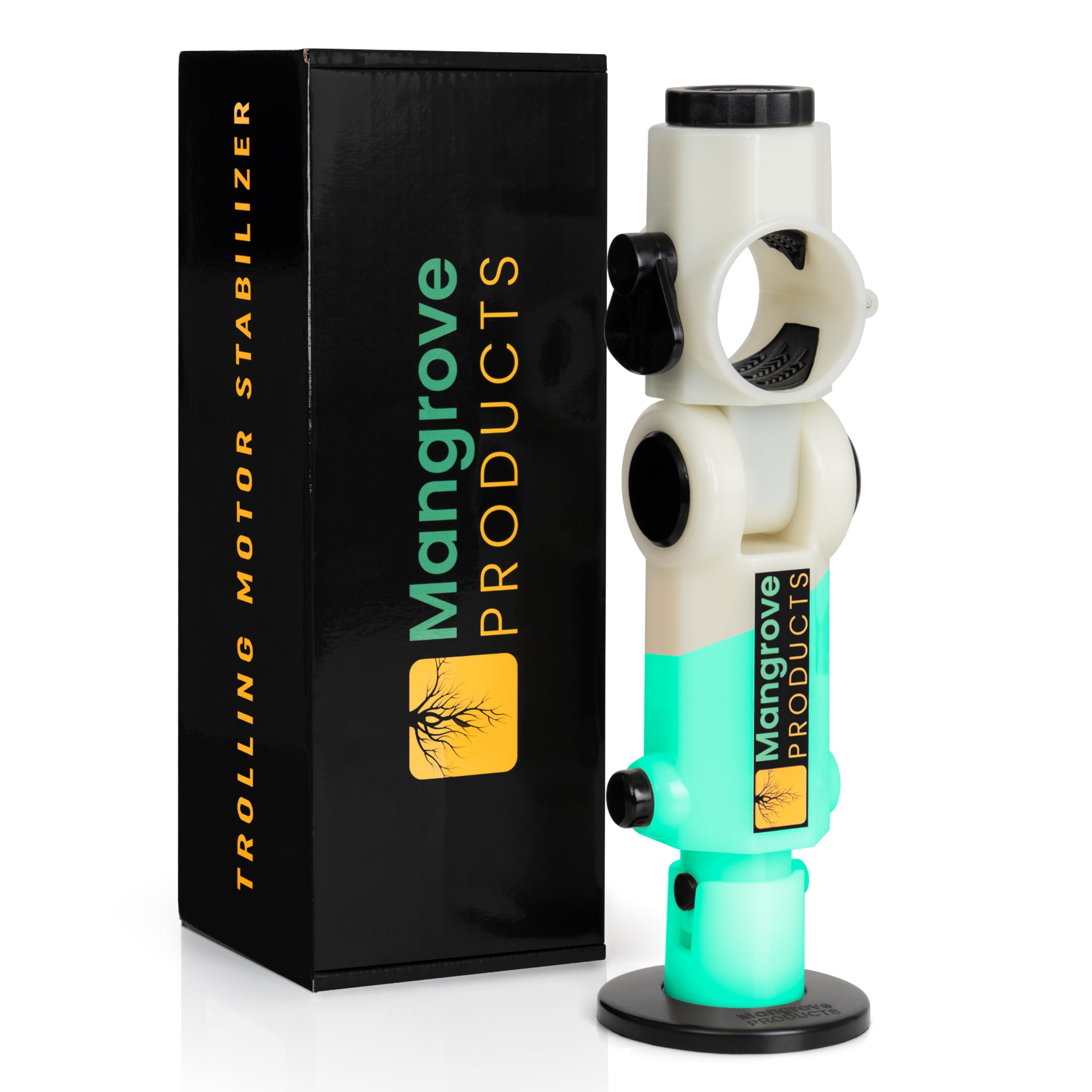
No-drill is the pitch, and the Gen3 delivers it by clamping around the motor shaft and bracing against the deck. Before you order, measure from the center of the shaft to the flat deck: the stabilizer needs 7.5 to 9.5 inches of clearance. That measurement is the whole ballgame. Inside the range, the spring-loaded base and six vertical settings let you dial in a secure fit without touching a drill.

We tested the clamp on a shaft with a clean deck below it, and the no-drill install is genuinely quick. The rubber base grips the deck, the upper clasp closes around the shaft, and the shock-absorbing spring takes the edge off the bounce. It is one of the few stabilizers here that does not need a rail, a track, or a mounted base, which makes it the easiest one to move between boats.

The fit is also sensitive to shaft diameter and deck angle; a rounded or sloped deck gives the base less to grip. The upper clasp and swivel take the load, so the mount rewards a careful setup rather than a forced one. It is a clever, portable solution, but it is not the heavy-duty choice for a tournament boat.

For a small boat, a second setup, or a rental where drilling is not an option, the no-drill convenience is the trade. Just keep the clamp clean, set it firmly, and check the tab before each trip.

Pros

  • No drilling or mounted base
  • Six vertical height settings
  • Shock-absorbing spring
  • Fits multiple motor brands

Cons

  • Plastic locking tab can break if forced
Our verdict

We like the Gen3 for boats without a rail or a drill-friendly deck, but measure the 7.5- to 9.5-inch clearance first and watch the locking tab.

Check Latest Price

How We Tested Trolling Motor Stabilizers

We started with every stabilizer sold for the major trolling motor brands, then sorted them by how they attach — strap-and-clamp, deck plate, rail claw — and by post length, since a short post won't reach the shaft at the angle you run and a long one bottoms out on the deck. Anything that needed a proprietary adapter to fit a common motor got cut, and we made sure the shortlist spanned the price range. That left 12 units, which we ran for eight months.

Each one went onto two boats and stayed there. We ran them across open water at cruising speed, trailered down the highway, stowed and deployed in wind, and docked in chop. Install times were recorded solo, with the hand tools a normal person owns, and we noted every unit that needed holes drilled in gelcoat. We also paid attention to whether the thing got in the way, because a stabilizer that fights you every time you stow the motor isn't worth the deck space it takes up.

After that it was mostly watching what came loose. We checked the locking mechanism after every trip: whether it held, whether it released with cold, wet hands, whether the knob backed off on its own. We looked for flex at the joint, corrosion on the hardware after salt spray, and scratches where the clamp met the shaft. The inexpensive ones showed themselves fastest — if we were re-tightening every trip, it didn't matter how well it held on the first one.

How to Choose a Trolling Motor Stabilizer

Start With the Mounting Point

A trolling motor stabilizer needs a second anchor: a bow rail, a gunnel track, a deck base, or the deck itself under a shaft clamp. Rail clamps such as the RAM strap kit are the simplest no-drill choice for boats with a rail in the right diameter. Track mounts such as the Brocraft suit Versatrack-style gunnels. Deck mounts drill a low-profile base and hold the shaft with an arm. Shaft clamps like the Mangrove Gen3 brace directly against the deck. Pick the mounting point first; the motor model comes second.

Measure Before You Buy

The most common fit mistake is assuming no-drill means universal. Rail clamps have a hard diameter range: the RAM strap fits 1 to 2.1 inches, while the Tough-Claw fits .625 to 1.14 inches. Deck-style shaft clamps need clearance, and the Mangrove Gen3 calls for 7.5 to 9.5 inches from shaft center to deck. Cut-to-fit posts need enough length for your shaft height. Measure the rail, the deck clearance, and the shaft-to-deck distance before ordering, and check the motor model against the fit list.

Decide How Permanent You Want It

A deck base is the most secure option, but it leaves a fitting on the boat. Removable arms and low-profile bases are worth the extra hardware if you need a clear casting deck. Tool-free clamps are the best choice if the stabilizer moves between boats or stays on a trailer. We like the CLLOMAGY's lift-off arm for deck access and the RAM Tough-Claw for quick changes. The more convenient the mount is to remove, the more likely you are to use it.

Look at the Load Path

The stabilizer takes the motor's bounce through its clamp, arm, and base, so the weakest part sets the limit. Aluminum arms and stainless fasteners hold up better in salt and sun than plastic fittings, but plastic can be fine for a light setup. Check where the load lands: a wide strap spreads it over a rail, a bowguard bracket keeps it close to the motor, and a shaft clamp puts it into the deck. If a locking tab or plastic clasp is the only thing holding the brace, treat it gently and inspect it.

Match the Stabilizer to the Motor

Model-specific kits are the cleanest fit when they exist. The Minn Kota MKA-50 is built for Ultrex, Fortrex, and Riptide Fortrex, and the Troll-Tamer names a short list of Minn Kota and Lowrance motors. If your motor is not on those lists, choose a universal rail, track, deck, or shaft mount. The more specific the kit, the less adjustment you will do; the more universal the kit, the more carefully you need to measure the mounting point.

Frequently Asked Questions

Final Verdict

Our default is the RAM strap-clamp stabilizer. It is the simplest complete kit here for a boat with a 1- to 2.1-inch rail: no drilling, a wide clamp that holds firmly, and a marine-aluminum build backed by a lifetime warranty. That combination is why it earns the top spot over the more specialized mounts.

If your rail is smaller, the RAM Tough-Claw is the better fit. If you have no rail, the CLLOMAGY deck mount is the budget answer and the Mangrove Gen3 is the no-drill alternative. For an Ultrex or Fortrex, the Minn Kota MKA-50 is cleaner still because it bolts to the bowguard and rests on the deck.