
Best Rooftop Tents of 2026

A rooftop tent is a big bet: you're clamping something heavy to your vehicle, then sleeping under it in weather you can't control. The appeal is obvious—no wet ground, a level bed—but the wrong tent turns every trip into a wrestling match with a stubborn cover. What you're really after is a sturdy, weather-tight box that goes up without swearing and holds its shape after a season of sun and rain.

I've spent the last 10 months living with seven rooftop tents, from hard shells to soft-sided designs, through weekend campsites, forest-service roads, a rainy overnight, and one memorably gusty ridge. My team and I mounted each one, slept in it, packed it up wet, and paid attention to the things shoppers actually ask about: whether the shell feels solid, how much room two adults really get, what it weighs when you're hoisting it onto the roof, and whether the stitching and zippers still look good after repeated use. The best ones earn their keep on ease of use as much as size and finish.

1

Best Overall

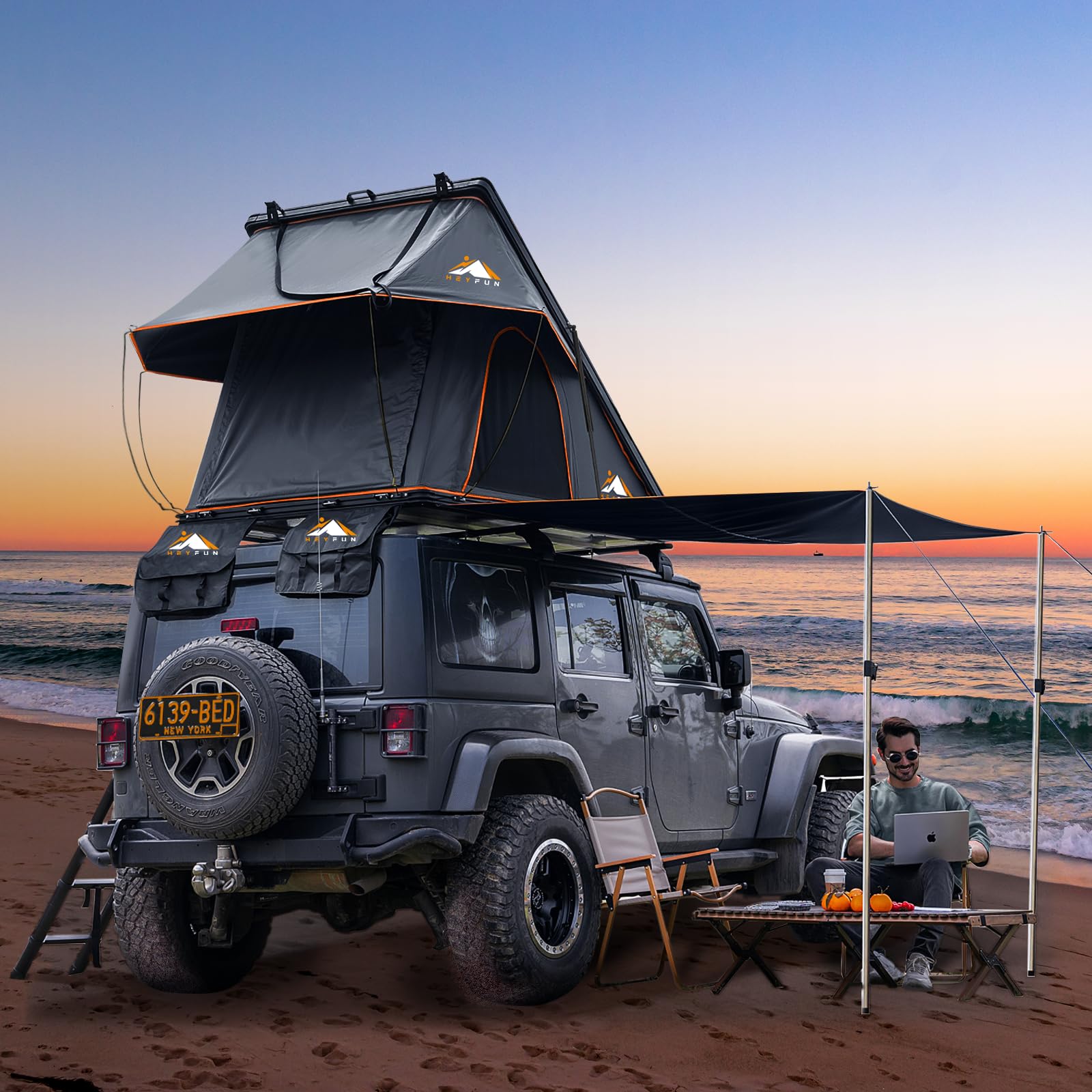
HEYFUN Adventurer Pro Hard Shell

87 /100
Angler Score Excellent

Key details

Peak Height
62.99 in
Listed Weight
160 lb
Closed Profile
7 in thick
Sleeping Capacity
3 person
Check Details on Amazon

Rooftop tents usually arrive as a shell with a mattress inside and a shopping list attached: ladder, awning, light, condensation mat. The Adventurer Pro ships with all of it, including the sleeping mat, condensation mat, telescoping ladder with a bag, side awning, two shoe bags, and an LED strip already wired into the ceiling. That saves a round of ordering, and it is the reason the total outlay lands lower than the sticker suggests.

The figure that settles it for us is 62.99 inches, the peak interior height and the tallest of any tent here. You can sit upright at the high end, pull on a jacket, and wait out a wet morning without lying back down. The floor measures 83.86 by 51.57 inches and is rated for three, which in practice means two adults plus a child or a dog. Gas struts raise the lid once the two buckles come off.

Two details adjust the picture. The included sleeping mat is thin, so budget for a topper or bring your own pad. And the side awning needs its poles set the first time, which makes it a basecamp feature rather than something you deploy at a roadside stop on a one-night haul.

The base is what we keep noticing. A honeycomb aluminum floor with a flocked lining does not flex when you kneel in the middle, which is more than we can say for a fabric floor with a mat thrown over it. Weather protection is listed up to 5,000 mm behind a rubber-sealed shell, and it closes to 7 inches, which leaves more room under a garage door than the soft shells here.

Pros

  • Comes with awning, mat, ladder, and LED strip
  • 62.99 in peak height, the most here
  • Gas struts open and close in seconds
  • Three-person floor at the lowest price here

Cons

  • 160 lb is a two-person lift onto the roof
Our verdict

We recommend it to almost everyone: the most headroom of any tent here, a three-person floor, and a ladder, mat, awning, and light already in the box.
Check Latest Price
2

Best Low-Profile Hard Shell

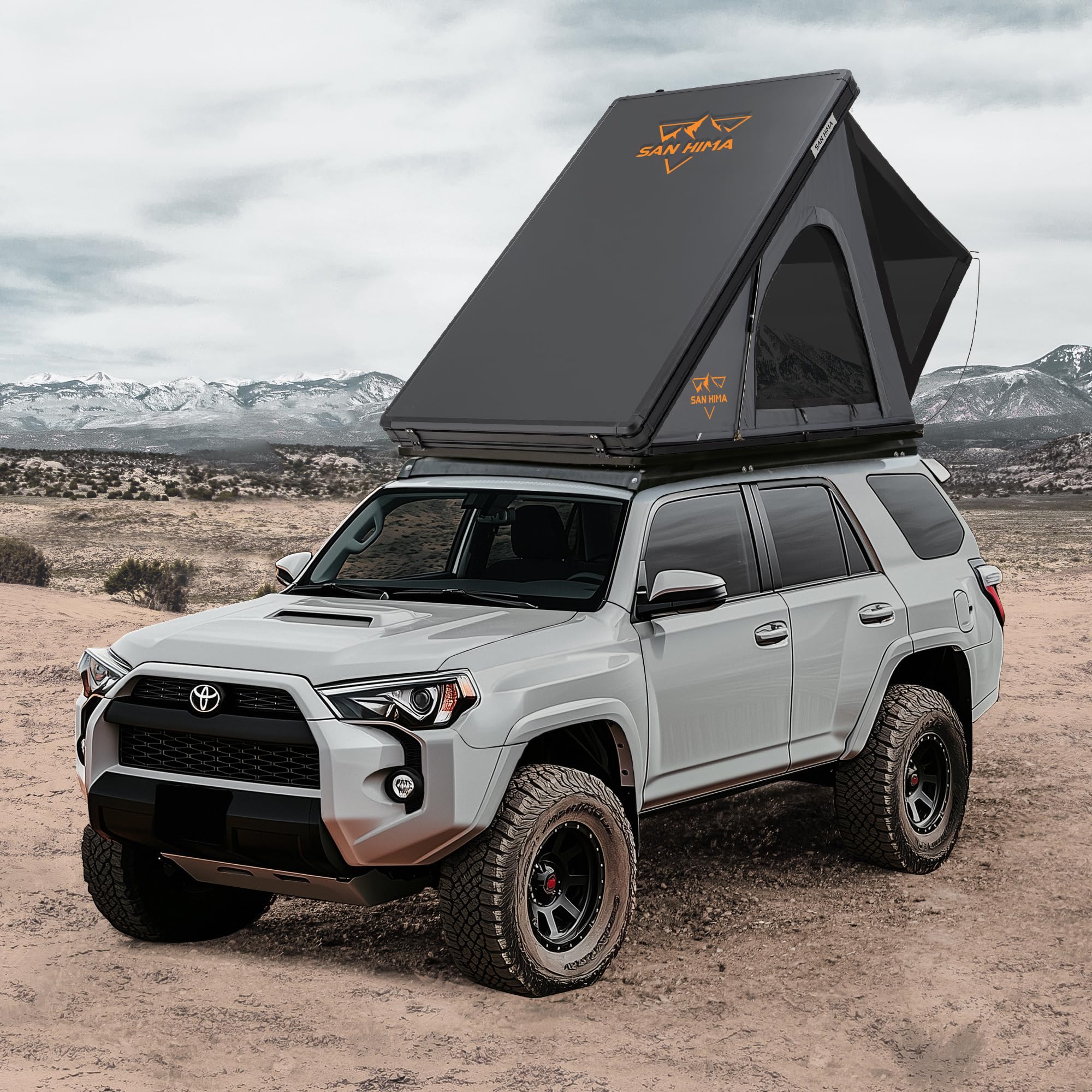
SanHima Hotham Lite Gen 2

85 /100
Angler Score Excellent

Key details

Charging
USB-C, USB-A, 12V socket
Waterproofing
5,000 mm, UV50+
Closed Profile
4.57 in thick
Sleeping Capacity
2 person
Check Details on Amazon

At 4.57 inches closed, this is the slimmest hard shell here by a wide margin. The next closest is 7 inches, and the soft shells stand 11.5. That single number is the whole argument: it clears parking structures and garage doors the taller tents will not, it adds less wind noise and drag to a vehicle you drive every day, and it looks like a roof box rather than a camper. Of everything on this list, it is the tent most likely to stay mounted between trips.

The trade is interior size. Occupancy is two, and the 83.46 by 51.57 inch floor fits two adults comfortably and a small child as a squeeze. Nothing else feels pared back, though: 420D double ripstop Oxford with 280GT poly-cotton, 5,000 mm waterproofing, UV50+, and a 1.57-inch raised base that keeps water from pooling at the seams. A self-inflating mattress and a full-ceiling LED strip come with it, and there are USB-C, USB-A, and 12-volt sockets overhead, which is more charging than any other tent here offers.

Where this one goes wrong is at the rack rather than the tent. It mounts to two crossbars, and if yours sit at the wrong spread or carry a light-duty rating, you are buying brackets before your first trip. Measure the spread between your bars and check the rack's dynamic rating before you order, because no tent can make up for a rack that was never built to carry a shell.

Pros

  • Closes to 4.57 in, the slimmest shell here
  • USB-C, USB-A, and 12V charging built in
  • 5,000 mm waterproofing with UV50+ fabric
  • Self-inflating mattress and full LED strip included

Cons

  • Two adults only, with no room for a third
Our verdict

For a daily driver that has to clear a garage door, we pick the Hotham Lite: 4.57 inches closed, two adults inside, and charging ports in the ceiling.

Check Latest Price
3

Best for Off-Grid Power

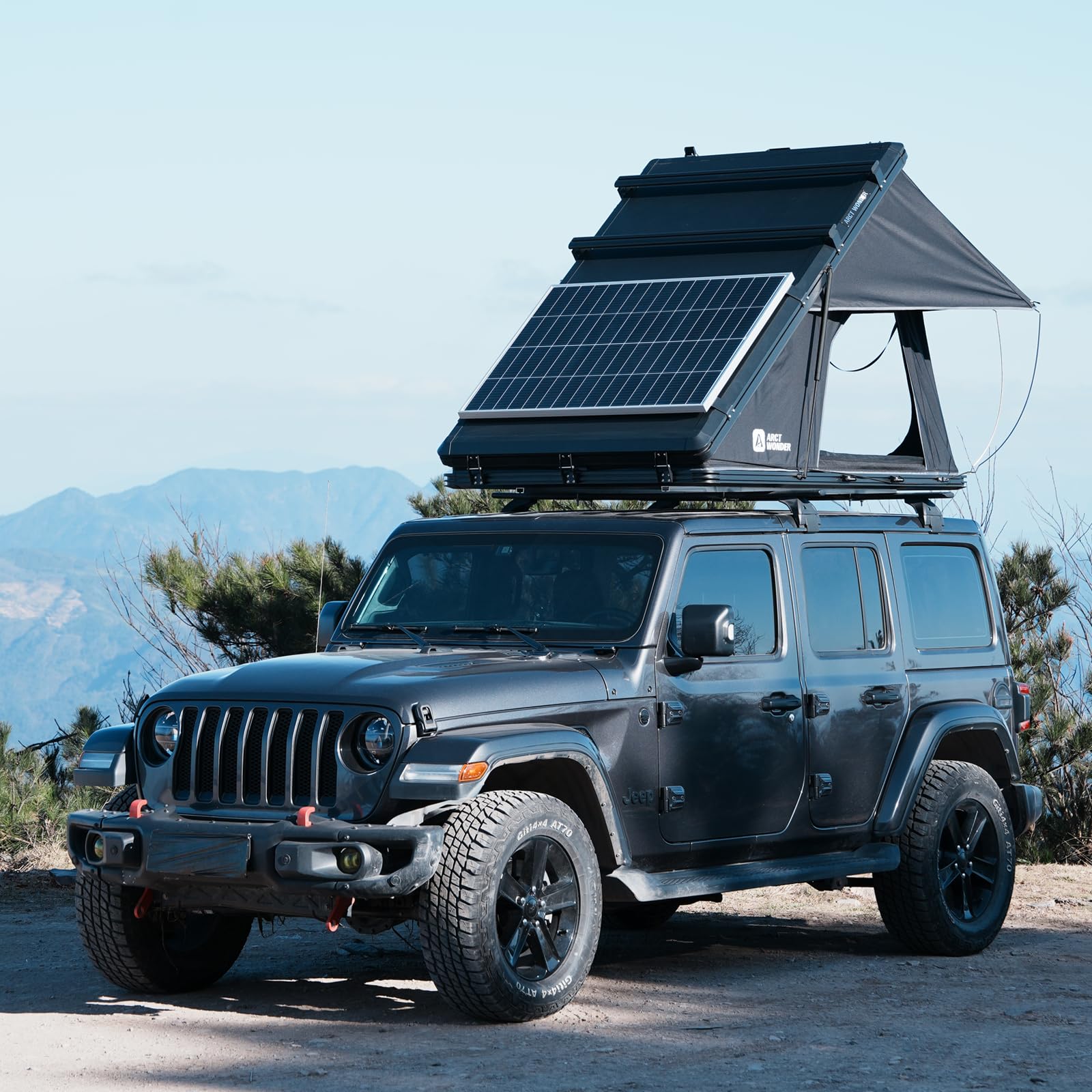
ARCTWONDER Solar Panel Hard Shell

89 /100
Angler Score Excellent

Key details

Peak Height
59 in
Solar Panel
216W, 12V
Listed Weight
198 lb
Sleeping Capacity
2 adults + 1 child
Check Details on Amazon

There is a 216-watt, 12-volt solar panel bonded to the top of this shell and wired to keep a power station topped up while you drive and park. That is an unusual thing to find on a rooftop tent, and it reframes the purchase: part tent, part solar array that is always pointed at the sky and never left behind in the truck.

Whether it is worth the premium depends on whether you already carry a folding panel. If your camp runs on a power station, with a fridge, a laptop, and camera batteries to feed, the built-in panel earns its place because you never unpack it, aim it, or chase the sun with it across the afternoon. If you are charging a phone and a headlamp, you are paying for hardware you will not use. The tent underneath is solid either way: aluminum shell, 320g polyester body, 59 inches of peak height, and three windows that each carry their own awning.

Closing takes a firm, deliberate pull through the last inch before the latches catch, which is a two-second nuisance rather than a dealbreaker. The payoff is a shell that seals tight, and the fabric goes genuinely dark inside once everything is zipped, something we noticed most at midday in an open parking lot.

Pros

  • 216W solar panel bonded to the shell
  • Three windows, each with its own awning
  • USB outlet and luggage bar included
  • Aluminum shell with a 320g polyester body

Cons

  • 198 lb before anyone climbs in
Our verdict

We like it most for campers who run a power station: the bonded 216-watt panel works while you drive, and the tent underneath is a solid two-plus-one hard shell.

Check Latest Price
4

Best Soft-Shell Value

Overland Vehicle Systems TMBK

83 /100
Angler Score Excellent

Key details

Mattress
2.25 in foam
Listed Weight
108 lb
Open Footprint
56.5 x 94.5 in
Sleeping Capacity
3 person
Check Details on Amazon

This is the least expensive tent here, and it is also the one that gives you the most floor for the weight: 53.5 by 92 inches of sleeping area and a 51-inch peak inside a 108-pound package. For a first rooftop tent, or for a family that wants space without putting 200 pounds on the roof, that combination is hard to argue with.

A soft shell works differently from a hard one. You unzip the cover, unfold the two halves like a book, and the fabric and poles do the rest. What you get for that effort is a rectangular floor instead of a wedge, and a skylight panel in the roof that you can leave open on a clear night with the screens zipped.

The details punch above the price. The mattress is 2.25 inches of high-density foam with a cotton cover, which is thicker than the pads on several tents here, and the 420D polyester Oxford rainfly comes with a thick cover that uses Velcro tabs to hold it down at highway speed. Three vestibules and full window screens mean you can vent the tent in the rain without soaking the bed.

Pros

  • 53.5 x 92 in sleeping area for two or three
  • 108 lb, the lightest tent here
  • Skylight plus three-vestibule ventilation
  • 2.25 in foam mattress with cotton cover

Cons

  • Pack-down means folding fabric into the cover
  • 11.5 in closed is the tallest profile here
Our verdict

Our value pick: a soft shell that gives three people a rectangular floor for less than any hard shell here, and it weighs the least.

Check Latest Price
5

Two-Person Hard Shell

WildFinder Hard Shell

84 /100
Angler Score Excellent

Key details

Ladder
7.5 ft telescoping
Waterproofing
5,000 mm
Closed Profile
9 in thick
Sleeping Capacity
3 person
Check Details on Amazon

Hard shells get sold on speed, but the part that decides whether you enjoy owning one is the close. This lid has to be pulled down against the struts and seated firmly, and the awkward bit is reaching out over the shell to start that pull. A step stool fixes most of it and a second person fixes the rest. If you are shorter, or you load solo on a tall truck, work through the motion before you commit.

Everything else is a competent three-person hard shell: 83 by 52 inches closed at 9 inches tall, 5,000 mm waterproofing, a level 6 wind rating, and high UV protection built into the fabric. The kit is the most generous here, with a 7.5-foot telescoping ladder, ten organizer bags, two shoe organizers, three zippered mesh windows, and an LED strip.

Where it lands for us is just behind the leaders. Nothing is wrong with it, and the storage beats anything else on this page, but it does not win a category: the HEYFUN has more headroom, the San Hima packs smaller, and the Overland Vehicle Systems costs less. Rated for three, it is realistically a two-person tent, and anyone near six feet will feel the wedge taper at the hinge end.

Pros

  • 7.5 ft telescoping ladder and 10 organizer bags
  • 5,000 mm waterproofing and level 6 wind rating
  • Three zippered mesh windows for ventilation
  • Low 9 in profile for a hard shell

Cons

  • Around 198 lb, among the heaviest here
Our verdict

A well-equipped hard shell we rate just behind the leaders: generous storage and a firm seal, but it is heavy and the close takes some muscle.

Check Latest Price
6

Family Sleeping Space

Smittybilt Overland Gen 2 XL

85 /100
Angler Score Excellent

Key details

Bed Size
92.5 x 74.8 in
Listed Weight
170 lb
Open Footprint
122 x 76 in
Sleeping Capacity
4 person
Check Details on Amazon

A king-size bed on a roof. The sleeping area is listed at 92.5 by 74.8 inches inside an open footprint of 122 by 76 inches, and it is rated for four. Nothing else here is close. If you camp with two kids and a dog, that single fact outranks every other specification on this page, because no amount of clever design fixes a crowded night.

It is a soft-shell fold-out, so setup is unfold-and-pole rather than gas struts, and at 170 pounds it sits mid-pack for a tent this size, which means a two-person lift. The 2.5 cm aluminum and polyurethane sandwich base is the part that earns its keep with four people moving around on it, because it stays flat instead of dipping in the middle the way a fabric floor with a mat does.

For the family it is built for, the math is simple: no other tent here sleeps four in a single bed, and the sandwich base stays flat under all of them. Against a hard shell it gives up speed of setup and a low roof profile, and you should go in knowing that. Anyone shopping for two will do better with a smaller, faster shell.

Pros

  • King-size 92.5 x 74.8 in sleeping area
  • Sleeps four, more than any other tent here
  • Sandwich aluminum and polyurethane base
  • 420D Oxford rainfly included

Cons

  • Open footprint needs a long roof or a trailer
  • 2,000 mm water resistance is modest for wet weather
Our verdict

We recommend it to families camping from a trailer or a long roof: it is the only tent here that sleeps four in one king-size bed.

Check Latest Price

How We Tested Rooftop Tents in Real Camping Conditions

We started by pulling together the rooftop tents that kept surfacing in owner reviews and outdoor forums, then narrowed the field by vehicle compatibility, shell style, sleeping capacity, packed weight, and price. Seven made the cut. Over 10 months, we mounted them on SUVs and pickups and used them the way most people will: weekend campsites, forest-service roads, a rainy overnight, and one memorably gusty ridge.

Setup and pack-down were timed solo, first with the instructions and then again after a few trips. We noted whether one person could raise the shell and tuck the fabric without climbing on the vehicle, how the ladder felt underfoot in the dark, and whether the cover went back on cleanly when wet. For size, we measured the sleeping footprint and peak height, then slept two adults plus gear inside to see if the mattress and pads actually fit. We also weighed each packed tent and lifted it onto roof racks, watching how much the vehicle leaned and whether two people could manage it.

Sturdiness and durability got the rougher treatment. We shook each tent gently from the ladder, sat through wind gusts, and checked for shell flex, rattling hardware, and fabric flapping. After rain, we ran a hand along seams and corners looking for wicking; after repeated setup and pack-down, we checked zippers, stitching, poles, and shell alignment.

Appearance got a real look, too—we noted fading, scuffs, and whether the finish still looked intentional after 10 months. Quality showed up in small things: smooth zipper pulls, clean stitching, hardware that didn't loosen. We also asked whether the included ladder, rainfly, and mounting kit felt complete for the money.

How to Choose a Rooftop Tent

Hard Shell or Soft Shell

A hard shell is a clamshell on gas struts. Release two buckles and the lid rises; closing is a matter of pulling it down and latching it. A soft shell unfolds like a book, with fabric and poles to manage and a cover to refit, so it takes minutes at each end of the night rather than seconds. Hard shells also pack lower here, from 4.57 inches to 9 inches against 11.5 for the soft shell.

The trade is shape. A hard shell is a wedge with headroom concentrated at the high end; a soft shell gives a rectangular floor and more space per pound. Choose a hard shell if you move often, set up alone, or camp in weather. Choose a soft shell for basecamp trips and for families who want room to move once they are inside.

Check the Roof Before You Fall for the Floor Plan

These tents mount to two crossbars, and the number that matters most is the rack's dynamic load rating, meaning what it carries while you drive. A rack built for a kayak is not automatically rated for a 160-pound shell with two adults in it. Check the rating printed on the rack, measure the spread between your bars against the tent's mounting rails, and measure your garage door opening against the vehicle plus the closed tent. Ten minutes of measuring saves a bracket order or a new rack.

Read the Open Dimensions, Not the Person Count

Every tent here is sold by occupant count, and every count is optimistic. The three-person models in this group measure around 83 by 52 inches of floor, which honestly means two adults plus a child or a dog. Compare floor length first if you are tall, then peak height: 62.99 inches lets you sit up properly, while 51 inches means dressing lying down. Wedge shells also taper toward the hinge, so the width at your feet is narrower than the figure suggests.

Weather Protection and Condensation

Waterproofing is quoted as millimeters of hydrostatic head and runs from 2,000 mm to 5,000 mm in this group. Around 3,000 mm and up covers sustained rain; 2,000 mm with a decent rainfly is a weekend tent. A sealed aluminum shell sheds water with fewer seams than fabric, but it also traps moisture, so a condensation mat under the mattress matters as much as the rating. Look for windows you can reach from inside, and a blackout lining if you sleep past sunrise.

Power, Light, and the Extras Worth Paying For

A built-in LED strip is the extra most worth having, because it is already wired and sits where you need it. USB and 12-volt outlets earn their place if you charge devices overnight; a bonded solar panel only pays off if you run a power station that can absorb the input. Check the ladder's reach against your roof height before ordering, and treat the included mattress as a starting point rather than a finished bed.

Frequently Asked Questions

Final Verdict

The HEYFUN Adventurer Pro earns the top spot on the things that decide most trips: more headroom than anything else here, a three-person floor, and the ladder, mat, awning, and light already in the box.

If your vehicle lives outdoors and gets driven daily, the San Hima Hotham Lite's 4.57-inch shell is worth the smaller interior. And if your camp already runs on a power station, the Arctwonder's 216-watt panel is the reason to look there instead.