Best 10-Person Tents of 2026

A 10-person tent is less a tent than a portable bunkhouse: it swallows a family, the cooler, the dog bed, and the duffels nobody wanted to leave in the car. The catch is that all that room has to be raised, staked, and kept dry, and that is exactly where big tents tend to fall short — spindly poles, a rainfly that stops two inches short of the floor, a floor plan that only fits 10 people if all 10 lie perfectly still. Get it right and it turns a scattered group into one shared camp, with everyone under the same roof and no one exiled to the car at 2 a.m.

My team and I have spent the past eight months living with 10 of them, from rushed backyard pitches on weeknights to a long weekend of steady rain, and the differences show up fast. One thing nobody tells a first-time buyer: that "10" is a count of sleeping pads, not people — subtract two if you want floor space for bags and a place to stand. The picks below are the ones that earned their footprint.

1

Best Overall

CORE Straight Wall Cabin 10P

90 /100
Angler Score Outstanding

Key details

Weight
31.6 lb
Floor Area
140 square feet
Center Height
86 inches
Waterproof Rating
1200 mm
Check Details on Amazon

Six feet up and still standing. The CORE's near-straight walls hold their height out to the edge of the floor instead of tapering away from the peak, so those 86 inches are somewhere you can actually use them. That is the detail that won this pick for us: in a dome you stand in one spot, and in this one you walk to the far corner to zip a window without stooping. Camping with four people and a dog is mostly a series of small collisions with your own gear, and usable headroom turns that into a holiday.

CORE rates the floor at 14 by 10 feet, 140 square feet, and translates that as four queen air beds or five people with gear. Our time on that floor tracks the second number far more closely. Four queens do fit, edge to edge, and then there is nowhere to put a duffel. What makes the space work is the rest of the layout: two doors, one at each end, a hanging divider that splits it into two rooms, and enough height for proper camp cots rather than pads on the ground. One small pocket is the only built-in storage, so pack a hanging gear loft.

Weather is where this tent pulls away from the cheaper ones here. The fabric carries a 1200 mm rating, the rainfly is fully taped rather than spot-sealed, and the windows zip shut instead of staying mesh, which matters more than any coating once the wind turns. Add the ground vents and the guylines and you have a tent we were content to leave standing through a wet forecast. The steel frame is heavier than the fiberglass used elsewhere and it is the right call at this size; guy it out properly and it stays put.

At 31.6 pounds it is a two-person job to carry and raise, and the pole bundle is the part that will eventually want attention, since a bent pole is how most long camping trips end early. That is the trade for a cabin this size that shrugs off rain. You spend a few minutes putting it up and a week living in it, and the wall shape is what you notice on every one of those days.

Pros

  • Straight walls keep headroom across the floor
  • Taped 1200 mm rainfly and sealed seams
  • 140 square feet fits four queen air beds
  • Two doors and a hanging room divider

Cons

  • 31.6 pounds, with a steel-pole bundle
  • Only one small pocket built in
Our verdict

Our top pick: straight walls, 86 inches of headroom, and a fully taped 1200 mm rainfly. For a family that camps through real weather, nothing else here balances space and protection as well.

Check Latest Price
2

Best Value

UNP 10-Person Tent

90 /100
Angler Score Outstanding

Key details

Weight
21 lb
Floor Area
162 square feet
Center Height
78 inches
Waterproof Rating
1000 mm
Check Details on Amazon

Eighteen feet by nine, 162 square feet, and a divider down the middle: on paper the UNP is the roomiest tent in this group, and it costs less than our top pick. That combination is the whole reason it earns a place. If your trips are a summer week at a lake with four kids and two air mattresses, the extra floor is worth more to you than the extra coating you get by spending up.

It is also the lightest of the big tents here at 21 pounds, with a carry bag 25.6 inches long that lies flat across a trunk. The mesh roof runs the length of the tent, so a clear night gives you stars and a hot one gives you a breeze; the same opening lets in morning light and trail dust, which is the honest trade. Five windows and two doors keep air moving, and the fiberglass poles go up quickly once two people are working together.

Where we land: this is a summer tent, and it never pretends otherwise. The trade for all that mesh and all that floor is a shell that is light for the volume it holds, and a wet weekend is where you find out. Seal the seams before the first trip, put a groundsheet underneath, and it delivers more usable space per dollar than anything else here, which is the entire point of a value pick. Chase storms in the mountains and the CORE is the better spend.

Pros

  • 162 square feet, the largest floor here
  • 21 pounds, the lightest of the big tents
  • Mesh roof and five windows for hot nights
  • Divider and two doors split the space

Cons

  • A 1000 mm coating is the light end for storms
  • Mesh roof lets in dust and early light
Our verdict

The value pick: 162 square feet, the largest floor here, in a 21-pound package. Buy it for dry-weather family camping and seal the seams before the first trip.

Check Latest Price
3

Best Front Porch

PORTAL Instant Cabin 10P

88 /100
Angler Score Excellent

Key details

Weight
41.2 lb
Floor Size
14 x 10 feet
Front Porch
110 x 110 inches
Center Height
84 inches
Check Details on Amazon

The porch is the reason to buy this one. A 110-inch screened square sits off the front of the cabin under its own roof, and it changes what the tent is for: chairs, a cooler, wet boots, and a wet dog all live out there instead of on your air mattress. We think it is the best layout in this group for a family that spends the afternoon at camp rather than out on a trail, because the mess has somewhere to go that is not the sleeping bay.

Behind the screen is a straightforward 14 by 10 cabin, 84 inches at the center, with six mesh windows, two doors, two ground vents, and a mesh ceiling. The listing claims ten sleeping bags or four queen air mattresses, and the floor supports the second figure far more honestly than the first. Four queens leaves you a floor with no walking room, which is exactly why the porch earns its keep, and a room divider splits the sleeping area when you need two.

Setup runs on a pre-attached alloy steel frame with sleeves, and two people get it standing in about the time it takes to lay out the stakes. The cost is weight: 41 pounds, the sort of bundle you carry from the car in one trip and then do not move again. The porch also means you need a site with a good nine extra feet of frontage to stake out. The fabric is PFAS-free, which we are glad to see at this price.

Pros

  • 110-inch screened porch adds a living room
  • 84-inch center height on a 14 by 10 floor
  • Six windows, two doors, and ground vents
  • PFAS-free fabric

Cons

  • 41 pounds, plus site space for the porch
Our verdict

Buy it for the porch: a 110-inch screened, shaded room that keeps boots, coolers, and dogs off the beds. The best layout here for long camp days.

Check Latest Price
4

Best for Sleeping In

EVER ADVANCED Blackout 10P

85 /100
Angler Score Excellent

Key details

Weight
46.6 lb
Floor Area
140 square feet
Center Height
78 inches
Waterproof Rating
4000 mm
Check Details on Amazon

Forty-six and a half pounds is a lot of tent to haul, and the first morning tells you what the money bought. While every other tent on the loop turns into a greenhouse at sunrise, this one stays dim enough to sleep in, because the inner fabric is a light-blocking material rather than a dark dye. The effect holds across the panels instead of only at the seams, which is where a blackout treatment usually gives up first.

The frame comes pre-attached, so pitching is a matter of unfolding, extending, and staking rather than feeding poles through sleeves. That is a few minutes with two people rather than a quarter of an hour, and it matters more than the headline time suggests: the tent you can raise without an argument is the tent you take for a two-night trip.

The weather details are stronger than we expected at this price. The fabric is rated at 4000 mm, the highest figure in this group, with a rainfly over the mesh, UPF 50+, five windows, two doors, and four pockets. The catch is heat: the same dense fabric that blocks light holds warmth, so on a hot August afternoon you want the windows open and a fan moving air. In cool weather that insulation turns into a bonus.

So the weight and the price are the whole question, and here is where we come down. This is a base-camp tent, not a touring one. Set it up once and stay a week, and the 46.6 pounds come out of the car and stay there while you sleep until eight. Move camp every night and it is the wrong tent, and the CORE is the right one.

Pros

  • Blackout fabric keeps the interior dark at sunrise
  • Pre-attached frame pitches in minutes
  • 4000 mm waterproof rating, the highest here
  • UPF 50+ fabric and five windows

Cons

  • 46.6 pounds, the heaviest tent here
  • Blackout fabric holds afternoon heat
Our verdict

The one tent here that genuinely keeps the sun out, with a pre-attached frame that goes up in minutes. Carry it once to a base camp and leave it standing.

Check Latest Price
5

Best Screen Room

PORTAL Tunnel Screen Porch 10P

85 /100
Angler Score Excellent

Key details

Weight
44.3 lb
Floor Size
19 x 8 feet
Screen Room
8 feet deep
Center Height
80 inches
Check Details on Amazon

Two adults, a dog, and a week of changeable weather is the trip this tent was built for. The 19-by-8-foot tunnel is really three spaces in a row: a sleeping bay at the back, a second bay behind the divider, and an eight-foot screened room across the front with an open floor, so coolers, chairs, and wet gear sit outside the sleeping area without sitting in the rain.

That screen room is the feature that earns this tent its place, and it comes at a cost worth naming. Because it takes the front eight feet of the 19-foot length, the sleeping area works out to roughly 11 by 8, which makes this a comfortable four-to-six-person bedroom rather than a ten-person one. We think the trade is right, since most families spend more waking hours in a bug-free sitting room than they do lying down. Buy it for the porch and the privacy, not the headcount.

The rest is thoughtfully done. The rainfly lifts off entirely on clear nights to leave a mesh ceiling for stargazing, the poles are color-coded, and there are storage pockets on the walls. It wants two people to pitch and a third in a wind, and 44.3 pounds is the price of all that fabric.

On weather, the 66D fabric is described as water-resistant with no published rating, which in practice means a three-season tent that shrugs off showers and wants its guylines in a blow. Stake it out fully, keep the rainfly on when you leave for the day, and it is a fine place to sit out a wet afternoon, which with that screen room is rather the point.

Pros

  • Eight-foot screened room as a second space
  • Mesh ceiling under a removable rainfly
  • Divided sleeping bays for privacy
  • Color-coded poles and wall pockets

Cons

  • 44.3 pounds before you add gear
  • Sleeping bay works out to about 11 by 8 feet
Our verdict

This is the tent with a second room attached: a bug-free eight-foot screen porch for chairs, coolers, and pets. Plan on sleeping four to six, not ten.

Check Latest Price
6

Settled-Summer Camping

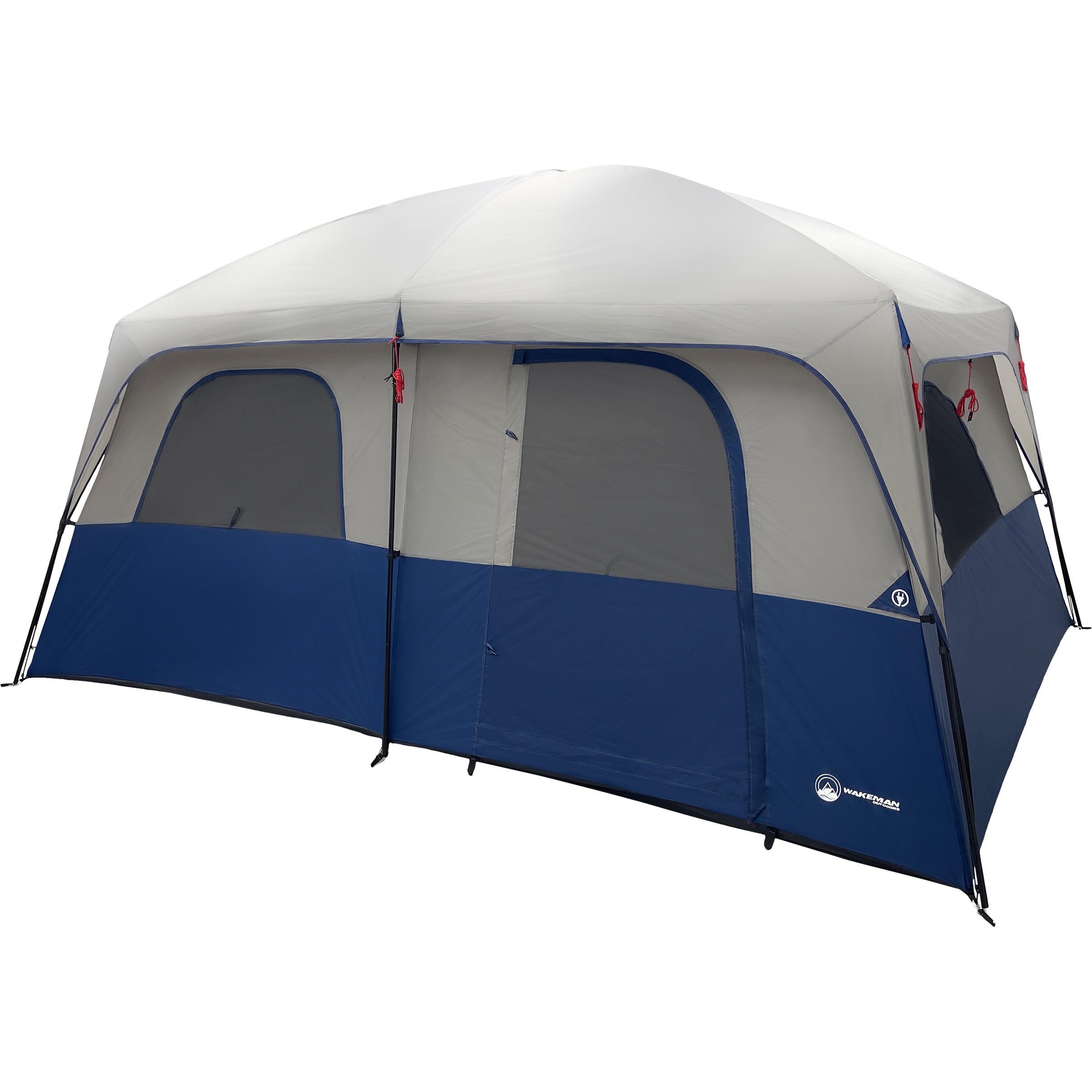
Wakeman Outdoors 10P

84 /100
Angler Score Excellent

Key details

Weight
33.7 lb
Floor Size
14 x 10 feet
Center Height
84 inches
Waterproof Rating
800 mm
Check Details on Amazon

Four queen air mattresses in a 14-by-10 footprint, 84 inches at the center, and a room divider: the Wakeman is one of the two tallest cabins here with that much standing room, and it gets there with sleeve poles, four screened windows, two D-shaped doors, a cord port for power, and a pair of organizer pockets. Those small conveniences decide whether a week in a tent feels tidy or chaotic, and this one has thought about them.

Two things hold it out of the top tier. The fabric is rated at 800 mm, the lightest coating in this group, and the warranty runs 30 days where most of these give a full year. For a settled July week with the family, we think neither will bite, and the tall cabin is genuinely comfortable to live in. For a trip with a thunderstorm icon on the forecast, the CORE's heavier coating and full year of cover are worth the step up.

Pros

  • 84-inch center height on a 14 by 10 floor
  • Sleeps four queen air mattresses
  • Cord port and two organizer pockets
  • Room divider splits it in two

Cons

  • 800 mm coating is the lightest waterproofing here
  • 30-day warranty is the shortest in this group
Our verdict

We like this one for a settled summer week: 84 inches of height, four queen beds, and a cord port, at a mid-range price. Not the tent for a wet forecast.

Check Latest Price
7

Easy Night Entries

Coleman WeatherMaster 10P

76 /100
Angler Score Very Good

Key details

Doors
1, hinged
Rooms
2
Weight
34.6 lb
Floor Area
153 square feet
Check Details on Amazon

The door hinges. A rigid frame swings open and shut instead of a panel you unzip and roll out of the way, and at two in the morning with a flashlight in your teeth and a child asking why it is dark, that is the feature you notice. It is the one thing no other tent here offers, and it is why the WeatherMaster makes this list at all.

The rest is Coleman's WeatherTec construction: welded corners, inverted seams, a tub floor with a covered zipper, and a frame the brand tests to withstand 35+ mph winds. The floor covers 153 square feet with a hanging divider, and setup is a conventional pole pitch that two people can manage at a relaxed pace. What you trade for the hardware is 34.6 pounds and a single door.

Where it lands: this is the tent for someone who is done crawling. Tall campers, grandparents on the trip, anyone who gets up in the night — the hinged door pays them back daily. The single door is the real compromise on a tent this size, since a family of five funnels through the same opening, and the premium price means it should be a deliberate choice rather than an upgrade by default.

Pros

  • Hinged door you can walk through
  • Welded corners, inverted seams, tub floor
  • Frame tested to 35+ mph winds
  • 153 square feet with a room divider

Cons

  • One door for a ten-person tent
  • 34.6 pounds to haul
Our verdict

We rank it as the easiest ten-person tent here to live with, thanks to a hinged door and a welded tub floor. A deliberate splurge, not a default.

Check Latest Price
8

First-Time Tent Buyers

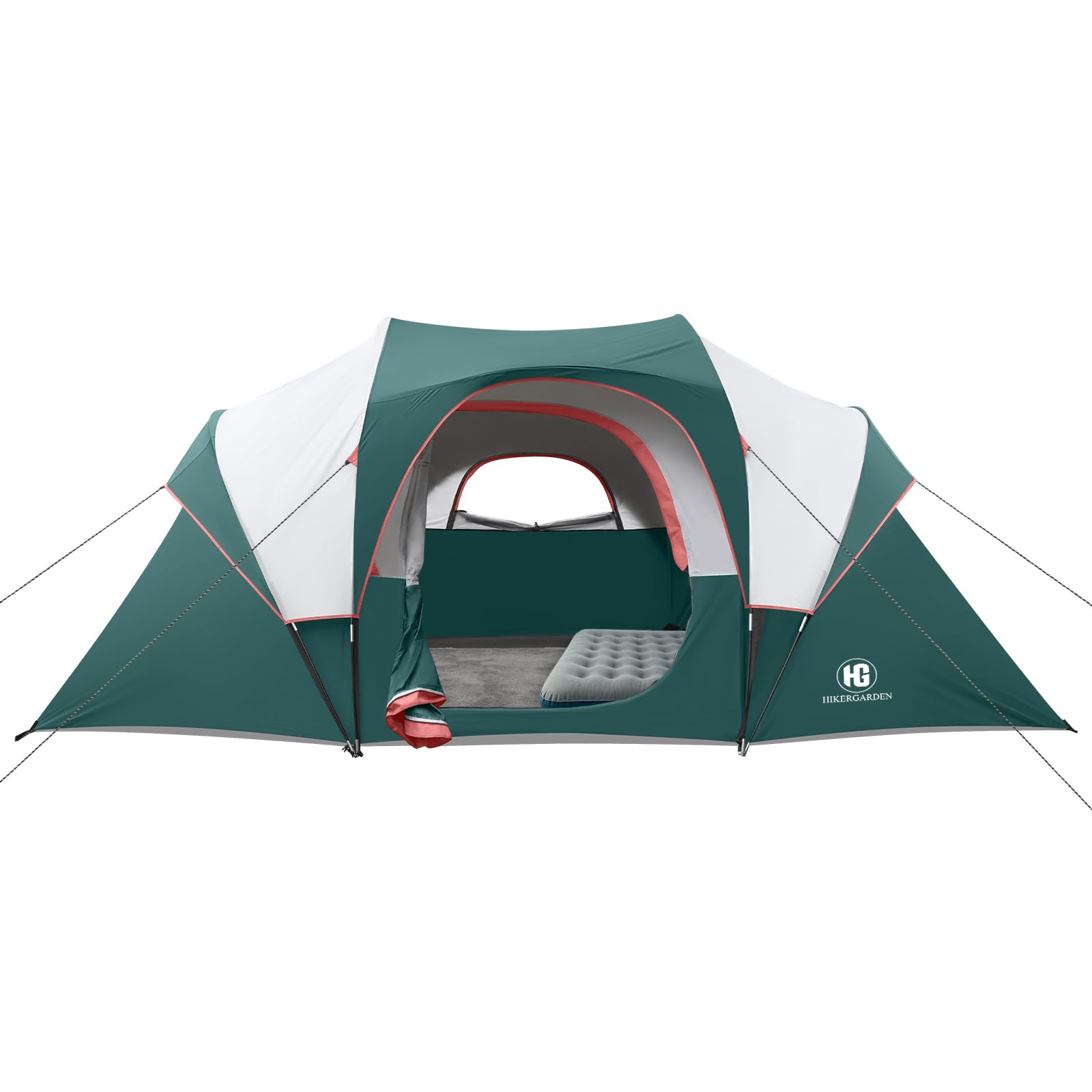
HG 10-Person Dome Tent

76 /100
Angler Score Very Good

Key details

Weight
21.8 lb
Floor Size
14 x 11 feet
Center Height
74 inches
Waterproof Rating
1000 mm
Check Details on Amazon

This is the cheapest way into a ten-person tent here, and the thing that surprised us is where the money did not come from: the floor. At 168 by 132 inches it measures 14 by 11 feet, one of the two largest footprints in this group. Two queen mattresses and a couple of camp chairs fit without a negotiation, and the divider curtain gives you two rooms when the kids need to be on the other side of one.

Height is 74 inches at the center, enough for most adults to stand upright at the peak and not quite enough for a six-footer at the sloping ends. That is the dome trade: a tall middle and a floor that curves away from you at the edges, so the standing space is a strip down the center rather than the whole floor. If everyone in the family is under about 5 foot 10, you will not think about it.

Everything else is conventional and sound: a ten-minute pitch with two people, fiberglass poles, four mesh windows, a mesh ceiling, a carry bag, 21.8 pounds, and a one-year warranty that is generous at this price. The mesh ceiling is a summer asset, since you can lie back and watch stars through it, and a cold-weather liability, since it holds no warmth at all.

The savings show up in the coating and the hardware, which is where the first ten minutes of ownership go. Seal the seams, cut a groundsheet to fit, and guy it out even when the sky looks friendly. Treated that way it is a solid first family tent, a festival shelter, or the one you lend to friends. Go in expecting a summer tent and it will not disappoint you.

Pros

  • 14 by 11 feet of floor at the lowest price
  • 74 inches of height suits most adults
  • 21.8 pounds with a 10-minute pitch
  • One-year warranty, long for the money

Cons

  • 74-inch peak is the lowest in this group
  • 1000 mm coating needs sealing before rain
Our verdict

The budget entry: 14 by 11 feet, a 74-inch ceiling, and a one-year warranty for the least money here. A first family tent for fair weather, once you seal the seams.

Check Latest Price

How We Chose and Tested the Best 10-Person Tents

We started by pulling every 10-person tent we could find from the major outdoor brands and narrowing the field by peak height, floor dimensions, pole material, door count, and price. Anything under six feet of center height, or with a footprint too small to lay out 10 pads with room to move, got cut. Ten tents made the final list, and we spent eight months with them, from early spring through a wet start to summer.

Setup was the first thing we measured, because it is the first thing that goes wrong. Two of us pitched each tent from the bag with a stopwatch running, then one person did it again alone at dusk with a headlamp, which is how most of these actually get put up. We noted whether poles snagged in their sleeves, how much of the process was guesswork versus color-coded, how many stakes it took to get a taut wall, and whether the tent went back into its bag without a wrestling match.

Then we lived in them. A family of five plus a dog on a two-night car-camping trip, four adults with air mattresses and gear bins on another, and a rainy weekend where we ran a sprinkler over each rainfly for 20 minutes and then pressed paper towels along the seams, the floor corners, and the door zippers to see what wicked through. We counted how many people slept comfortably with their bags inside, whether a six-foot adult could stand up to change clothes, and where condensation pooled by morning. Between trips we checked zipper sliders, stake loops, and floor corners for the wear that actually ends a tent's life, and weighed the price against how much of it survived — a budget tent that leaks in its second season is the expensive one.

How to Choose a 10-Person Tent

Count Beds, Not Heads

A queen air mattress takes up roughly 5 by 6.7 feet, so four of them need around 134 square feet before anyone sets down a duffel. That is why CORE publishes both figures — four queen beds or five people with gear — and why the second one is closer to the truth. A tent that sleeps ten bodies on paper sleeps four people comfortably.

Decide how many mattresses and cots you really sleep on, add a couple of feet of floor for bags, a cooler, and a dog, and buy for that number. If you want a sitting area as well as beds, a screened porch is worth more than another two feet of sleeping floor.

Standing Room Comes From the Walls, Not the Peak

Center height is the figure in the listing, but the walls decide whether you can use it. A dome tapers away from the peak, so 78 inches in the middle can be closer to 50 where your mattress sits. Straight-wall cabins like the CORE hold their height out to the corners, which is why we rank them first for anyone around 5 foot 10 or taller.

Be honest about how you use the tent. If you crawl in at midnight and crawl out at seven, a 74-inch dome is plenty. If you dress standing up, read in a chair, or herd children through a rainy morning, chase 80 inches or more and a vertical wall.

Waterproofing Is a Number and a Detail

Fabric ratings in this group run from 800 mm to 4000 mm. Around 1000 mm handles a summer shower; for shoulder-season camping, look for 1200 mm or better, a fully taped rainfly rather than a partial one, sealed seams, and a polyethylene tub floor that turns up at the sides.

The trap is the word waterproof on its own, which usually describes the fabric rather than the stitching. Pitch with the guylines even on a calm evening: a taut tent sheds water and a baggy one pools it, and no coating rescues a sagging fly.

Weight, Setup, and the Walk From the Car

Packed weight across these tents runs from 21 pounds to 46.6, and that spread is really a question about how you camp. Under about 25 pounds, one person can carry and pitch the tent without a negotiation; over 40 it is a two-person lift and a short walk from the trunk.

Pre-attached instant frames save minutes at the site but not pounds in the bag, and they pack as one long bundle. Sleeve poles take longer to thread than clips, though they hold a big cabin steadier when the wind gets under the fly.

Ventilation and the Mesh Trade

Mesh ceilings and ground vents keep condensation off the inside of the fly, and on a warm night they are the difference between sleeping and lying in your own weather. They also let in light, dust, and cold, which matters at 5:30 in the morning.

If most of your camping is warm and dry, take the mesh and enjoy the stars. If you camp into October, look for zip-closed windows and a full rainfly, and leave one vent open anyway so your breath has somewhere to go.

Frequently Asked Questions

Final Verdict

After pitching all eight, the CORE Straight Wall Cabin is the one we point families toward first. It is the tallest tent here at 86 inches, the walls stay vertical so that height is usable at the edge of the floor, and the taped 1200 mm rainfly is built for weather that turns. Nothing else in this group puts space and protection together as cleanly.

Two requirements change the answer. If your camping is summer and dry, the UNP hands you 22 more square feet of floor for less money. If sunrise at 5:30 is what ruins the trip, the EVER ADVANCED blackout tent earns its extra weight and extra cost.