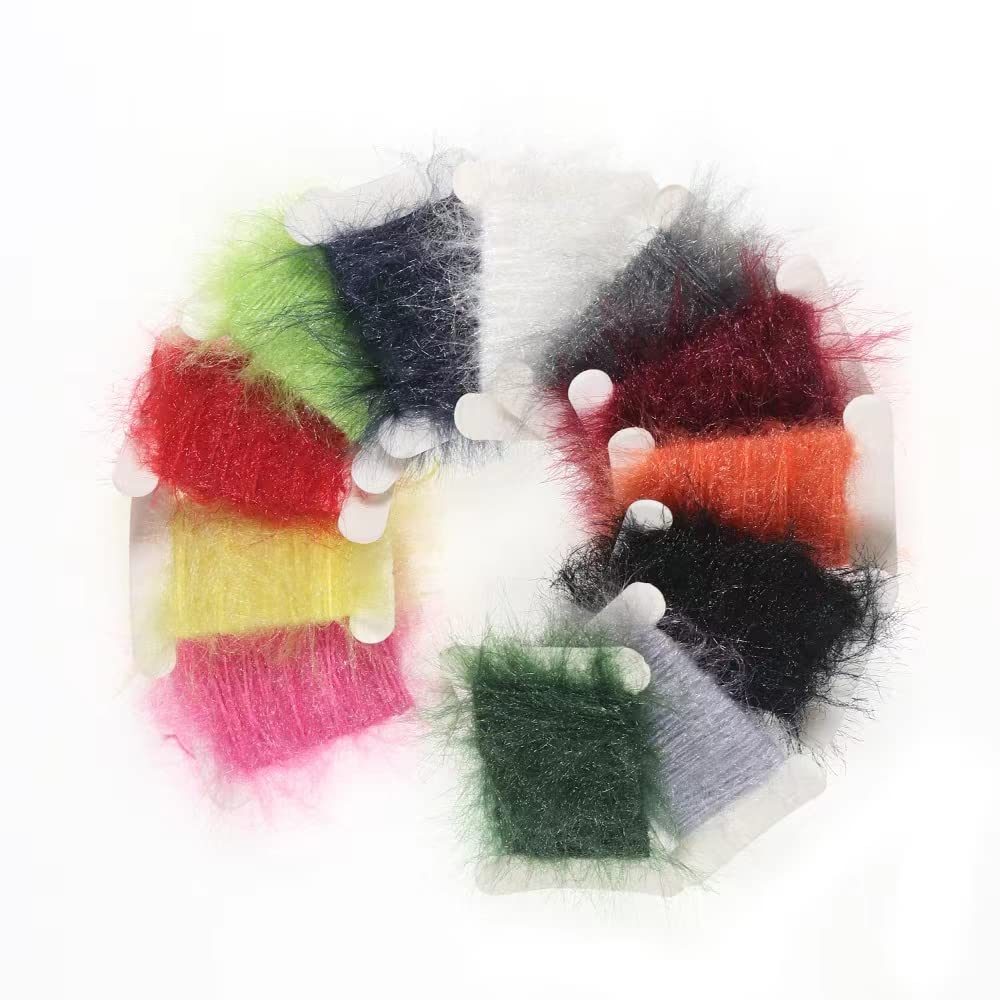
Best Fly Tying Dubbing of 2026

Dubbing looks like the simplest thing on a fly tyer's bench: pinch, twist, wind. What separates a good pack from a frustrating one is everything crammed into those few seconds — whether the fibers actually grip the thread or slide off your fingertips, whether they blend into the shade you had in mind, whether you get a tapered, buggy body or a lumpy one. Get it right and the material disappears into the process. Get it wrong and you're re-tying the same size 16 Adams for the third time.

For the past four months, my team and I have kept 16 packs and dispensers within arm's reach of the vise, tying dry flies, nymphs, and streamers with all of them. The surprise was value: a single pack stretches across dozens of flies, so even the pricier stuff lands at pennies per bug — buy the material you'll actually reach for. Color is the other trap, since shade names don't travel between makers and one brand's hare's ear can sit three tones off another's. The picks below are the ones we kept coming back to.

1

Best Overall

Tigofly 8-Pack Ice Dubbing

89 /100
Angler Score Excellent

Key details

Format
8 individual packs
Dubbing Type
Ice dubbing (synthetic)
Colors Included
8 (Dark Grey, Pearl White, Silver, Golden, Light Green, Red, Green, Teal)
Amount Per Color
2 g (0.07 oz)
Check Details on Amazon

Eight colors, two grams apiece, for less than one premium dispenser from a heritage name — that arithmetic is why this is the set we tell most tyers to start with. The material is ice dubbing, chopped synthetic flash that spins into a body fast and lights up a thorax that would otherwise be drab. What we did not expect was how often we reached for the teal and the light green, colors that make a plain beadhead nymph look like something worth eating.

Ice dub behaves differently from fur. The fibers are a little stiff, so a pinch rolled between your fingers grabs the thread without much wax and the noodle wraps tight instead of fuzzing out. That is what makes it a good thorax material and a poor dry-fly one: it shines rather than floats. Keep it for nymphs, streamer collars, and attractor patterns, and tie your dries from a fine dry-fly dubbing. The pearl white and silver turned out to be the sleepers of the pack, since a midge pupa or a shiner flank takes one pinch and nothing else.

The eight separate bags are the practical half of the design. Two of them drop into a vest pocket and you are covered for a session at the water without hauling the whole drawer. On the bench it is the opposite: unzip, pinch, zip, repeat, which is slower than the XFISHMAN box when you are tying twenty of the same fly.

Pros

  • Eight usable flash colors for a budget outlay
  • Two grams per color goes far on small bodies
  • Stiff fiber spins onto thread without much wax
  • Individual packs travel to the water easily

Cons

  • No brown or olive among the eight colors
Our verdict

Start here: eight colors of flash that will dress nymph thoraxes and streamer bodies all season, at the smallest outlay in this group for a full palette.

Check Latest Price
2

Best for Dry Flies

Hareline Superfine Dry Fly Dubbing

87 /100
Angler Score Excellent

Key details

Container
Clear 12-compartment box
Dubbing Type
Superfine synthetic dry fly
Colors Included
12 hatch-named colors
Assortment Weight
3.2 oz
Check Details on Amazon

Light Cahill, Hendrickson Pink, Pale Evening Dun, Blue Dun, BWO. Those are not color words, they are hatches, and a box labeled that way is telling you what it is for before you lift the lid.

It is the best dry-fly dubbing of this group, and the fiber is the reason. Superfine synthetic is cut short and fine, so a thin pinch spins into a smooth, sparse noodle that floats instead of waterlogging. We tied Adams and small mayfly bodies with a fraction of the material a nymph body takes, and the bodies came out neater because there was less to bulk up. Adams Gray, Olive, and Brown Olive do most of the mayfly and caddis work; Mahogany and Amber are the shades we used least and still would not drop.

The twelve compartments are drilled so you pinch directly from the hole with the lid shut, which sounds trivial until you have spent a season chasing loose fur across a bench. It is the biggest outlay in this roundup, and it is the one purchase that visibly changes a dry-fly box rather than adding to it.

Pros

  • Hatch-named colors you can match to a specific mayfly
  • Fine fiber dubs sparse bodies that float
  • Drilled compartments let you pinch with the lid shut

Cons

  • Fibers are too fine for bulky streamer bodies
Our verdict

If you tie dries, buy this box before anything else here — hatch-named colors, fine fiber, and a dispenser you pinch straight from.

Check Latest Price
3

Best Dispenser Box

XFISHMAN Ice Dubbing Dispenser

84 /100
Angler Score Excellent

Key details

Container
10-compartment dispenser box
Dubbing Type
Ice dubbing (synthetic)
Colors Included
10 (Golden, RoseRed, Blue, Peacock Green, Purple, Black, Pearl White, Peacock, UV White, Silver)
Check Details on Amazon

Ten compartments under one clear lid is the whole pitch, and it is a good one. This is what a dubbing drawer looks like after someone stops buying single bags: the box sits open on the bench, you pinch from the slot you want, and the colors stay where you put them.

The slots run Golden, RoseRed, Blue, Peacock Green, Purple, Black, Pearl White, Peacock, UV White, and Silver, which is a flash palette end to end. The ice dub inside is the same material as the Tigofly packs: stiff enough to spin onto thread without fuss, bright enough that one pinch behind a bead is all a thorax needs. UV White is the brightest thing in the box, and it is the slot we reached for on hot spots and streamer heads.

Where it beats the eight-pack is organization, and that is a real convenience once a bench gets crowded — the lid does the work of eight ziplock seals. It is the box we leave open while tying a run of attractor nymphs, and it is the one we close first when the dog walks in.

Pros

  • Ten colors in one bench-ready compartment box
  • Ice dub spins on quickly for thoraxes and collars
  • UV White gives a bright hot-spot option

Cons

  • Flash-only palette with no brown or natural tones
  • Two of the ten slots are near-duplicate whites
Our verdict

Buy this one if you want your flash colors organized in a single box on the bench instead of eight bags to hunt through.

Check Latest Price
4

Best Natural Fur

Wapsi Awesome 'Possum Dubbing

85 /100
Angler Score Excellent

Key details

Fiber
100% natural possum fur
Container
Pinch-and-grab dispenser
Colors Included
12 natural fur colors
Check Details on Amazon

100% natural is the claim on the front of this dispenser, and it holds up in the hand: this is possum fur, spiky guard hairs and soft underfur together, not chopped plastic. You notice the difference the second you pull a clump out and it stays clumped.

It is the box we reach for when a nymph needs to look alive. Possum dubs loose and translucent, with the spikes poking out of the body, and that halo is what makes a hare's ear or a stonefly nymph read as food rather than as a coil of yarn. The palette is all earth: Orange, Burnt Orange, Bleached Ginger, Gray, Brown, Rusty Brown, Olive, Black, Golden Stone, Golden Olive, Natural Brown, Dark Olive. Golden Stone and Golden Olive are the two a stonefly box cannot do without, and they are the ones we burned through.

The pinch-and-grab lid is the small pleasure here: lift, pinch, close, and the rest of the box stays where it was, which is more than we can say for a bag of loose fur on a breezy afternoon. Twelve fixed compartments also stop the colors migrating into one muddy average the way a shared bag does.

Pros

  • Natural possum dubs buggy, translucent nymph bodies
  • Twelve earth tones cover stonefly and hare's ear work
  • Pinch-and-grab lid keeps the box tidy

Cons

  • Natural fur only, with no flash or brights
Our verdict

Buy it for natural fur that dubs into buggy, translucent nymph bodies, in twelve earth tones no synthetic set here covers.

Check Latest Price
5

Best for Baitfish Patterns

Hareline Ice Dub Minnow Belly

93 /100
Angler Score Outstanding

Key details

Color
Minnow Belly (#234)
Pack Weight
0.07 oz
Dubbing Type
Ice dubbing (synthetic)
Check Details on Amazon

Minnow Belly names its own job. It is the pale, pearly underside of a baitfish, the flash a streamer is imitating when it rolls past a bass, and Hareline's version is chopped fiber with a lot of sparkle packed into it.

Use it where a pattern needs a lit belly or a hot spot: a collar behind a conehead, a throat on a baitfish profile, a band behind the bead on a woolly bugger. One pinch is enough, because the fiber is stiff and spins onto the thread without much work. The pack itself is about the size of a playing card, which is why ours ended up in a shirt pocket instead of the drawer.

It is one color, so treat it as a top-up rather than a first buy. The value shows up when you already own a palette and want this specific flash along the underside of a plain white streamer, where it changes how the fly reads in the water. We kept reaching for it on baitfish patterns that looked flat until the belly went bright.

Pros

  • Pearly flash that reads as a baitfish belly
  • Stiff fiber spins onto thread without fuss
  • Small pack travels in a shirt pocket

Cons

  • One pack of one color costs about what a palette does
Our verdict

One pack, one job: a bright belly color for streamer sides and attractor hot spots, in a bag small enough to live in a pocket.

Check Latest Price
6

Streamer Bodies

GREATFISHING Dubbing Yarn

79 /100
Angler Score Very Good

Key details

Material
Dubbing yarn
Colors Included
12 assorted colors
Length Per Color
5 m
Check Details on Amazon

This is yarn, not loose dubbing, and that is the first thing to get straight: twelve five-meter strands you wrap, chop, or split for bulk rather than a fiber you roll onto thread. It also will not serve a small dry fly or a fine nymph body, and no amount of chopping fixes that. For streamers and baitfish on bigger hooks, though, it is the fastest bulk here — one wrap builds an underbody that would take minutes of dubbing — and the color run (chartreuse, hot pink, orange, yellow, black, three greys) is the one big-fly tyers actually burn through.

Two ways we used it: wound along the shank for a baitfish profile before eyes and a collar go on, and chopped fine and blended into a dubbing loop for a bulky head. Five meters of a color is a long supply, long enough that a single pack covers a season of the flies you would tie from it.

The pink and the chartreuse are the loud end of the box, and they are the reason it earns a slot for steelhead and salmon patterns where subtlety is not the point. If your box is mostly size 14 nymphs, none of these twelve strands will help you, and that is a fair reason to skip it.

Pros

  • Wraps a streamer underbody in one pass
  • Twelve strands, five meters of each color

Cons

  • Colors can run slightly off from the photos
Our verdict

A streamer-bench material rather than a general dubbing: twelve bright strands, five meters each, for bodies that need bulk instead of a pinch.

Check Latest Price

How We Chose and Tested Fly Tying Dubbing

We started by gathering the dubbing that actually turns up on tyers' benches — natural fur blends, synthetic ice dubbing, and multi-compartment dispensers — then filtered by price per pack, how many shades came in a set, and whether the listing showed fiber texture clearly enough to judge coarseness before buying blind. Anything sold only in bulk, or offering fewer than three colors, didn't make the cut. That left 16 units, which stayed in rotation for four months.

All of it got used where dubbing is really used: at the vise, in the evening, usually with a trip somewhere on the calendar. We noodled a pinch onto thread with every pack to see how quickly it grabbed and whether it held together or shed onto the desk, ran the spikier material through a dubbing loop for streamers, and wound each blend onto hooks from size 20 midges up to 2/0 streamers, watching for matting, fly-away fibers, and whether the body tapered or went lumpy. We also kept a rough count of how many flies a pack produced before it looked picked over.

Color got its own pass: we compared every shade under the desk lamp and again in daylight, held them next to a reference card to see which ones read warmer or cooler than their labels suggested, and checked that dispenser lids stayed shut and didn't bleed color between compartments. Ease of use came down to a simple question — which packs did we reach for without thinking?

How to Choose Fly Tying Dubbing

Match the Fiber to the Fly

Dubbing is not one material. Fine synthetic superfine dubbing is cut short so it spins into thin, floating bodies, which is dry-fly work. Natural fur such as possum is spikier and dubs loose and translucent, which is what a nymph wants. Ice dub is chopped flash: bright, stiff, and best in a thorax, a collar, or a baitfish belly. Yarn is bulk that you wrap rather than pinch.

The trap is buying one big box of ice dub and expecting to tie dries from it. It shines rather than floats, and the first cast tells you. Buy the flash set and a floating fiber as two purchases, and you have a bench instead of a compromise.

How Many Colors Are Worth Paying For

Count the colors you tied last season before you buy twelve. A hatch-named dry-fly palette earns its slots because you are matching a specific mayfly; a nymph box mostly needs browns, olives, and a couple of hot spots, not six shades of pearl.

If you tie a little of everything, start with the smaller flash set and add naturals as a pattern demands them. Two focused boxes beat one large dispenser where half the slots never open, and unused dubbing is still dubbing whether it cost little or a lot.

Dispenser Box or Individual Packs

A compartment dispenser lives on the bench: lid open, pinch from the slot, close. Packs travel better, and two of them in a vest pocket cover a session at the water without a box rattling around in the bag.

The trap with a compartment box is wind and gravel. Open one over a lawn and you will spend the afternoon picking dubbing out of the grass. Tie at a bench and the box wins; tie on a tailgate or at the water and buy packs.

How Far a Pack Really Goes

A nymph body takes a pinch you can roll between finger and thumb, smaller than most people expect, so two grams of a single color ties a lot of flies. Color range, not volume, is what limits a bench.

When a set states weight per color, that is the number to compare; when it does not, judge by compartment count and commit to less. Streamers are the exception, since bodies swallow material fast and a five-meter strand is the honest unit for that work.

Frequently Asked Questions

Final Verdict

Start with the Tigofly eight-pack. It covers the most useful ground here for the smallest outlay, and the flash it carries is what most nymphs, attractor patterns, and streamer collars want. The exception is dry flies: if your box is mostly dries, buy the Hareline Superfine twelve-color box first, because fine fiber and hatch-named colors do a job ice dub cannot.

If you tie buggy natural nymphs rather than bright attractors, the Wapsi possum dispenser is the better first box, with a single flash pack added when a pattern calls for it.