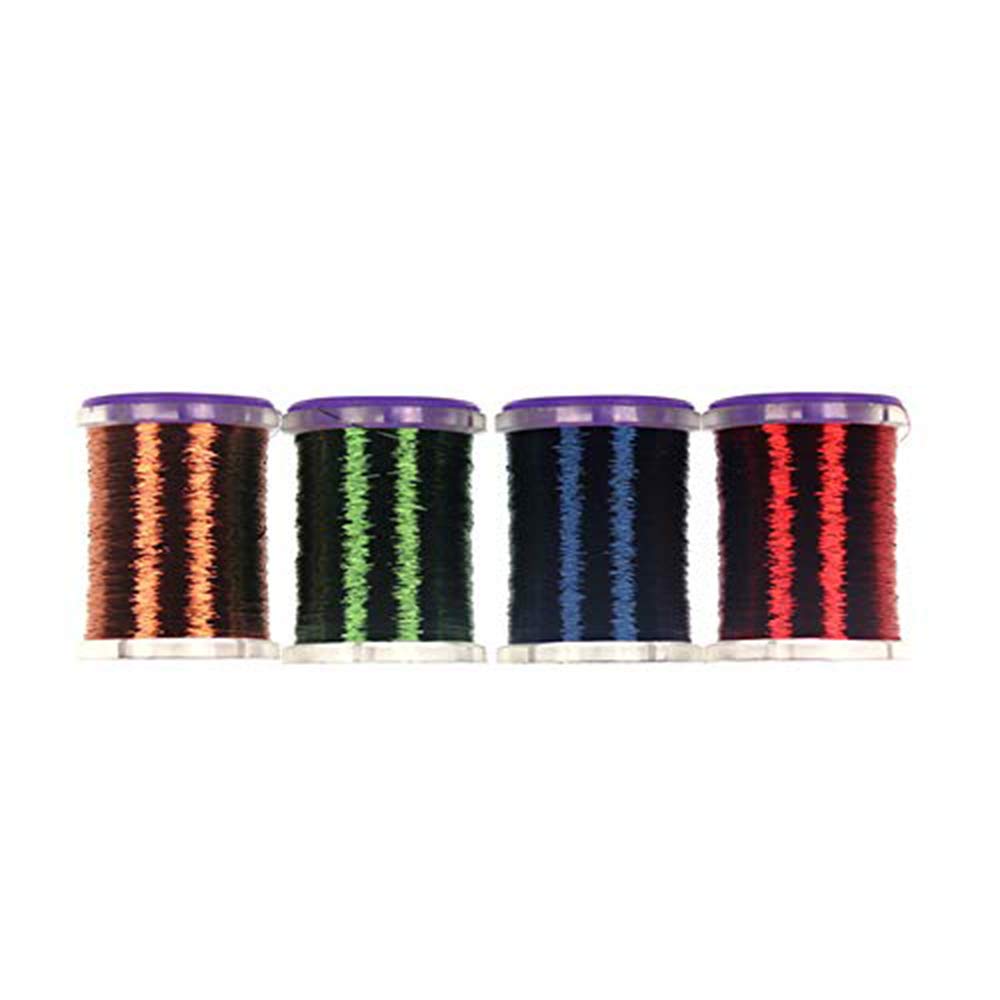
Best Fly Tying Wire of 2026

Standing in the tailout at dusk, watching a streamer ride high when it needed to be scraping bottom, is how most of us end up buying fly tying wire. It's the least glamorous item on the bench and the one that decides whether a fly fishes at the depth you intended: a few wraps under the body pull a nymph down, shape a taper, and give you ribbing that makes a segmented abdomen read like the real thing. It also has to survive being wrapped, which is where cheap spools quietly fail — kinking mid-body, snapping at the shank, or going dull brown in the box.

I've tied with bargain wire that snapped on the third wrap, so I'm fussy about this. Over four months my team and I ran 16 spools and multi-color sets through the vise, mostly on size 12 to 16 nymphs and a few weighted streamers. One thing worth knowing before you shop: diameter matters more than the label, and a spool that peels cleanly off the edge saves you more profanity than a fancy finish ever will. The picks below are the ones we kept reaching for.

1

Best Overall

Temorah 10-Color Copper Wire

89 /100
Angler Score Excellent

Key details

Colors
10
Material
Copper
Spool Length
About 10.5 yards
Wire Diameter
0.3 millimeters
Check Details on Amazon

Ten spools, ten colors, every one of them 0.3mm and about 10.5 yards long. What makes this set worth its place isn't the quantity — it's the color. A rib is the cheapest change you can make to a fly and the one a fish reads first: a band of red behind a beadhead, copper over a hares ear, silver on a zebra midge. Buying that range one spool at a time is how a bench ends up with nine shades of gold and nothing that pops.

0.3mm is the gauge we reach for without thinking about it. It's heavy enough to add a little sink under dubbing and thin enough to rib a size 14 nymph without bulking the body, so one set covers most of what a trout box needs. We wrapped it hard against the shank to see whether the finish would scrape through, and the color held where the wire crossed over itself — no bare metal showing at the tight spots, which is more than we can say for cheaper copper.

The spools dispense cleanly too, and that matters more than it sounds. Wire that uncoils in loops and kinks is wire you quietly stop reaching for; this pulls off straight and lies flat on the hook, and it stays where you put it through a dozen turns of thread.

Where it will run short is volume. Ten colors means 10.5 yards of each, and the two or three you actually tie with will be empty long before the purple is. Buy a second spool of your workhorse color when you reorder and treat the rest as the palette — and keep in mind that copper is a ribbing wire with a little weight to it, not a substitute for lead when a streamer has to get down.

Pros

  • Ten colorfast copper colors in one box
  • 0.3mm ribs a nymph and adds light weight
  • Spools pay out without kinking

Cons

  • Every color is 0.3mm, with no finer gauge
Our verdict

This is the set we hand anyone building a bench from scratch: ten colorfast copper spools in the one gauge that ribs a nymph and lightens it at the same time.

Check Latest Price
2

Best Traditional Lead

XFISHMAN Lead Wire

89 /100
Angler Score Excellent

Key details

Pack
2 spools
Material
Lead
Spool Weight
1 oz
Wire Diameter
0.020 inches (Medium)
Check Details on Amazon

Lead isn't fashionable, but it's still the densest thing most of us wrap on a hook, and that is the entire argument for keeping a spool within reach. Pressed under dubbing or seated behind a bead, it sinks a fly in fewer turns than any lead-free alloy. Fewer turns is not a trivial difference: it's a slimmer body and less bulk exactly where the profile matters.

The size range runs from .020 to .040 inch, and the gap between the ends is bigger than the numbers suggest, since doubling the diameter roughly quadruples the metal in a single wrap. .020 handles nymph bodies and small streamers; .040 is the big articulated stuff, where you want a keel rather than a hint. This pack ships as two one-ounce spools of medium .020, which is the size a trout bench burns through.

It's soft in the right way — press a wrap flat and it stays flat against the shank instead of springing back at you, which is what you want when you're building a smooth underbody. Two spools also means one lives in the travel box and one stays on the desk, a small thing that saves a lot of digging halfway through a dozen flies.

Pros

  • Most weight per wrap of any wire here
  • Two one-ounce spools in the .020 general size
  • Sizes available from .020 to .040 inch

Cons

  • Contains lead
Our verdict

When a fly has to get down and stay there, we still reach for lead — and this two-spool pack of .020 is the most weight for the least fuss on the bench.

Check Latest Price
3

Best Lead-Free

Hareline Round Lead Free Wire 0.020

89 /100
Angler Score Excellent

Key details

Density
60% of lead
Material
Lead-free alloy
Spool Fit
Most standard bobbins
Wire Diameter
0.020 inches
Check Details on Amazon

The spool is the first thing we noticed. It's sized to sit in a standard bobbin, so the wire can pay out from the tool you'd normally use for thread instead of uncoiling across the desk and onto the floor. That's genuinely useful thinking on a product that could have been dropped in a bag and forgotten about.

At 0.020 inch it's the general-purpose weight size — nymph bodies, small streamers, the odd worm pattern. The alloy runs about 60 percent of lead's density, so the same fly takes more wraps. We've come around on that: adding a wrap at a time lets you tune how fast a fly drops, where a full lead wrap is a decision you make once and live with.

It also resists tarnishing, which matters for flies that sit in a box from one season to the next, and it takes a firmer initial wrap to seat against the shank than lead does. Once it's down, though, it stays down — and it's the wire we keep on the bench when someone else is going to be tying at it.

Pros

  • Spool fits most standard bobbins
  • About 60% of lead's density for finer control
  • Doesn't tarnish easily between trips

Cons

No notable drawbacks to flag.

Our verdict

If you'd rather not have lead at the bench, this is the spool we point people to — it does the same weighting job on a tidier, non-toxic spool.

Check Latest Price
4

Best for Flies Tied Ahead

Riverruns 6-Color Ultra Wire

85 /100
Angler Score Excellent

Key details

Colors
6
Material
Non-tarnishing copper
Spool Length
9.6 meters (about 10.5 yards)
Wire Diameter
0.3 millimeters
Check Details on Amazon

Champagne, warm gold, chartreuse, wine, brown, black — read that list again and notice what's missing. There's no fire orange, no hot pink, nothing fluorescent. This is a palette built for natural nymphs, and it's why we reach for this set when we're tying Copper Johns and Brassies rather than attractor patterns.

The wire itself is 0.3mm on roughly 10.5-yard spools, and the copper is treated to resist the dulling that turns a bright rib into a brown one after a season in the box. Each spool is a single strand, so you can also wrap two colors side by side for a banded, segmented body — a trick that's easy to overlook until you've seen it on a streamer.

Where it gives ground is handling. This wire is stiffer than the softer copper many tyers are used to, and the spools don't pay out as smoothly, so starting a clean wrap takes a beat longer. On a size 12 that's nothing. On a size 18 it asks for more patience than our top pick does, and the price is higher for four fewer colors — you're paying for the finish, not the yardage.

Pros

  • Six muted shades aimed at natural nymphs
  • Non-tarnishing copper finish
  • Two colors can be wrapped together for banded bodies

Cons

  • Pricier than our top pick with four fewer colors
Our verdict

Buy this one for the palette: six muted, non-tarnishing copper shades that still look right on flies that have been in the box since spring.

Check Latest Price
5

Best for Big Streamers

Greatfishing 4-Size Lead Wire

80 /100
Angler Score Excellent

Key details

Pieces
4
Material
Lead
Diameters
0.5, 0.8, 1.0, and 2.0 millimeters
Packaging
Reusable ziploc bag
Check Details on Amazon

Two millimeters of lead is a lot of wire. It's also the size that changes a streamer that has to punch through a wind lane, and it's the reason this set exists, since most tying wire stops well short of it. The other three coils — 0.5, 0.8, and 1.0mm — handle the middle ground: cheek weights, keels, and bodies built along a shank.

The coils are generous where it counts. The three lighter diameters come in two-meter lengths and the 2mm comes in one, which is about right, because a foot of 2mm weights an entire fly. The lead folds and holds a shape by hand, so you can work a keel along the shank, cover it with dubbing, and trust it to stay where you put it rather than creeping as you wrap.

This isn't a general nymphing set, and it doesn't pretend to be. The finest coil is 0.5mm — five times the diameter of the 0.1mm wire we use on midges — so it belongs in the streamer box, not the midge box. Kept to that job, it's the most capable weighting wire here.

Pros

  • Four diameters up to a heavy 2 millimeters
  • Two-meter coils on the three lighter sizes
  • Lead folds and holds a shaped keel

Cons

  • Comes as loose coils in a bag, not spools
Our verdict

For articulated streamers and saltwater patterns, this is the heavy end of the drawer — four lead diameters running up to a genuinely chunky 2mm.

Check Latest Price
6

Midge Ribs

Greatfishing 0.1mm Copper Wire

84 /100
Angler Score Excellent

Key details

Colors
4
Material
Copper
Wire Diameter
0.1 millimeters
Check Details on Amazon

A tenth of a millimeter is roughly the thickness of a human hair, and that's the honest measure of what this wire is for. Ribbed over a thread body, it gives you segmentation on a size 18 midge without adding a bump or changing the silhouette. Put it on a size 12 nymph and you'll wonder why you bothered.

There's almost no stiffness to it, so it wraps tight and lies flat against the shank. The trick is to keep light tension and let the wire follow the curve of the hook rather than pulling it into place — pull hard and it kinks, and a kink in wire this fine is visible in the finished rib no matter how much dubbing goes over the body.

Four copper-family colors come in this pack, and the fine gauge takes a finish well. We've had the best luck tying it in behind the bead, wrapping forward, and letting the thread flatten it slightly as it goes, which keeps the rib snug to the body instead of riding up over the dubbing. It's a small spool with a narrow purpose, and on that purpose it's the best here.

Pros

  • Fine 0.1mm rib for midges and small dries
  • Adds segmentation without bulking the body
  • Four copper-family colors in the pack

Cons

  • Too fine to weight a fly on its own
Our verdict

A specialist spool: at a tenth of a millimeter this copper is for ribbing midges and small dries, and it does that one job neatly.

Check Latest Price

How We Tested Fly Tying Wire

We started by gathering every spool sold specifically as fly tying wire — bright copper, lead-free substitutes, and traditional lead in several gauges — then cut the field to 16 based on whether the listing stated an actual diameter in millimeters rather than vague small or medium sizing, and what the price worked out to per foot. Anything available in only one gauge got set aside, since a usable wire box needs at least a fine ribbing wire and a heavier weighting wire.

Testing ran four months, mostly on Tuesday nights at the bench tying size 12 to 16 nymphs and midges ahead of weekend trips, with a handful of weighted streamers mixed in. Each spool got the same workout: I wrapped it along a bare hook shank under tension, counted how many wraps it took to build a visible taper, and noted whether it kinked, snapped, or frayed the tying thread. Then I peeled a working length off the spool to see whether it came off straight or coiled up and tangled — a small thing that turns into a big thing at 11 p.m. with cold hands.

Color got its own pass. I tied the same Copper John style abdomen in every shade a set offered, checked whether the copper was real metal tone or a coating sitting on top of silver, and left the finished flies in an open box for three weeks to see which ones went brown. Value came down to usable wire: I measured what was left on each spool after a month of tying and weighed that against what the spool cost, because a bargain spool that birdsnests half its length isn't a bargain.

The wires that held up all shared one trait — they laid flat against the shank instead of springing back at me. That's the standard everything else was graded against.

How to Choose Fly Tying Wire

Weighting Wire and Ribbing Wire Are Different Purchases

Weight wire lives under the dubbing and is never seen: lead or a lead-free alloy, wrapped in touching turns along the shank to make a fly drop. Ribbing wire sits on top of the body, and its job is segmentation and color — copper, in the gauge that spirals over a dubbed abdomen without crushing it.

Most benches need both, but not in equal amounts. A single 0.3mm copper set like our top pick plus one spool of lead or lead-free covers the great majority of trout patterns. If you tie only midges and small dries, the copper will do nearly all the work; if you tie streamers, the weighting wire is the one that matters.

Match the Diameter to the Hook

Diameter is the specification that decides what a spool is good for. Around 0.1mm is ribbing wire for size 16 and smaller — it segments a midge without changing its profile. From 0.2 to 0.3mm is the workhorse range, fine enough for a size 14 nymph and heavy enough to add a little sink under dubbing. At 0.5mm and above you're weighting streamers and building keels.

The common mistake runs both ways. Buying only heavy wire because heavier sounds better leaves you unable to rib anything small, and buying only fine wire means ten wraps where two would do. Two diameters cover almost every pattern you'll tie; the exception is a dedicated streamer box, which wants the heavy sizes on their own.

Lead or Lead-Free: Density, Wraps, and Handling

Lead is the densest material you can reasonably wrap on a hook, which is why it takes the fewest turns to reach a given depth — and fewer turns mean a slimmer body. Lead-free alloy runs about 60 percent of lead's density and is slightly stiffer, so the same fly takes more wraps. The compensation is control: you can add depth a wrap at a time instead of committing to a full lead wrap.

Then there's the bench itself. Lead leaves residue on your fingers, so wash up before you eat, keep drinks off the tying desk, and don't sand or file a wrapped shank. If those habits are ones you know you won't keep, tie lead-free and give up a little density rather than the other way around.

Yardage, Spools, and Bench Manners

A 10.5-yard spool of 0.3mm copper ties an enormous number of ribs, but multi-color sets divide that yardage by ten, so the two colors you actually fish run out while the odd ones sit there. Buy a second spool of your workhorse color rather than a second set.

Form matters as much as length. A spool that pays out without looping is wire you'll reach for; wire that kinks coming off the spool gets avoided. Heavy weight wire often arrives as loose coils in a bag rather than on spools, which is fine as long as you keep the diameters separated and labeled — guessing between 1mm and 2mm by feel gets old quickly.

Frequently Asked Questions

Final Verdict

For most benches, buy the Temorah ten-color set first. At 0.3mm it does both jobs a copper spool is good for, the finish holds when you crank it down, and having ten colors means you stop substituting whatever happens to be on the desk. Then add one spool of real weight: the XFISHMAN lead if you want maximum depth per wrap, the Hareline 0.020 if you'd rather keep lead out of the house.

If your tying runs to articulated streamers and saltwater patterns, start with the Greatfishing coils instead — nothing else here goes heavy enough.